
Personalization isn’t just for skincare or fitness anymore—it’s revolutionizing oral hygiene. This article explores how today’s smart toothbrushes use AI, sensors, and habit tracking to create a brushing experience that’s uniquely tailored to your mouth. Learn how this shift from generic to personalized care improves dental health, reduces enamel damage, and keeps your smile brighter for longer.
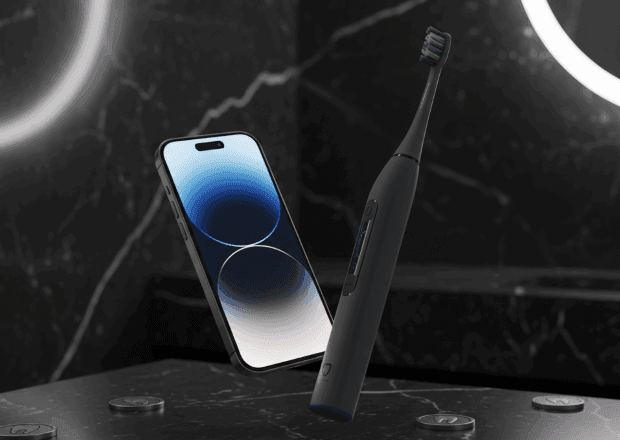
For years, brushing your teeth has followed the same one-size-fits-all rule: brush twice a day, two minutes each time. But not everyone has the same mouth shape, gum sensitivity, or brushing habits. Personalized oral care recognizes that every mouth is different—and your toothbrush should know that too.
A personalized toothbrush doesn’t just clean your teeth—it adapts to you.
• AI-Driven Feedback: Learns your brushing style and gives real-time guidance.
• Pressure Sensors: Warn you when you’re brushing too hard, which can harm enamel and gums.
• Zone-by-Zone Tracking: Monitors which areas you’ve brushed, missed, or overbrushed.
• Daily Scoring & Reports: Shows you progress, strengths, and where to improve.
• User Profiles: Tailors the brushing mode to your sensitivity, dental needs, or age.
BrushO is designed around the idea that oral care should learn from you—not the other way around.
✅ 6-Zone / 16-Surface Mapping: Brushing guidance that covers every surface of your mouth.
✅ FSB (Fully Smart Brushing) Technology: Tracks pressure, coverage, timing, and gives feedback in real time.
✅ Adaptive Intensity Modes: Customize cleaning strength based on gum sensitivity or user type (child/adult).
✅ App-Connected Experience: The BrushO App stores your brushing data, visualizes trends, and provides reminders & encouragement.
✅ Rewards System: Earn points for consistency and good technique—turn habits into healthy rewards.
Traditional brushing often leads to common issues like:
• Missed areas (especially molars and gumline)
• Brushing too hard (causing gum recession and enamel erosion)
• Inconsistent duration and angles
• Poor tracking of oral health over time
Without feedback, you’re just guessing. And with teeth, guessing wrong can be expensive.
When your toothbrush adapts to your habits, it doesn’t just clean better—it becomes a tool for prevention. Smart personalization can:
• Reduce plaque more evenly
• Catch bad habits before they cause damage
• Alert you to brushing blind spots
• Reduce your long-term dental costs
As oral care becomes more connected, your toothbrush could soon sync with:
• Dental professionals (remote brushing reports)
• Health apps (integrating brushing data into wellness metrics)
• AI diagnostics (early warning for gum disease, decay risk)
And it all starts with personalization.
Yes—a toothbrush can absolutely be personalized. In fact, it should be. With innovations like BrushO, your daily brushing becomes more than a routine—it becomes a smart, adaptive, and preventive habit tailored just for your smile.

The uncontrolled hypertension is the condition that the dental practice meets in the patient who presents with the elevated pressure that the guideline does not permit for the elective treatment, and the management of this patient requires the deferral of the dental procedure and the referral to ...

The closure of the extraction space in the orthodontic treatment is the phase that demands the careful selection of the mechanics and the monitoring of the force that the appliance delivers. The sliding mechanics that rely on the continuous archwire and the power chain that connects the brackets ...

The transverse discrepancy of the maxilla is the problem that the crowding and the posterior crossbite often hide, and the maxillary expansion is the treatment that addresses the width of the arch rather than the position of the individual tooth. The clinician who diagnoses the constriction early...

The local anaesthesia is the daily procedure that the modern dentistry treats as the routine, and the complications that follow it range from the transient and the trivial to the permanent and the serious. The clinician who injects by the habit without the anatomy in the mind is the clinician who...

The hypertension is the condition that the dental practice meets in the every day, and the patient who carries the elevated pressure without the symptoms is the patient who presents the risk that the chair-side measurement reveals. The dental team occupies the position that no other profession ho...

The glass-ceramic crown has become the default restoration for the anterior and the many posterior teeth, and the material selection within the family is the decision that determines the strength, the aesthetics, and the longevity of the result. The lithium disilicate, the leucite, and the zircon...

The dental phobia is the extreme form of the dental fear that prevents the patient from attending the treatment that the oral health requires, and the management of the phobia demands the skill that extends beyond the routine behaviour guidance. The systematic desensitization, the exposure therap...

The dental fear of the child is the condition that shapes the attitude for the lifetime, and the clinician who manages the first visits with the skill builds the patient who attends the recall without the dread. The fear that the child develops follows the many sources, and the practice that reco...

The patient with controlled hypertension is the patient who requires the dental care that the oral health demands and the treatment that the blood pressure permits, and the clinician who manages the controlled case safely follows the guideline that the evidence supports. The controlled hypertensi...

The ceramic veneer is the restoration that the aesthetic dentistry depends on, and the bond that retains the veneer on the enamel is the critical link that determines whether the restoration survives the function or fractures and debonds. The clinical technique from the preparation to the cementa...

Xây dựng mạng dữ liệu sức khỏe răng miệng nhanh chóng và chi phí thấp theo cách mọi người đều có thể tham gia.
Xây dựng mạng dữ liệu sức khỏe răng miệng nhanh chóng và chi phí thấp theo cách mọi người đều có thể tham gia.


Address: RM 1427, 14/F RADIO CITY 505, HENNESSY RD CAUSEWAY BAY, HONG KONG
Code: 000000
Phone: +852-53758652
Email: customerservice@brusho.com