
Dental anxiety is one of the biggest reasons people avoid dental visits. Research shows that up to 36% of adults experience some level of fear, and nearly 12% have a severe dental phobia that keeps them away from treatment entirely. This leads to a dangerous cycle: fear → avoidance → worse oral health → greater fear. In this article, we’ll explore the causes of dental anxiety, the risks of skipping appointments, coping strategies, and why smart tools like BrushO FSB300 can transform daily oral care into a calmer and more confident experience.
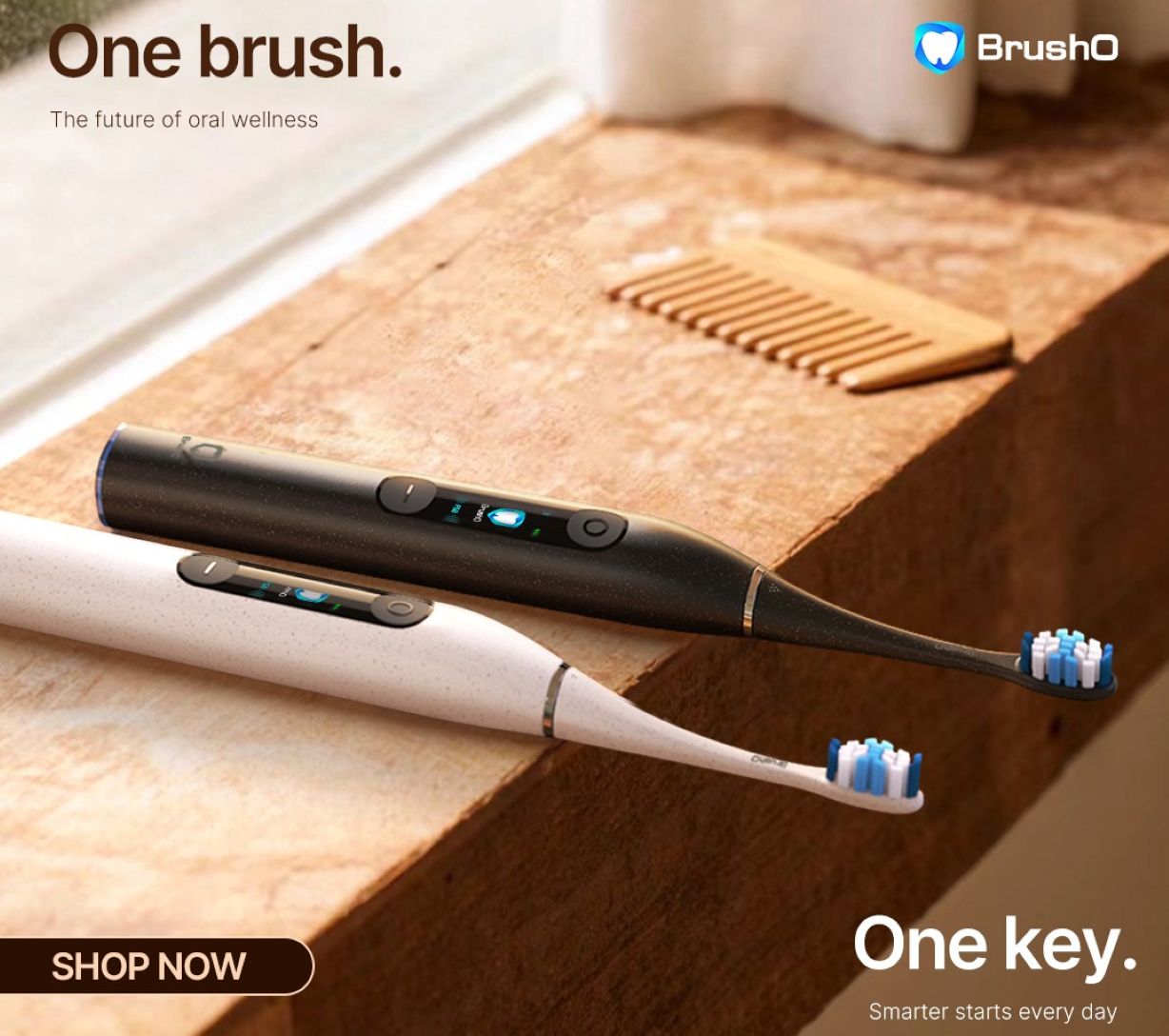
Dental anxiety is more than a little nervousness; it’s an intense stress response connected to dental treatment.
👉 The cycle of fear and avoidance is why dental anxiety is such a serious public health issue.
Fear of Pain
- Memories of painful treatments stick, even though modern dentistry uses anesthesia effectively.
Cost Concerns
- Without dental coverage, costs can be overwhelming—leading patients to delay until it’s too late.
Embarrassment
- Shame about tooth decay, gum disease, or bad breath keeps many away from the very care they need.
Sensory Overload
- Bright lights, antiseptic smells, and the sound of drills can feel overwhelming.
Loss of Control
- Being unable to talk or move while a dentist works creates feelings of vulnerability.
Children: Fear injections and strange equipment; early bad experiences often last into adulthood.
Young Professionals: Delay visits due to cost or busy schedules.
Middle-Aged Adults: Avoid out of embarrassment or fear of bad news.
Seniors: More prone to loss of control, fears and worry about discomfort.
👉 Each group experiences dental anxiety differently—but all face serious risks when avoiding care.
Untreated cavities → infections, abscesses, or extractions.
Gum disease → higher risk of heart disease, stroke, and diabetes.
Tooth loss → affects chewing, speech, and confidence.
Higher costs → a $100 filling becomes a $1,000 root canal when delayed.
Skipping visits is not just about your smile—it’s about long-term health.
Gradual Exposure
- Start with cleanings before tackling complex treatments to rebuild comfort.
Open Communication
- Tell your dentist about fears. Many now use “tell-show-do” methods or hand signals to give patients more control.
Sedation Options
- Nitrous oxide or light sedation can help highly anxious patients relax.
Relaxation Techniques
- Deep breathing, meditation, or music can lower stress before and during visits.
Digital & Preventive Care
- Teledentistry and smart home care reduce the need for invasive treatments, cutting down on visits that trigger fear.
Dental anxiety often stems from uncertainty and lack of control. BrushO FSB300 is engineered to restore both:
Delivers one of the highest speeds in the industry, but with smooth, stable vibrations and no messy splatter. This creates a calm, predictable brushing routine that feels safe and controlled.
Many anxious patients fear pain. BrushO’s gentle modes protect enamel and gums, preventing discomfort from overbrushing.
The BrushO app shows exactly where you brushed, what you missed, and how to improve—turning uncertainty into confidence.
Anxiety fades when you see measurable results. BrushO tracks scores and progress over time, helping users feel in control of their oral health.
Parents can monitor kids’ brushing habits, easing worries about their dental future and reducing the likelihood of emergency visits.
👉 With BrushO, prevention becomes proactive, predictable, and stress-free—helping anxious patients avoid the very situations they fear most.
Q1: How common is dental anxiety?
Up to one-third of adults report some fear, with about 12% experiencing a severe phobia.
Q2: Can avoiding the dentist harm your health?
Yes, untreated issues raise risks of gum disease, infections, and systemic illnesses.
Q3: How can I reduce dental anxiety at home?
Strong preventive care with smart tools like BrushO lowers the chance of needing stressful treatments.
Dental anxiety is widespread, but avoiding the dentist only makes problems worse. The good news is that you can break the cycle. By understanding triggers, practicing coping strategies, and using smart preventive tools like BrushO FSB300, you gain control over your daily oral health. That means fewer emergencies, lower costs, and less stress when it’s time to see the dentist.

The xerostomia is the symptom that the patient describes as the dry mouth, and the Sjogren syndrome is the systemic autoimmune condition that the clinician identifies as one of the causes that the symptom reveals. The dry mouth that the patient reports may follow the medication, the radiation, th...

The sinus lift is the augmentation procedure that the clinician performs to create the bone height that the posterior maxilla requires for the implant, and the choice between the lateral window and the transcrestal approach determines the surgical trauma, the healing, and the implant that the sit...

Post-extraction bleeding is one of the most common and most distressing experiences after a tooth extraction. For most patients, a small amount of oozing from the extraction site for 24 to 48 hours after the procedure is completely normal. However, when bleeding becomes excessive, prolonged, or d...

The skeletal class III malocclusion is the condition that the clinician treats with the orthognathic surgery or the camouflage orthodontic treatment, and the decision between the two paths determines the function, the aesthetics, and the stability that the patient receives. The orthognathic surge...

Interproximal enamel reduction — commonly referred to as IPR, slenderizing, stripping, or contouring — is the controlled removal of small amounts of enamel from the proximal surfaces of teeth. Despite sounding more invasive than it is, IPR is one of the most widely used and clinically safe proced...

The gingival graft is the surgical procedure that the periodontist performs to restore the keratinized tissue and to cover the exposed root, and the choice between the free gingival graft and the connective tissue graft determines the outcome that the patient receives. The free gingival graft har...

Denture adhesives — commonly known as fixatives or denture creams — are among the most widely used adjuncts in prosthodontic care. Millions of complete and partial denture wearers use some form of adhesive daily, often without a clear understanding of what these products do, when they should be u...

When a young patient presents with an immature tooth that has lost its vitality — typically due to trauma or deep caries — the endodontist faces one of the most consequential decisions in paediatric endodontics. The permanent root has not finished forming, the apex remains open, and the tooth is ...

The ankyloglossia is the condition that the lingual frenulum restricts the movement of the tongue, and the release of the frenulum in the infant is the procedure that the clinician performs to restore the function that the feeding and the speech require. The assessment that the clinician performs...

Dental amalgam fillings have been in clinical use since the mid-19th century, making them one of the most historically established restorative materials. In 2026, the conversation around amalgam replacement has shifted from a simple material preference debate to a nuanced clinical assessment of w...

Xây dựng mạng dữ liệu sức khỏe răng miệng nhanh chóng và chi phí thấp theo cách mọi người đều có thể tham gia.
Xây dựng mạng dữ liệu sức khỏe răng miệng nhanh chóng và chi phí thấp theo cách mọi người đều có thể tham gia.


Address: RM 1427, 14/F RADIO CITY 505, HENNESSY RD CAUSEWAY BAY, HONG KONG
Code: 000000
Phone: +852-53758652
Email: customerservice@brusho.com