
Curious if AI toothbrushes really improve your brushing? Discover how smart toothbrushes like BrushO provide real-time feedback to enhance technique, pressure control, and oral health outcomes—backed by research and dental recommendations.
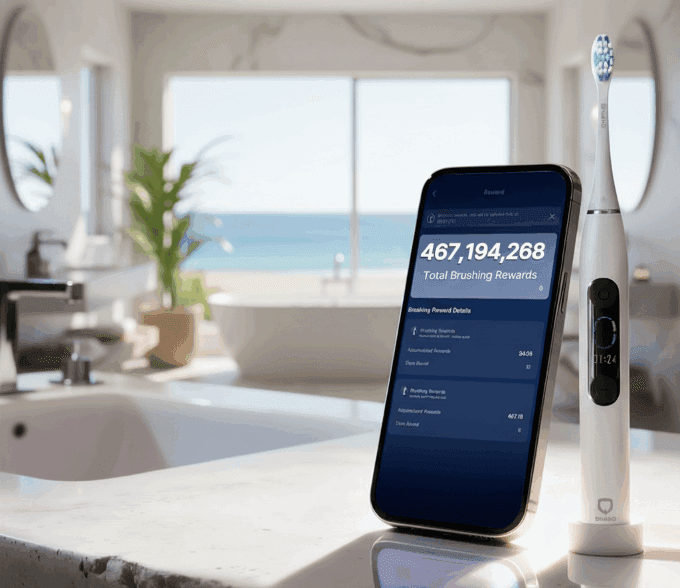
Brushing your teeth twice a day is only effective if you do it correctly. Many people think they’re brushing well, but studies show up to 80% of users make critical technique errors:
• Missing hard-to-reach zones like molars and gumlines
• Brushing too fast or not long enough
• Using excessive pressure, damaging enamel
• Failing to cover all surfaces evenly
These mistakes can lead to plaque buildup, gum inflammation, and tooth sensitivity, even with regular brushing.
An AI toothbrush uses advanced sensor technology and real-time data analysis to coach users while they brush. Unlike traditional or even standard electric toothbrushes, an AI-powered smart toothbrush like BrushO offers:
• Real-time feedback on brushing pressure and motion
• AI-guided zone tracking to ensure full-mouth coverage
• Personalized brushing reports via mobile app
• Scoring systems to gamify progress
• Behavioral habit tracking for long-term consistency
This transforms brushing from a mindless task into an interactive self-care ritual, similar to using a fitness tracker—but for your mouth.
AI toothbrushes improve technique through instant coaching:
| Behavior Detected | What Happens |
| Brushing too hard | App alerts you to reduce pressure |
| Skipping areas | You’re prompted to return and clean missed zones |
| Brushing too fast | On-screen reminders help you slow down |
| Brushing consistently | Earn higher scores and motivational rewards |
By providing immediate correction, smart brushes help users build better muscle memory and awareness, leading to long-term oral health improvements.
BrushO uses a unique 6-zone, 16-surface mapping system to analyze every brushing session. Here’s what sets it apart:
• Pressure sensors monitor excessive force to protect enamel
• Gyroscopic motion tracking ensures correct angles and motions
• AI algorithms adapt to your brushing habits
• App-integrated feedback and scores encourage daily improvement
• Lifetime free brush heads via the Brush & Earn system
Unlike generic electric brushes, BrushO adapts to you—not the other way around.
Brushing for two minutes is not enough if you’re:
• Missing 30% of surfaces
• Neglecting your gumline where plaque accumulates
• Applying too much pressure and damaging enamel
With BrushO’s AI-powered analysis, users brush more evenly, gently, and effectively, achieving cleaner teeth and healthier gums.
Consistently using an AI toothbrush can result in:
• Lower plaque scores
• Reduced gum bleeding and inflammation
• Whiter teeth and fresher breath
• Slower enamel erosion
• Improved dental check-up outcomes
Most importantly, you gain confidence—knowing your brushing routine is scientifically guided.
Despite the cutting-edge technology, AI toothbrushes are easy to use:
• Simple setup and intuitive app interface
• Suitable for all ages—including kids and seniors
• Daily motivation through scores and progress charts
• No need for manual tracking—the app does it all
And with BrushO’s gamified reward system, you’re not just improving hygiene—you’re earning free brush heads and building wellness habits.
Yes—when done right, AI toothbrushes significantly improve brushing technique by:
• Providing real-time feedback
• Coaching you to brush better, not just longer
• Turning oral care into a data-informed wellness habit
BrushO, born from Stanford-led innovation and trusted by 40+ UK dental clinics, is leading this transformation. With its FSB (Fully Smart Brushing) technology, adaptive sensors, and reward-driven system, BrushO is more than a toothbrush—it’s your personal oral care coach.

The uncontrolled hypertension is the condition that the dental practice meets in the patient who presents with the elevated pressure that the guideline does not permit for the elective treatment, and the management of this patient requires the deferral of the dental procedure and the referral to ...

The closure of the extraction space in the orthodontic treatment is the phase that demands the careful selection of the mechanics and the monitoring of the force that the appliance delivers. The sliding mechanics that rely on the continuous archwire and the power chain that connects the brackets ...

The transverse discrepancy of the maxilla is the problem that the crowding and the posterior crossbite often hide, and the maxillary expansion is the treatment that addresses the width of the arch rather than the position of the individual tooth. The clinician who diagnoses the constriction early...

The local anaesthesia is the daily procedure that the modern dentistry treats as the routine, and the complications that follow it range from the transient and the trivial to the permanent and the serious. The clinician who injects by the habit without the anatomy in the mind is the clinician who...

The hypertension is the condition that the dental practice meets in the every day, and the patient who carries the elevated pressure without the symptoms is the patient who presents the risk that the chair-side measurement reveals. The dental team occupies the position that no other profession ho...

The glass-ceramic crown has become the default restoration for the anterior and the many posterior teeth, and the material selection within the family is the decision that determines the strength, the aesthetics, and the longevity of the result. The lithium disilicate, the leucite, and the zircon...

The dental phobia is the extreme form of the dental fear that prevents the patient from attending the treatment that the oral health requires, and the management of the phobia demands the skill that extends beyond the routine behaviour guidance. The systematic desensitization, the exposure therap...

The dental fear of the child is the condition that shapes the attitude for the lifetime, and the clinician who manages the first visits with the skill builds the patient who attends the recall without the dread. The fear that the child develops follows the many sources, and the practice that reco...

The patient with controlled hypertension is the patient who requires the dental care that the oral health demands and the treatment that the blood pressure permits, and the clinician who manages the controlled case safely follows the guideline that the evidence supports. The controlled hypertensi...

The ceramic veneer is the restoration that the aesthetic dentistry depends on, and the bond that retains the veneer on the enamel is the critical link that determines whether the restoration survives the function or fractures and debonds. The clinical technique from the preparation to the cementa...

Xây dựng mạng dữ liệu sức khỏe răng miệng nhanh chóng và chi phí thấp theo cách mọi người đều có thể tham gia.
Xây dựng mạng dữ liệu sức khỏe răng miệng nhanh chóng và chi phí thấp theo cách mọi người đều có thể tham gia.


Address: RM 1427, 14/F RADIO CITY 505, HENNESSY RD CAUSEWAY BAY, HONG KONG
Code: 000000
Phone: +852-53758652
Email: customerservice@brusho.com