
Charcoal toothpaste has become a buzzword in oral care, promising whiter teeth, fresher breath, and natural stain removal. Infused with activated charcoal, these products appeal to those seeking “natural” and instant results. But does charcoal toothpaste actually work — or could it be doing more harm than good? In this article, we delve into the scientific evidence, explain how charcoal interacts with enamel and stains, discuss its pros and cons, and offer expert guidance on effective and safe alternatives. Whether you’re considering using charcoal toothpaste or want to know how it compares to smart brushing tools like BrushO, this guide has you covered.
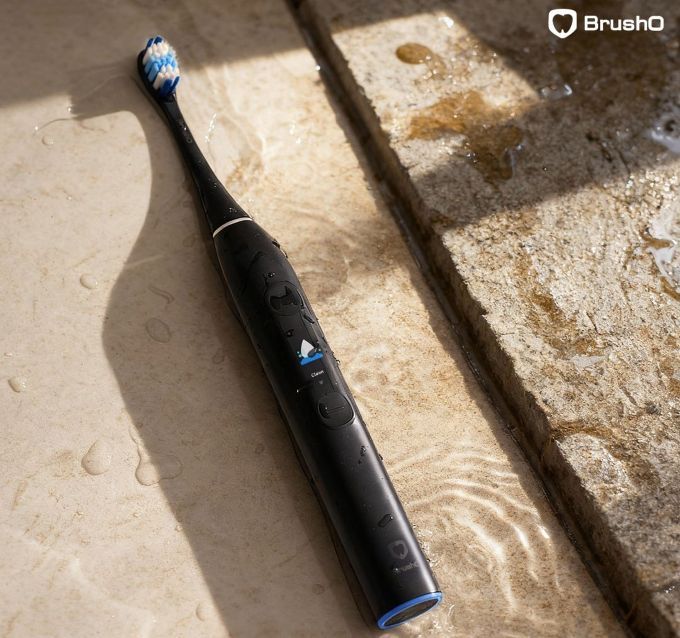
Charcoal toothpaste typically contains activated charcoal, which is a highly porous form of carbon processed at high temperatures. The idea is that its tiny pores adsorb (bind to) surface stains and pigments on teeth, potentially making them look whiter. Activated charcoal has been used in medicine for toxin adsorption, but its role in oral hygiene is controversial and less scientifically established.
Activated charcoal can help remove surface stains caused by:
• Coffee
• Tea
• Red wine
• Smoking
Charcoal particles may adsorb pigments on the outer layer of enamel, offering a mild whitening effect. Users often report immediate visual improvements, especially on surface stains.
No. Charcoal toothpaste doesn’t change the intrinsic color of your teeth — the shade determined by dentin beneath the enamel. It mainly affects extrinsic stains on the surface.
Not necessarily. Any whitening effect from charcoal toothpaste is usually mild and temporary. For deeper whitening, products like professional-grade whitening strips, dentist-administered treatments, or smart brushing routines that reduce plaque buildup over time are more effective.
Many charcoal formulas are more abrasive than regular toothpaste. This means they can:
• Wear down enamel
• Increase tooth sensitivity
• Expose dentin (yellowish layer), paradoxically making teeth appear darker
Not all charcoal toothpastes are equally abrasive, but some score high on the Relative Dentin Abrasivity (RDA) scale.
Some charcoal toothpastes lack fluoride, a key ingredient that helps:
• Strengthen enamel
• Prevent cavities
• Promote remineralization
Without fluoride, long-term use may reduce decay protection.
Charcoal powder can be messy and may temporarily stain:
• Toothbrush bristles
• Bathroom fixtures
• Dental restorations (crowns, veneers)
Many dentists are cautious about recommending charcoal toothpaste due to concerns about abrasivity and enamel safety. The American Dental Association (ADA) has not universally endorsed charcoal products because:
• Scientific evidence is limited
• Whiter appearance may come at the cost of enamel wear
• Claims are often based on anecdote rather than controlled studies
If your goal is whitening with oral health in mind, consider:
Using a toothpaste with fluoride helps prevent decay while gently cleaning stains. Combined with proper technique, this is more effective than abrasive products.
Smart toothbrushes like BrushO elevate standard brushing with:
• Real‑time feedback on pressure, duration, and coverage
• FSB (Fully Smart Brushing) technology to reduce plaque and tartar
• Custom modes to support gum care, sensitive teeth, and deeper cleaning
These features help remove plaque buildup, a major contributor to staining and discoloration.
Dentist‑supervised whitening is scientifically proven to be safer and more effective for intrinsic and deep stains.
If you still want to try charcoal toothpaste:
✔️ Use only occasionally — not as a daily substitute
✔️ Choose products with fluoride where possible
✔️ Be gentle — avoid scrubbing hard
✔️ Monitor sensitivity — stop if teeth become sore
✔️ Pair with a fluoride mouthwash or smart brushing routine
Charcoal toothpaste may have a role in removing surface stains, but its effectiveness is limited, and it can pose risks due to abrasivity and lack of fluoride. For long‑term oral health and effective stain control, prioritize proper brushing technique, fluoride toothpaste, and tools like the BrushO smart toothbrush. These combine gentle cleaning, real‑time guidance, and habit tracking to help you achieve a brighter smile without compromising enamel or gum health.
Dec 30
Dec 30

The uncontrolled hypertension is the condition that the dental practice meets in the patient who presents with the elevated pressure that the guideline does not permit for the elective treatment, and the management of this patient requires the deferral of the dental procedure and the referral to ...

The closure of the extraction space in the orthodontic treatment is the phase that demands the careful selection of the mechanics and the monitoring of the force that the appliance delivers. The sliding mechanics that rely on the continuous archwire and the power chain that connects the brackets ...

The transverse discrepancy of the maxilla is the problem that the crowding and the posterior crossbite often hide, and the maxillary expansion is the treatment that addresses the width of the arch rather than the position of the individual tooth. The clinician who diagnoses the constriction early...

The local anaesthesia is the daily procedure that the modern dentistry treats as the routine, and the complications that follow it range from the transient and the trivial to the permanent and the serious. The clinician who injects by the habit without the anatomy in the mind is the clinician who...

The hypertension is the condition that the dental practice meets in the every day, and the patient who carries the elevated pressure without the symptoms is the patient who presents the risk that the chair-side measurement reveals. The dental team occupies the position that no other profession ho...

The glass-ceramic crown has become the default restoration for the anterior and the many posterior teeth, and the material selection within the family is the decision that determines the strength, the aesthetics, and the longevity of the result. The lithium disilicate, the leucite, and the zircon...

The dental phobia is the extreme form of the dental fear that prevents the patient from attending the treatment that the oral health requires, and the management of the phobia demands the skill that extends beyond the routine behaviour guidance. The systematic desensitization, the exposure therap...

The dental fear of the child is the condition that shapes the attitude for the lifetime, and the clinician who manages the first visits with the skill builds the patient who attends the recall without the dread. The fear that the child develops follows the many sources, and the practice that reco...

The patient with controlled hypertension is the patient who requires the dental care that the oral health demands and the treatment that the blood pressure permits, and the clinician who manages the controlled case safely follows the guideline that the evidence supports. The controlled hypertensi...

The ceramic veneer is the restoration that the aesthetic dentistry depends on, and the bond that retains the veneer on the enamel is the critical link that determines whether the restoration survives the function or fractures and debonds. The clinical technique from the preparation to the cementa...

Xây dựng mạng dữ liệu sức khỏe răng miệng nhanh chóng và chi phí thấp theo cách mọi người đều có thể tham gia.
Xây dựng mạng dữ liệu sức khỏe răng miệng nhanh chóng và chi phí thấp theo cách mọi người đều có thể tham gia.


Address: RM 1427, 14/F RADIO CITY 505, HENNESSY RD CAUSEWAY BAY, HONG KONG
Code: 000000
Phone: +852-53758652
Email: customerservice@brusho.com