
Air pollution is often linked to respiratory issues, but did you know it also impacts your oral health? From dry mouth and gum inflammation to increased risk of decay, the air you breathe plays a major role in the health of your mouth. This article explores how air quality affects oral hygiene and how using smart tools like BrushO can help you stay ahead of hidden threats.
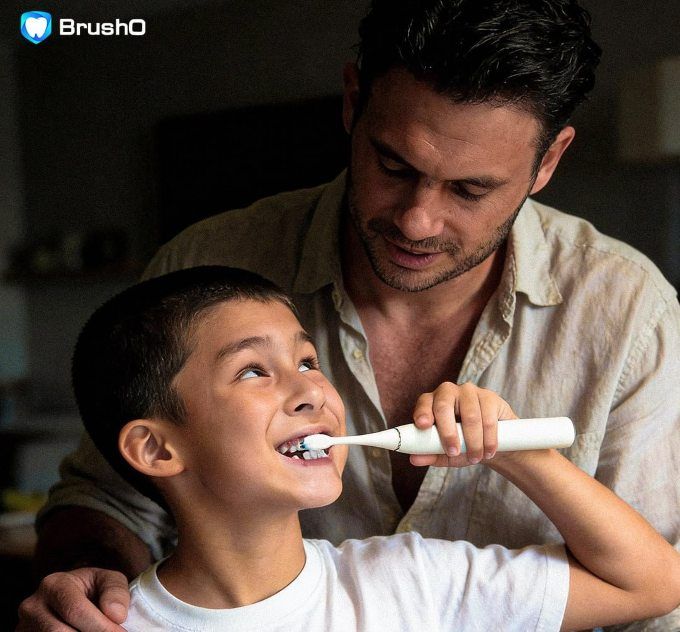
Air quality isn’t something most people consider when brushing their teeth — but it should be. Inhaling polluted, dry, or allergen-filled air can:
• Dry out your mouth, reducing the saliva that protects teeth.
• Inflame your gums, leading to sensitivity and bleeding.
• Increase the risk of cavities and infection, especially in polluted environments.
These effects are more common in urban areas, homes with poor ventilation, and during allergy or wildfire seasons.
Indoor heating, air conditioning, and outdoor smog all lower humidity levels. When your mouth gets dry:
• Saliva production drops.
• Bacteria flourish.
• Your risk of bad breath, plaque buildup, and tooth decay increases.
Particulate matter and toxic gases from traffic or industrial pollution can enter your body through your mouth. Over time, this contributes to:
• Gum inflammation
• Increased sensitivity
• Higher risk of periodontal disease
Polluted or allergen-filled air can trigger mouth breathing, especially at night. Mouth breathing:
• Dries out the oral cavity
• Worsens gum recession
• Increases enamel wear due to reduced saliva
While you can’t control the air around you, you can control how you care for your mouth. BrushO provides a defense layer with:
Polluted air may cause gum irritation, making overbrushing more likely. BrushO adjusts brushing pressure to avoid further damage.
If you’re breathing through your mouth or experiencing dry mouth symptoms, BrushO reminds you to focus on hydration and gentle brushing modes like Gum Care or Ultra-Gentle.
Notice recurring dryness or inflammation? BrushO’s heatmaps and scores help identify brushing-related symptoms that may be linked to air quality exposure.
Customize your brushing session during allergy seasons or when the air feels especially dry. BrushO’s Gum Care mode is perfect for sensitive times.
• Use a humidifier to keep indoor air moist.
• Drink water regularly to stimulate saliva flow.
• Rinse with fluoride mouthwash if your area has high air pollution.
• Wear a mask in polluted environments to limit direct exposure.
Air quality has a subtle but powerful impact on your oral health. Whether you live in a city, struggle with allergies, or spend time in dry environments, adjusting your oral care routine is key. With smart tech like BrushO, you can respond to environmental stressors before they harm your teeth and gums.
BrushO is an AI-powered smart toothbrush that uses real-time feedback, pressure sensors, and brushing heatmaps to elevate daily oral care. With custom modes, smart reports, and habit-building tools, BrushO helps users protect their oral health — no matter what the air is like outside.

A narrow alveolar ridge is one of the commonest obstacles to implant placement, and ridge splitting offers an elegant alternative to lengthy guided bone regeneration. The technique divides the deficient ridge into two cortical plates, expands them apart, and places an implant in the gap, so that ...

The inferior alveolar nerve block is the workhorse of mandibular anesthesia, yet it is the injection that fails most often in everyday practice. When the tooth still responds to cold and the patient still feels pain, the clinician faces a familiar dilemma: repeat the block, switch to another tech...

Finding the canal is the first challenge of every endodontic case, and it becomes a serious problem when a pulp chamber has calcified or when a crown obscures the anatomy. Guided endodontics brings the precision of computer-aided planning to this task: a cone-beam computed tomography scan and an ...

The occlusal surfaces of the permanent molars carry deeply invaginated pits and fissures that trap plaque and resist brushing, and it is here that most caries in children begins. Pit and fissure sealants fill these defects with a resin barrier, isolating the enamel from food and bacteria. This ar...

Periodontitis is a biofilm disease, and the primary treatment remains mechanical debridement of the root surfaces and the maintenance of a clean environment. Antibiotics are not a treatment in their own right, but in selected forms of the disease they act as a valuable adjunct, suppressing the su...

Maxillary transverse deficiency is a common problem in adolescent and adult patients, and while rapid palatal expansion works well in the growing child, the mature midpalatal and circummaxillary sutures resist conventional expansion. Surgically assisted rapid palatal expansion, commonly abbreviat...

The position of the screw access channel is the hidden geometry that decides whether a screw-retained implant crown looks natural or fails esthetically. In the anterior zone the access hole must be brought to the lingual or palatal surface; in the posterior zone it can rest on the occlusal table....

The grafting of a deficient ridge was long seen as a mandatory step before implant placement, and classic teaching recommends a bone graft whenever the residual volume is small. In the same period, a simpler philosophy has matured: in a large share of cases, a favorable site can host an implant w...

The premature loss of a primary tooth is a common event in the growing child, and the premature loss of the primary first molar before its successor is ready is a particular problem. The loss of the primary first molar often passes without obvious symptoms, but the consequences for the permanent ...

The gingival biotype describes the thickness and the contour of the gingiva around a tooth or an implant, and it strongly influences the prognosis of every restorative and periodontal procedure. A thin, scalloped biotype is fragile: recession follows minimal trauma, the soft tissue shows through ...

Xây dựng mạng dữ liệu sức khỏe răng miệng nhanh chóng và chi phí thấp theo cách mọi người đều có thể tham gia.
Xây dựng mạng dữ liệu sức khỏe răng miệng nhanh chóng và chi phí thấp theo cách mọi người đều có thể tham gia.


Address: RM 1427, 14/F RADIO CITY 505, HENNESSY RD CAUSEWAY BAY, HONG KONG
Code: 000000
Phone: +852-53758652
Email: customerservice@brusho.com