
Oral health outcomes are shaped not only by brushing frequency but by behavioral psychology — specifically brushing confidence, or an individual’s belief in their ability to clean effectively. Research in preventive dentistry shows that low confidence often correlates with rushed routines, inconsistent coverage, and poor plaque control, while excessive confidence can lead to aggressive brushing and enamel damage. This psychological dimension of oral hygiene directly impacts long-term dental stability, gingival health, and habit persistence. Understanding how brushing confidence affects technique provides a deeper pathway toward improving oral outcomes through feedback-guided, data-informed brushing systems.
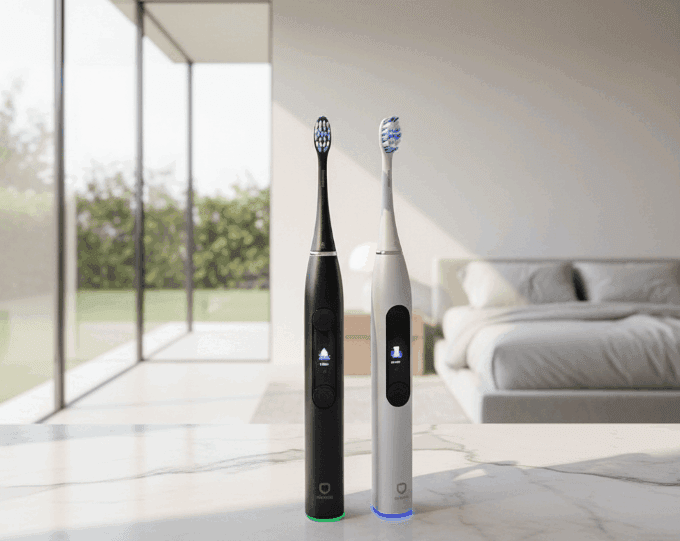
Brushing confidence refers to perceived self-efficacy in performing effective oral hygiene behaviors. It influences:
• Brushing duration
• Surface coverage
• Pressure control
• Consistency of routine
• Willingness to adjust technique
In health psychology, self-efficacy is a proven predictor of preventive behavior adherence. Within dentistry, it shapes how thoroughly individuals engage with daily plaque removal tasks. Confidence itself is not inherently beneficial — its impact depends on accuracy.
Individuals uncertain about their technique often exhibit compensatory patterns:
• Shortened brushing sessions
• Avoidance of hard-to-reach zones
• Inconsistent angles along gumlines
• Reduced pressure stability
These behaviors can produce measurable outcomes:
• Plaque retention
• Early gingival inflammation
• Elevated cavity risk
• Breath quality decline
Low confidence frequently leads to passive brushing, where mechanical contact occurs but effective biofilm disruption does not.
At the opposite extreme, overconfidence may produce:
• Excessive brushing force
• Aggressive horizontal strokes
• Over-brushing frequency
• Enamel abrasion
• Gum recession risk
Dental literature identifies mechanical trauma from brushing as a contributing factor to:
• Cervical enamel wear
• Gingival margin damage
• Tooth sensitivity
This highlights a critical paradox — confidence without feedback can harm oral structures as easily as it protects them.
Confidence evolves through feedback cycles:
1. Behavior
2. Outcome perception
3. Confidence adjustment
4. Habit reinforcement
Traditional brushing lacks objective feedback, meaning confidence is formed through subjective assumptions rather than measurable performance. This disconnect explains why many individuals maintain ineffective routines for years without awareness of technique gaps.
AI-guided brushing technologies introduce performance transparency, allowing confidence to align with measurable outcomes.
Systems such as BrushO enhance calibrated confidence by:
• Tracking 6-zone coverage distribution
• Monitoring pressure application
• Evaluating brushing duration balance
• Providing session performance scoring
• Visualizing behavioral trends
This converts brushing from assumption-based behavior into data-supported decision making.
Accurate feedback fosters:
• Correct technique assurance
• Reduced overcompensation
• Habit persistence
• Improved long-term oral outcomes
Confidence becomes informed rather than intuitive.
When brushing confidence matches actual performance, measurable improvements occur:
• Reduced plaque biofilm accumulation
• Lower gingival bleeding frequency
• Improved enamel preservation
• Enhanced microbiome balance
• Greater routine consistency
Psychologically aligned hygiene behaviors demonstrate stronger long-term adherence than externally forced routines. Confidence calibration therefore functions as a behavioral health tool.
• Use coverage visualization tools
• Monitor pressure feedback signals
• Review brushing analytics trends
• Maintain routine timing consistency
• Seek professional technique guidance
• Avoid equating speed with effectiveness
Confidence should emerge from observation, not assumption.
Brushing confidence is an underrecognized determinant of oral health outcomes. Both underconfidence and overconfidence distort technique, leading either to insufficient plaque control or mechanical tissue damage. The most effective oral care behaviors arise when confidence reflects measurable brushing performance. Integrating real-time feedback and behavioral tracking into daily hygiene routines allows individuals to calibrate technique awareness, strengthen habit stability, and protect long-term dental integrity. Oral health is therefore shaped not only by tools and routines, but by the psychological accuracy with which individuals engage them.
Feb 11
Feb 6

The uncontrolled hypertension is the condition that the dental practice meets in the patient who presents with the elevated pressure that the guideline does not permit for the elective treatment, and the management of this patient requires the deferral of the dental procedure and the referral to ...

The closure of the extraction space in the orthodontic treatment is the phase that demands the careful selection of the mechanics and the monitoring of the force that the appliance delivers. The sliding mechanics that rely on the continuous archwire and the power chain that connects the brackets ...

The transverse discrepancy of the maxilla is the problem that the crowding and the posterior crossbite often hide, and the maxillary expansion is the treatment that addresses the width of the arch rather than the position of the individual tooth. The clinician who diagnoses the constriction early...

The local anaesthesia is the daily procedure that the modern dentistry treats as the routine, and the complications that follow it range from the transient and the trivial to the permanent and the serious. The clinician who injects by the habit without the anatomy in the mind is the clinician who...

The hypertension is the condition that the dental practice meets in the every day, and the patient who carries the elevated pressure without the symptoms is the patient who presents the risk that the chair-side measurement reveals. The dental team occupies the position that no other profession ho...

The glass-ceramic crown has become the default restoration for the anterior and the many posterior teeth, and the material selection within the family is the decision that determines the strength, the aesthetics, and the longevity of the result. The lithium disilicate, the leucite, and the zircon...

The dental phobia is the extreme form of the dental fear that prevents the patient from attending the treatment that the oral health requires, and the management of the phobia demands the skill that extends beyond the routine behaviour guidance. The systematic desensitization, the exposure therap...

The dental fear of the child is the condition that shapes the attitude for the lifetime, and the clinician who manages the first visits with the skill builds the patient who attends the recall without the dread. The fear that the child develops follows the many sources, and the practice that reco...

The patient with controlled hypertension is the patient who requires the dental care that the oral health demands and the treatment that the blood pressure permits, and the clinician who manages the controlled case safely follows the guideline that the evidence supports. The controlled hypertensi...

The ceramic veneer is the restoration that the aesthetic dentistry depends on, and the bond that retains the veneer on the enamel is the critical link that determines whether the restoration survives the function or fractures and debonds. The clinical technique from the preparation to the cementa...

Xây dựng mạng dữ liệu sức khỏe răng miệng nhanh chóng và chi phí thấp theo cách mọi người đều có thể tham gia.
Xây dựng mạng dữ liệu sức khỏe răng miệng nhanh chóng và chi phí thấp theo cách mọi người đều có thể tham gia.


Address: RM 1427, 14/F RADIO CITY 505, HENNESSY RD CAUSEWAY BAY, HONG KONG
Code: 000000
Phone: +852-53758652
Email: customerservice@brusho.com