How Smart Brushes Reduce Dental Visit Costs
Jan 28

Jan 28
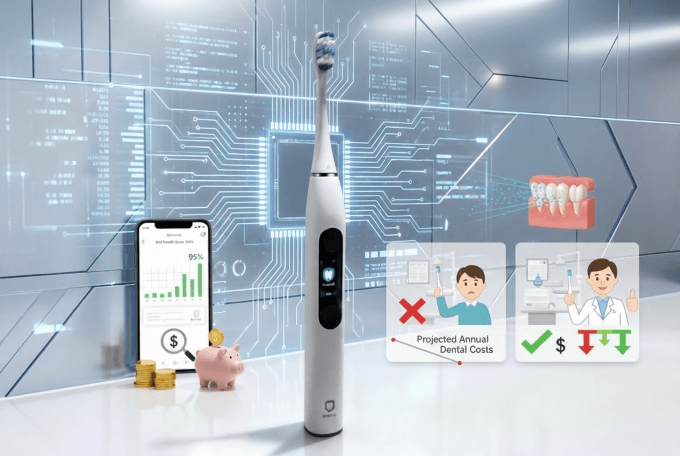
Smart toothbrushes, such as BrushO’s smart toothbrush, help reduce dental visit costs by preventing common oral problems through superior plaque removal, real-time feedback, and personalized tracking. By promoting better brushing habits and catching early signs of dental issues, smart toothbrush technology supports healthier teeth and gums, lowering the need for costly dental treatments over time.
 

Rising Dental Visit Costs and Preventive Care

Dental care costs continue to rise globally, creating financial barriers for many families seeking routine checkups, cleanings, and treatments. A significant portion of these costs stems from preventable issues such as cavities, gingivitis, and periodontal disease—conditions largely caused by inadequate daily oral hygiene. This is where smart toothbrushes play a valuable role: by enhancing daily brushing effectiveness with built-in technology and personalized insights, they can help reduce the likelihood of expensive dental procedures. Unlike manual brushes, smart toothbrushes integrate sensors, guided brushing, and connected apps to promote better technique, consistent habits, and early detection of potential issues. Over time, these benefits contribute directly to fewer dental problems—and lower overall dental expenses.
 

How Poor Brushing Contributes to Dental Costs

Before exploring how smart toothbrushes help, it’s critical to understand why inadequate brushing increases dental costs:
  • Plaque Buildup: Failure to thoroughly remove plaque leads to cavities and gum disease.
  • Gum Inflammation: Persistent bacterial buildup causes gingivitis and eventually periodontal disease.
  • Missed Early Signs: Without proper brushing feedback, early signs of dental issues go unnoticed until they require professional treatment.
Traditional toothbrushes rely entirely on user technique, making it easy to overlook hard-to-reach surfaces, apply incorrect pressure, or brush for insufficient time. These gaps in care allow bacterial buildup and decay to progress—often silently—until they escalate into costly dental procedures like fillings, root canals, or deep cleanings.

1. Better Plaque Removal Reduces Dental Problems

One of the most important ways smart brushes reduce dental visit costs is by enhancing plaque removal. Devices like BrushO’s smart toothbrush use sonic or oscillating-rotating technology combined with coverage sensors to break up plaque more effectively than manual brushing alone. By reaching interdental areas and gumline regions, these toothbrushes help prevent the bacterial buildup that leads to decay and gum disease—common drivers of dental treatment costs.More effective plaque control not only helps maintain a clean oral environment but also preserves enamel and gum integrity, reducing the risk of cavities and periodontal issues.

2. Real-Time Feedback Prevents Costly Mistakes

Unlike manual brushes, smart toothbrushes provide real-time feedback during brushing. By alerting users when they are applying excessive pressure or missing zones, they guide users toward healthier techniques and more thorough cleaning.
For example:
  • Pressure Alerts: Help users avoid brushing too hard, which can cause enamel wear and gum recession.
  • Zone Coverage Feedback: Ensures even attention across all quadrants of the mouth.
This immediate coaching reduces common brushing errors that contribute to oral disease, allowing users to correct habits before they lead to dental complications requiring professional intervention.

3. Personalized Tracking Helps Catch Early Issues

Smart toothbrushes connected to apps track brushing behavior over weeks, months, and years. These long-term insights allow users to spot patterns such as:
  • Frequently missed areas
  • Inconsistent brushing duration
  • Declining habit consistency
By identifying trends early, users can adjust brushing techniques or consult a dentist before issues become severe and costly. This preventive data is a powerful tool for maintaining oral health—and a proactive way to avoid expensive treatments.

4. Encouraging Consistency Through Motivation and Rewards

Many smart toothbrush systems incorporate motivational tools such as progress tracking, brushing “streaks,” and reward mechanisms. BrushO’s Brush & Earn reward system, for instance, incentivizes consistent brushing behaviors with points redeemable for brush heads or discounts. These positive reinforcements encourage users to maintain healthy habits, reducing the likelihood of oral health decline—one of the primary drivers of dental expenses. Consistently effective brushing is one of the most cost-efficient ways to prevent decay, inflammation, and gum disease.

5. Educating Users Leads to Smarter Dental Habits

Smart toothbrushes paired with dental care apps educate users on proper technique, pressure control, and full-mouth coverage. This ongoing education nurtures long-term brushing habits that keep plaque levels low and decrease the need for professional cleanings beyond regular checkups. Many users report improved technique and confidence in their daily oral care after integrating smart toothbrush feedback into their routines. As brushing quality improves, so does overall oral health, reducing the frequency and severity of dental issues that lead to expensive treatments.

6. Integration With Professional Dental Monitoring

Some advanced smart toothbrush apps allow users to share brushing data with their dentist, aiding in remote monitoring and early intervention. By documenting brushing habits and tracking issues over time, dental professionals can customize preventive advice, potentially reducing the need for more invasive procedures. This collaborative approach bridges daily oral care with professional guidance, helping patients avoid costly dental visits beyond routine checkups.
 

Smart Oral Care for Long-Term Savings

Although smart toothbrushes require an initial investment, their proven ability to enhance daily brushing effectiveness pays long-term dividends by preventing oral health problems that contribute to rising dental visit costs. By improving plaque removal, offering real-time feedback, tracking brushing habits, encouraging consistency, and educating users, smart toothbrushes empower better oral hygiene that significantly reduces the risk of cavities, gum disease, and costly dental interventions. In the journey to healthier teeth and gums, smart toothbrush technology—like BrushO’s smart toothbrush—offers a cost-effective way to safeguard your smile and your wallet.

Bài viết mới

Sonic vs Oscillating Toothbrush: A Dentist's Comparison Guide

Sonic vs Oscillating Toothbrush: A Dentist's Comparison Guide

When choosing an electric toothbrush, the most debated distinction is between sonic (vibrating) and oscillating-rotating technology. Each camp has loyal proponents, clinical studies supporting its efficacy, and specific design advantages. Understanding the mechanical differences — and what the pe...

10 Common Tooth Brushing Mistakes You're Probably Making

10 Common Tooth Brushing Mistakes You're Probably Making

Most people believe they know how to brush correctly. Yet a 2019 survey in the *Journal of Dental Research* found that only 12% of adults achieve adequate plaque removal during routine brushing, despite 89% reporting that they brush twice daily. The gap between perceived and actual brushing quali...

How to Get the Most Out of Your BrushO Smart Toothbrush: Complete Setup Guide

How to Get the Most Out of Your BrushO Smart Toothbrush: Complete Setup Guide

Unboxing a smart toothbrush is only the first step. The real value of BrushO's AI-powered system lies in proper setup — configuring the pressure threshold, establishing baseline coverage data, and learning to interpret the real-time audio feedback. This guide walks through every stage of the Brus...

BrushO Smart Toothbrush Review: Is AI-Powered Brushing Worth It in 2026?

BrushO Smart Toothbrush Review: Is AI-Powered Brushing Worth It in 2026?

The smart toothbrush market has become crowded with devices offering varying intelligence — from Bluetooth-connected timers to AI-driven sensor arrays. BrushO, which gained traction since its 2025 launch, promises on-device neural processing that eliminates app dependency while delivering dentist...

Best Electric Toothbrush 2026: Smart vs Traditional – Which One Actually Works?

Best Electric Toothbrush 2026: Smart vs Traditional – Which One Actually Works?

The electric toothbrush market has split into two distinct camps: traditional electric toothbrushes that deliver consistent mechanical cleaning, and AI-powered smart brushes that promise real-time coaching and personalized feedback. With global smart toothbrush sales projected to exceed $3.2 bill...

Electric Toothbrush True Cost Comparison: Brush Heads, Battery Life, and Hidden Fees

Electric Toothbrush True Cost Comparison: Brush Heads, Battery Life, and Hidden Fees

The price tag on an electric toothbrush is misleading. A $70 brush with $36 annual replacement heads costs $250 over five years. A $150 brush with free lifetime heads costs $150 over the same period. The sticker price is not the cost — the replacement heads are. Here is a transparent total cost o...

Sonic vs Oscillating vs AI: Your Guide to Electric Toothbrush Types

Sonic vs Oscillating vs AI: Your Guide to Electric Toothbrush Types

Walk into the electric toothbrush aisle and you face a choice that most shoppers resolve by picking the color they like best. But underneath the plastic housings and marketing claims, electric toothbrushes fall into three fundamentally different technological categories — sonic, oscillating-rotat...

How to Brush Your Teeth Properly: The Technique Most People Get Wrong

How to Brush Your Teeth Properly: The Technique Most People Get Wrong

Most people brush their teeth twice a day and do it wrong. Not out of negligence, but because nobody ever taught them the right way — and the wrong way feels perfectly fine until the damage accumulates over years. A 2018 study in the British Dental Journal found that only 1 in 10 adults consisten...

How Do AI Toothbrushes Work? Sensors, Algorithms, and Real-Time Feedback Explained

How Do AI Toothbrushes Work? Sensors, Algorithms, and Real-Time Feedback Explained

An AI toothbrush does not simply vibrate for two minutes and stop. It runs a continuous perception pipeline — sensing position, pressure, and motion up to 200 times per second, classifying that data through onboard neural networks, and delivering feedback in under 100 milliseconds — all on a micr...

BrushO vs Oral-B iO: Which Smart Toothbrush Fits Your Routine?

BrushO vs Oral-B iO: Which Smart Toothbrush Fits Your Routine?

Two smart toothbrushes, two radically different engineering philosophies. Oral-B's iO series represents the culmination of decades of oscillating-rotating refinement — a small round head that spins, pulsates, and micro-vibrates, paired with app-based AI zone tracking. BrushO takes the opposite ap...
