How Smart Toothbrushes Clean Every Surface of Your Teeth
Jan 21

Jan 21
When brushing your teeth, ensuring every surface is thoroughly cleaned is crucial for maintaining optimal oral health. While traditional toothbrushes might leave certain areas missed, smart toothbrushes, equipped with sensors and AI, can track coverage and guide you to clean every surface effectively. In this article, we’ll explore how smart toothbrushes, like BrushO, clean each surface of your teeth, from front to back and every hard-to-reach corner. Discover how this advanced technology ensures you never miss a spot while brushing.


How Smart Toothbrushes Clean Every Surface of Your Teeth

1. The Challenge of Cleaning Every Surface of Your Teeth

To achieve optimal oral health, it’s crucial to clean all surfaces of your teeth—front, back, chewing surfaces, and even the areas along the gumline. However, with traditional manual or even basic electric toothbrushes, it's easy to miss certain areas, especially those at the back of the mouth or in between teeth.
Smart toothbrushes are designed to address this challenge. They are equipped with sensors and AI technology that track brushing coverage and ensure that every part of the mouth is cleaned thoroughly.

2. How Sensors Track Brushing Coverage

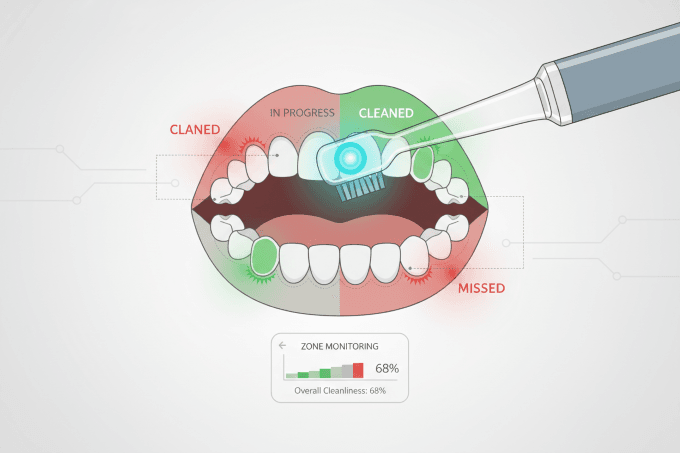
Smart toothbrushes use advanced motion sensors and accelerometers to track the movements of the toothbrush. These sensors map out the different zones of your mouth—often dividing the mouth into 6 zones, depending on the model. As you brush, the smart toothbrush monitors whether you’re covering all these areas effectively, ensuring that no part of your teeth is neglected.
The brushing process is monitored in real-time, and if you’re missing an area or brushing too quickly, the smart toothbrush will provide feedback through vibrations or visual indicators. This ensures that every surface, from the front of your teeth to the back molars, receives proper attention.

3. Brushing Technique: Covering All Surfaces Efficiently

Proper brushing technique is key to ensuring all tooth surfaces are cleaned effectively. Smart toothbrushes guide users in brushing at the correct angle and motion to ensure full-mouth coverage. Whether you’re using a circular or back-and-forth motion, the smart toothbrush’s AI system adapts to your style and gives personalized recommendations for better coverage.
For example, a smart toothbrush may suggest altering the angle for cleaning the gumline or adjusting pressure on the back molars. This targeted feedback improves the overall brushing technique and guarantees that no surface is left out.

4. The Importance of Brushing the Gumline and Hard-to-Reach Areas

The gumline and areas behind your teeth are often overlooked, especially when brushing manually. These areas are prone to plaque buildup and can contribute to gum disease if not cleaned properly. Smart toothbrushes are equipped with pressure sensors and coverage tracking features that alert you when you’re not brushing the gumline or other hard-to-reach areas thoroughly enough.
By ensuring proper cleaning of these often-neglected spots, smart toothbrushes help maintain healthier gums and reduce the risk of plaque and tartar buildup.

5. AI-Powered Feedback for Complete Coverage

AI technology in smart toothbrushes takes the guessing out of brushing. With AI-powered feedback, these devices track your brushing behavior over time, analyzing which areas of your mouth are getting the most attention and which areas are being missed.
By providing real-time guidance, smart toothbrushes help you improve your technique, making sure you cover all surfaces. These devices also keep track of your progress, offering insights and reminders that encourage better brushing habits.

6. Personalized Brushing Modes for Comprehensive Cleaning

Smart toothbrushes often come with different brushing modes tailored to specific needs, such as a "deep clean" mode, a "gum care" mode, or a "white+" mode. These modes optimize brushing for specific areas of your teeth and allow you to clean every surface more efficiently. For example, the deep clean mode may focus on areas that need extra attention, while the gum care mode targets the gumline.
These customizable modes, paired with AI-powered feedback, ensure that every surface of your teeth gets the attention it needs for optimal cleaning.

7. Progress Tracking and Continuous Improvement

The data collected by your smart toothbrush is stored and analyzed in the corresponding app, allowing you to track your progress over time. Weekly or monthly reports provide an overview of your brushing habits, highlighting areas that need improvement. If you’re consistently missing a certain surface or not brushing for the recommended duration, the app will remind you and offer tips for improvement.
By offering actionable feedback, smart toothbrushes help users develop better brushing habits and ensure that every surface of the teeth is cleaned effectively.

8. The Long-Term Benefits of Full Surface Cleaning

Cleaning all surfaces of your teeth is key to maintaining long-term oral health. Smart toothbrushes not only ensure that every surface is cleaned during each brushing session, but they also help you establish better brushing habits over time. Consistent use of a smart toothbrush can lead to healthier gums, reduced plaque buildup, and fewer cavities.
By preventing missed areas and ensuring proper coverage, smart toothbrushes promote long-term oral health and help you avoid common dental issues like gum disease and tooth decay.
 

Final Thoughts: Smart Toothbrushes for Thorough, Effective Cleaning

Smart toothbrushes take the guesswork out of brushing by providing real-time feedback and personalized recommendations. With advanced sensors and AI technology, these devices ensure that every surface of your teeth is cleaned thoroughly, from the front to the back and everywhere in between.
By using a smart toothbrush, you can ensure that your brushing habits are more effective, leading to healthier teeth, gums, and a brighter smile in the long run.

Bài viết mới

The cementoenamel junction is easy to stress

The cementoenamel junction is easy to stress

The cementoenamel junction is the narrow meeting line between crown and root, and it can become stressed when gum recession, abrasion, and acid leave that area more exposed than usual. Small daily habits often irritate this zone long before people understand why it feels sensitive.

Sweet lozenges can keep cavity risk active

Sweet lozenges can keep cavity risk active

Sugary cough drops and sweet lozenges can keep teeth bathed in sugar for long stretches, especially when people use them repeatedly, let them dissolve slowly, or keep them by the bed overnight. The cavity concern is not just the ingredient list but the prolonged oral exposure between brushings.

Pressure maps show when one side gets ignored

Pressure maps show when one side gets ignored

Many people brush with a hidden left-right bias created by hand dominance, mirror angle, and routine sequence. Pressure and coverage maps make that asymmetry visible so one side does not keep getting less time or a different amount of force.

Premolar cusps share work before molars do

Premolar cusps share work before molars do

Premolars sit between canines and molars for a reason. Their cusp shape helps transition the mouth from tearing food to grinding it, and that design changes how chewing force is shared before the heavy work reaches the molars.

Popcorn husks can inflame hidden gum edges

Popcorn husks can inflame hidden gum edges

A sharp popcorn husk can slip under one gum edge and irritate a single spot that suddenly feels sore, swollen, or tender. That focused irritation differs from generalized gum disease, and it usually responds best to calm cleanup, observation, and consistent plaque control instead of aggressive scrubbing.

Night dry mouth raises cavity pressure

Night dry mouth raises cavity pressure

A dry mouth during sleep gives plaque, acids, and food residue more time to linger on tooth surfaces, which can quietly raise cavity pressure even when a person brushes twice a day. The risk comes from reduced saliva protection overnight, not from one dramatic bedtime mistake.

Foamy toothpaste can hide light gum bleeding

Foamy toothpaste can hide light gum bleeding

Very foamy toothpaste and fast rinsing can make small amounts of gum bleeding harder to notice, especially when early irritation is mild. Slower observation during and after brushing helps people catch gum changes sooner and understand whether their routine is missing early warning signs.

Enamel rods help teeth resist daily bites

Enamel rods help teeth resist daily bites

Enamel rods are the tightly organized structural units that help tooth enamel spread routine chewing stress instead of behaving like a random brittle shell. Their arrangement adds everyday resilience, but it does not make enamel immune to wear, cracks, or erosion.

Cold medicines can dry the mouth by morning

Cold medicines can dry the mouth by morning

Common cold medicines, especially decongestants and antihistamines, can reduce saliva overnight and leave the mouth drier by morning. The main concern is not panic but routine: hydration, medicine timing, and more deliberate bedtime oral care can lower the quiet cavity and gum risk that comes with repeated dry nights.

Bedtime score alerts can catch skipped corners

Bedtime score alerts can catch skipped corners

Night brushing often happens when attention is fading. Bedtime score alerts and zone reminders can expose the small corners people miss when they are tired, helping them notice coverage gaps before those repeated misses turn into plaque hotspots.
