
You forgot to brush your teeth last night — no big deal, right? Think again. Skipping brushing for even a single day allows plaque to build, bacteria to multiply, and inflammation to begin. While the damage may not be immediately visible, the effects compound quickly. In this post, we explore what really happens in your mouth when you skip brushing for just one day and why tools like BrushO smart toothbrush can keep you on track, effortlessly.
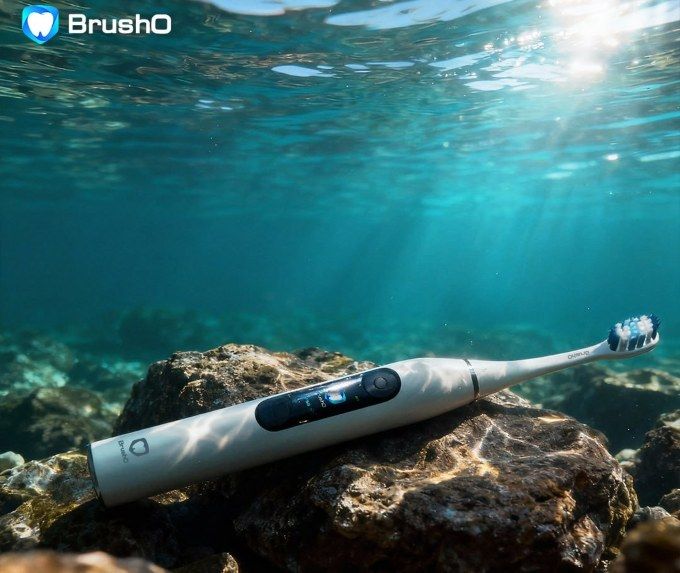
When you skip brushing, your mouth becomes a playground for harmful bacteria. Here’s what unfolds behind the scenes:
Plaque is a sticky biofilm made up of bacteria, food particles, and saliva. Within 12–24 hours of not brushing, this film starts to thicken, especially along the gumline and between teeth. If left undisturbed, it begins hardening into tartar within a day or two.
The mouth is home to hundreds of types of bacteria. When you don’t brush, bad bacteria thrive, especially those that produce acid after feeding on sugar. These acids begin to erode enamel, increasing the risk of cavities.
As bacteria feed on leftover food particles, they release volatile sulfur compounds (VSCs), leading to noticeably bad breath — even just one night without brushing can cause morning breath to worsen significantly.
The early stages of gingivitis can begin after just 24–48 hours of plaque accumulation. Gums may become red, slightly swollen, or bleed when touched. Skipping brushing gives this process a head start.
Occasionally skipping brushing may seem harmless, but it sets a dangerous precedent:
• You signal to your brain that oral care is optional.
• One missed session turns into a missed day, then into inconsistent habits.
• It creates a feedback loop of neglect, potentially leading to long-term gum disease.
Smart toothbrushes like BrushO are designed to combat this exact issue by building accountability into your routine.
BrushO isn’t just a toothbrush — it’s an AI-powered oral care coach that helps you never miss a session again:
✅ Brushing Reminders: Sync with your app to get notified when you forget to brush.
✅ Progress Tracking: View your brushing habits over time and receive performance scores.
✅ FSB Technology: Tracks coverage, pressure, and brushing time to ensure every session counts — even if you’re brushing late at night.
✅ Reward System: Earn $BRUSH tokens every time you brush, redeemable for replacement brush heads and more.
With BrushO, brushing becomes rewarding — literally.
If you accidentally skipped brushing:
1. Brush thoroughly the next morning and evening.
2. Floss Carefully to remove plaque buildup between teeth.
3. Hydrate Well to stimulate saliva production, your body’s natural cleaner.
4. Avoid Sugary or Acidic Foods that fuel bacteria.
5. Use BrushO’s App to reset your brushing goals and stay accountable.
One missed day is forgivable — but only if it doesn’t become a habit.
Skipping brushing for one day might not seem catastrophic, but the biological consequences begin immediately. Plaque builds. Bacteria grow. Inflammation starts. Protecting your mouth — and overall health — starts with consistent brushing habits. With BrushO’s smart feedback and reward system, you stay motivated to never skip again.
BrushO is an AI-powered smart toothbrush designed to optimize brushing, track habits, and make oral care effortless. With FSB (Fully Smart Brushing) technology, app feedback, and customizable modes, BrushO ensures complete coverage and consistency. Brushing earns you $BRUSH token rewards, turning good habits into tangible benefits. Skip the excuses — not your brushing.

<p class="lead">For decades, the only response to a carious lesion was to drill and fill it, removing tooth structure to place a restoration. Resin infiltration offers a different philosophy: instead of removing the lesion, it stops the lesion from progressing by sealing it from within. This mini...

<p class="lead">When a primary tooth is severely decayed or damaged, a simple filling is often not enough to restore its function and keep it healthy until it exfoliates naturally. Preformed crowns provide a durable, full-coverage restoration that protects the tooth and maintains space in the arc...

<p class="lead">After months or years of active orthodontic treatment, the teeth are aligned, the bite is corrected, and the braces come off. Yet the treatment is not finished: without retention, the teeth will drift back toward their original positions. Relapse is a natural consequence of the el...

<p class="lead">Primary herpetic gingivostomatitis is the first infection of the mouth with the herpes simplex virus, and it is one of the most painful conditions a child can experience. Affected children develop fever, widespread oral ulcers, and swollen gums, and they may refuse to eat or drink...

<p class="lead">When a tooth with an apical infection fails to heal after root canal treatment, the endodontist has a limited number of options: retreat the tooth, extract it, or perform periradicular surgery. Apicoectomy, the surgical removal of the root tip and the infected tissue around it, of...

<p class="lead">Osteoradionecrosis of the jaws is one of the most feared complications of radiotherapy for head and neck cancer. It presents as exposed, non-healing bone within the radiation field, causing pain, infection, and fistula formation, and it can severely impair the patient's quality of...

<p class="lead">Mucocele and ranula are the two most common benign lesions of the minor and sublingual salivary glands. Both arise from the obstruction or rupture of a salivary duct, producing a fluid-filled swelling that is usually painless but cosmetically and functionally troublesome. This art...

<p class="lead">Injury to the inferior alveolar or lingual nerve is among the most feared complications in dentistry, producing numbness, tingling, or altered sensation in the lip, chin, and tongue that can persist for months or years. Although rare, these injuries cause significant distress and ...

<p class="lead">The success of a composite restoration depends less on the resin itself than on the quality of the bond between the material and the tooth. Modern adhesive systems have transformed restorative dentistry by making micromechanical attachment to enamel and dentine predictable and dur...

<p class="lead">Bitewing radiographs are the single most valuable imaging tool for the detection of caries, particularly the interproximal lesions that are invisible to the naked eye and frequently missed on clinical examination alone. Yet their use must be balanced against radiation exposure and...

Xây dựng mạng dữ liệu sức khỏe răng miệng nhanh chóng và chi phí thấp theo cách mọi người đều có thể tham gia.
Xây dựng mạng dữ liệu sức khỏe răng miệng nhanh chóng và chi phí thấp theo cách mọi người đều có thể tham gia.


Address: RM 1427, 14/F RADIO CITY 505, HENNESSY RD CAUSEWAY BAY, HONG KONG
Code: 000000
Phone: +852-53758652
Email: customerservice@brusho.com