
Many people dismiss bleeding gums as a minor annoyance. But this common symptom can be your mouth’s way of warning you about deeper issues. Whether it’s a result of poor brushing habits, inflammation, or even a systemic condition, bleeding gums should never be ignored. In this post, we’ll uncover what your gums are trying to tell you — and how smart tools like BrushO can help keep your oral health on track.
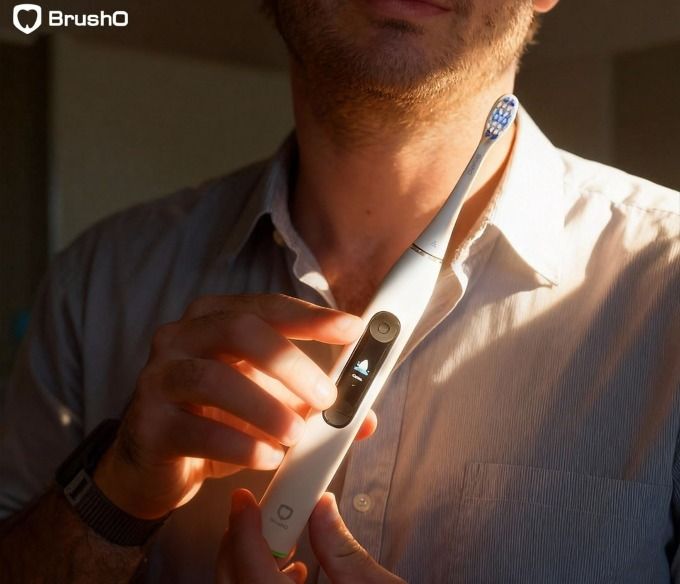
Bleeding gums are your body’s early warning system. Here are some of the most common culprits:
Using too much force or brushing with hard bristles can irritate and damage delicate gum tissue.
Bacteria build-up around the gumline causes inflammation, leading to bleeding, swelling, and even gum recession.
When plaque hardens between teeth, it inflames the gums — flossing too aggressively after a long time can trigger bleeding.
These vitamins play a role in tissue repair and blood clotting. A deficiency can weaken your gums.
Pregnancy, menstruation, or menopause can cause gum sensitivity and increased bleeding.
Blood thinners or disorders like diabetes may contribute to persistent gum bleeding.
Bleeding gums may be painless at first, but the consequences can be serious:
Untreated gingivitis can lead to bone loss and eventual tooth loss.
Infected gums can allow bacteria to enter the bloodstream, increasing the risk of heart disease and stroke.
Oral inflammation has been linked to systemic diseases like diabetes and arthritis.
In short, the mouth is connected to your entire body. Don’t take bleeding lightly.
BrushO’s smart brushing system is designed to support your gum health through technology and personalized care:
BrushO alerts you in real time when brushing too hard — one of the leading causes of bleeding gums.
With its AI-powered 6-zone, 16-surface tracking, BrushO ensures no area of the gumline is left behind — even the hard-to-reach molars.
Choose Gum Care Mode for extra gentle yet effective cleaning that soothes sensitive gums.
Track your gum care habits with daily scores and heatmaps, allowing you to notice trends — like frequent bleeding in a specific area — early.
In addition to smart brushing, adopt these daily habits:
• Floss gently, but consistently
• Rinse with an alcohol-free mouthwash
• Eat a nutrient-rich diet (especially leafy greens, citrus, and berries)
• Stay hydrated to keep tissues healthy
• Visit your dentist regularly, especially if bleeding persists
Bleeding gums are not normal, even if they happen often. They’re trying to tell you something — and BrushO is here to help you listen. By combining gentle precision, real-time feedback, and a gum-friendly brushing mode, BrushO empowers you to take better care of your mouth every day. Don’t wait for a dentist to catch the problem — take proactive control with smart technology at your side.

Squamous cell carcinoma is not a single, uniform disease, and two of its oral variants illustrate the extremes of its behavior. Verrucous carcinoma is a slow-growing, exophytic tumor that almost never metastasizes, while spindle cell carcinoma is an aggressive, sarcomatoid malignancy that can be ...

Most people expect a toothache to be the first sign of pulp disease, but some forms of pulpitis are surprisingly silent. A pulp polyp is the visible result of chronic hyperplastic pulpitis, a condition in which the dental pulp grows out of a large carious opening as a fleshy mass. Recognizing thi...

Dry mouth is not merely uncomfortable; it is a medical condition with real consequences for teeth, speech, swallowing and quality of life. When the salivary glands cannot produce enough saliva, medications called sialogogues can restore some of the missing fluid. Pilocarpine and cevimeline are th...

A blister in the mouth can be the first warning of a systemic autoimmune disease, and two disorders deserve particular attention in the dental chair: pemphigus vulgaris and mucous membrane pemphigoid. Both produce chronic oral ulceration, yet their immunologic targets, clinical behavior and long-...

When infection drains from a tooth, the body often creates a visible escape route, and the dentist must interpret these fistulous openings correctly. A parulis is the common gum boil that signals chronic periapical infection, while an oroantral fistula is a communication between the mouth and the...

Among the fibro-osseous lesions of the jaws, the ossifying fibroma holds a unique position because it is a true neoplasm, unlike the reactive cemento-osseous dysplasia discussed in an earlier article. It grows continuously, expands bone and requires surgical removal, and its cemental variant adds...

Not all keratocystic lesions of the jaw behave alike, and one of the most important distinctions in oral pathology separates the orthokeratinized odontogenic cyst from its better-known relative, the odontogenic keratocyst. Although the two lesions look similar under the microscope at first glance...

Periodontal disease is usually a slowly progressive infection, but a rare form called necrotizing ulcerative periodontitis destroys tissue with alarming speed. Unlike ordinary periodontitis, this condition produces necrotic, cratered papillae, deep pocketing and rapid bone loss, and it appears al...

Every parent has met the child who refuses to eat because of painful mouth sores, and most of these children have one of two viral illnesses: herpangina or hand, foot and mouth disease. Both are caused by enteroviruses, both produce fever and oral ulcers, and both are overwhelmingly common in you...

Cementoosseous dysplasia is one of the most common fibro-osseous lesions found on dental radiographs, yet it is also one of the most frequently misdiagnosed. The lesion replaces normal bone with cellular fibrous tissue and cementum-like material, and it appears in several forms that range from a ...

Xây dựng mạng dữ liệu sức khỏe răng miệng nhanh chóng và chi phí thấp theo cách mọi người đều có thể tham gia.
Xây dựng mạng dữ liệu sức khỏe răng miệng nhanh chóng và chi phí thấp theo cách mọi người đều có thể tham gia.


Address: RM 1427, 14/F RADIO CITY 505, HENNESSY RD CAUSEWAY BAY, HONG KONG
Code: 000000
Phone: +852-53758652
Email: customerservice@brusho.com