
Your gums do more than hold your teeth in place—they’re an early warning system for your overall health. In particular, the state of your gum tissue can provide powerful clues about your immune function. Inflammation, bleeding, and gum recession may indicate more than just poor brushing—they could signal immune stress or chronic inflammation. Discover how your gums reveal your internal defenses and how effective brushing habits, combined with tools like BrushO, can enhance both your smile and immunity.
Your gums are part of the mucosal immune system, which serves as the body’s first line of defense against pathogens. When harmful bacteria build up in the mouth, your immune system responds. But if the system is overactive or weakened, gum tissue may suffer.
Persistent gum swelling, redness, or tenderness often reflects underlying inflammation. While it may start locally (due to plaque or poor hygiene), it can signal a system-wide inflammatory state tied to:
• Chronic stress
• Autoimmune diseases
• Nutritional deficiencies
• Hormonal imbalances
If your gums bleed during brushing or flossing, your immune system may be struggling to repair damaged tissue or respond effectively to bacteria. Frequent bleeding may also hint at:
• Vitamin C or D deficiency
• Overactive immune response
• Poor blood clotting
Advanced gum disease (periodontitis) isn’t just a local issue. Research links it to serious conditions like:
• Diabetes
• Cardiovascular disease
• Rheumatoid arthritis
• Respiratory infections
These links exist because inflamed gums can allow bacteria to enter the bloodstream, triggering immune reactions throughout the body.
Maintaining healthy gums isn’t just about keeping your teeth in place—it’s a way to actively support your body’s immune defenses. BrushO’s AI technology helps identify and prevent early signs of immune imbalance in the gums.
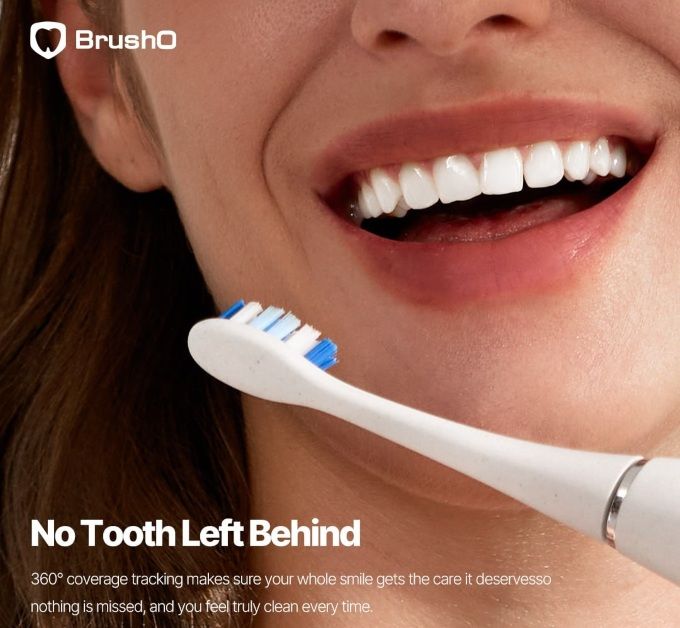
BrushO’s AI-guided brushing ensures you don’t miss high-risk zones like the gumline. Proper gumline cleaning reduces inflammation triggers and improves local immunity.
Too much pressure can damage sensitive gum tissue, while too little allows plaque to thrive. BrushO alerts you in real-time, helping preserve gum integrity and immune balance.
BrushO’s specialized gum care mode stimulates blood flow to the gums, encouraging tissue repair and a stronger immune response.
With the BrushO app, you can monitor your gum health over time. Consistent brushing is rewarded with $BRUSH tokens—reinforcing habits that keep your immune system supported.
Focus on where teeth meet gums, using gentle circular motions to reduce plaque and irritation.
This protects fragile gum tissue while still providing effective cleaning.
Floss reaches the tight gum pockets where bacteria hide and cause inflammation.
Saliva helps maintain immune defense in the mouth—drink plenty of water daily.
Bleeding, redness, or recession are early signs—don’t ignore them. Use the BrushO app to stay alert.
Your mouth is a window into your immune system. Keeping your gums healthy helps limit inflammation, reduce disease risk, and enhance overall resilience. By integrating smart brushing routines with BrushO, you’re not just caring for your smile—you’re investing in your long-term wellness.

Physiologic root resorption is the normal, programmed process by which the roots of primary teeth are progressively dissolved so that the crowns can exfoliate and make room for the permanent successors. It is a tightly regulated event that begins near the apex, advances toward the crown, and is c...

A periapical abscess is an acute collection of pus at the apex of a tooth root, the endpoint of an endodontic infection that has escaped the confines of the root canal and entered the surrounding bone. The pressure of the accumulating pus produces intense pain, and when the infection spreads thro...

The maxillary canine is the second most frequently impacted tooth after the third molar, and its proper eruption is essential for a functional occlusion, a stable arch, and an esthetic smile. When the canine fails to erupt, it may remain buried in the palate or the alveolus, and the management of...

A diastema is a gap between teeth, and the term is most commonly applied to the space between the upper central incisors, the midline diastema. It is a frequent esthetic complaint, because the anterior teeth dominate the smile, and it may be a normal feature of the developing dentition in childre...

Bruxism, the involuntary clenching and grinding of the teeth, affects a substantial proportion of adults and children and is a major cause of tooth wear, muscle pain, headache, and temporomandibular disorders. Conventional management relies on occlusal splints, behavioral modification, and muscle...

Torus mandibularis and torus palatinus are benign bony overgrowths that arise on the lingual surface of the mandible and on the midline of the hard...

Oral pigmented lesions are a diverse group of conditions that appear as areas of abnormal color in the oral mucosa, ranging from brown and black...

Gingivoplasty is a periodontal surgical procedure designed to reshape the gingiva and restore a natural, harmonious contour to the gum line. Unlike...

Fusion and gemination are developmental dental anomalies in which two teeth appear to be joined together, producing a single crown that is wider than...

An anterior open bite is a malocclusion in which the anterior teeth fail to meet in the vertical dimension when the posterior teeth are in occlusion,...

Xây dựng mạng dữ liệu sức khỏe răng miệng nhanh chóng và chi phí thấp theo cách mọi người đều có thể tham gia.
Xây dựng mạng dữ liệu sức khỏe răng miệng nhanh chóng và chi phí thấp theo cách mọi người đều có thể tham gia.


Address: RM 1427, 14/F RADIO CITY 505, HENNESSY RD CAUSEWAY BAY, HONG KONG
Code: 000000
Phone: +852-53758652
Email: customerservice@brusho.com