
Snoring affects millions of people and their sleep partners, yet it’s often dismissed as harmless. In reality, snoring can be a warning sign of deeper health problems, from nasal blockage to sleep apnea. Understanding what causes snoring is the first step to better sleep, better breathing, and even better oral hygiene. In this article, we’ll explore the science behind snoring, how it affects oral health, and smart steps you can take to reduce it—starting with your nightly routine and brushing habits.
Snoring occurs when airflow through the nose and throat is partially blocked during sleep. This obstruction causes surrounding tissues to vibrate, producing the familiar snoring sound. But what causes these blockages in the first place?
Sleeping with an open mouth can lead to tongue collapse and airway obstruction.
Lying on your back causes gravity to pull the tongue and soft tissues downward, narrowing the airway.
Swollen nasal passages make breathing harder, increasing the chance of snoring.
Excess tissue around the throat adds pressure to the airway.
These relax throat muscles too much, encouraging airway collapse.
Structural problems can contribute to chronic snoring.
In severe cases, snoring may be a symptom of obstructive sleep apnea, a condition that temporarily stops breathing during sleep.
You might not think snoring and oral hygiene are connected—but they are:
Snoring usually involves mouth breathing, which dries out saliva. Saliva helps protect teeth by neutralizing acid and washing away bacteria.
A dry mouth creates the perfect environment for odor-causing bacteria to flourish.
Lack of saliva can lead to inflamed gums and increase the risk of gingivitis.
Without sufficient saliva, enamel is more vulnerable to acid erosion and plaque buildup.
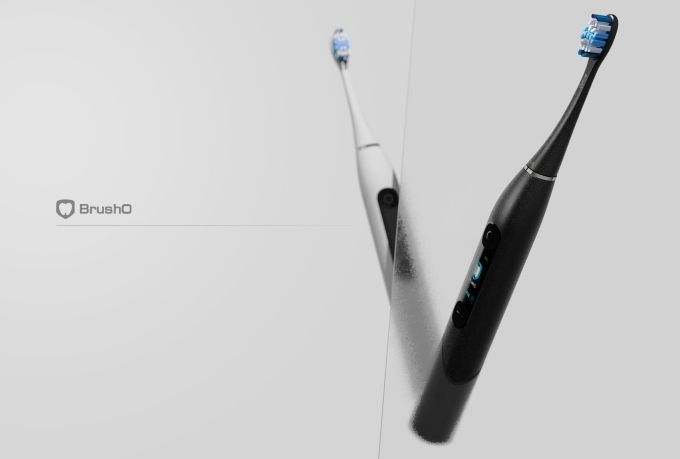
Your brushing routine can directly influence your nighttime breathing. BrushO enhances oral health with:
Covers all 16 surfaces of your mouth, especially those affected by dry mouth.
Helps soothe irritated gums caused by snoring-induced dryness.
Track your oral hygiene progress and identify issues caused by mouth breathing.
By encouraging better brushing habits, BrushO also reminds you to care for your entire oral environment, including saliva balance.
A clean mouth reduces bacterial buildup, which can worsen inflammation.
This keeps your airway more open than sleeping on your back.
Keeps airways moist, reducing irritation and blockage.
Prevents over-relaxation of throat muscles.
Reduces pressure on the airway.
Keeps air passages clear and reduces snoring frequency.
Snoring is more than just noise—it’s a signal from your body. Whether it’s from posture, breathing issues, or oral dryness, understanding the cause is key to healthier sleep. With smart tools like BrushO, you’re not just brushing—you’re reinforcing better oral habits that support better breathing and better rest.
BrushO is an AI-powered smart toothbrush that improves brushing habits through real-time feedback, zone tracking, and personalized care modes. Whether you’re dealing with dry mouth, gum irritation, or want a healthier oral environment, BrushO helps make your brushing smarter and your health stronger.

Squamous cell carcinoma is not a single, uniform disease, and two of its oral variants illustrate the extremes of its behavior. Verrucous carcinoma is a slow-growing, exophytic tumor that almost never metastasizes, while spindle cell carcinoma is an aggressive, sarcomatoid malignancy that can be ...

Most people expect a toothache to be the first sign of pulp disease, but some forms of pulpitis are surprisingly silent. A pulp polyp is the visible result of chronic hyperplastic pulpitis, a condition in which the dental pulp grows out of a large carious opening as a fleshy mass. Recognizing thi...

Dry mouth is not merely uncomfortable; it is a medical condition with real consequences for teeth, speech, swallowing and quality of life. When the salivary glands cannot produce enough saliva, medications called sialogogues can restore some of the missing fluid. Pilocarpine and cevimeline are th...

A blister in the mouth can be the first warning of a systemic autoimmune disease, and two disorders deserve particular attention in the dental chair: pemphigus vulgaris and mucous membrane pemphigoid. Both produce chronic oral ulceration, yet their immunologic targets, clinical behavior and long-...

When infection drains from a tooth, the body often creates a visible escape route, and the dentist must interpret these fistulous openings correctly. A parulis is the common gum boil that signals chronic periapical infection, while an oroantral fistula is a communication between the mouth and the...

Among the fibro-osseous lesions of the jaws, the ossifying fibroma holds a unique position because it is a true neoplasm, unlike the reactive cemento-osseous dysplasia discussed in an earlier article. It grows continuously, expands bone and requires surgical removal, and its cemental variant adds...

Not all keratocystic lesions of the jaw behave alike, and one of the most important distinctions in oral pathology separates the orthokeratinized odontogenic cyst from its better-known relative, the odontogenic keratocyst. Although the two lesions look similar under the microscope at first glance...

Periodontal disease is usually a slowly progressive infection, but a rare form called necrotizing ulcerative periodontitis destroys tissue with alarming speed. Unlike ordinary periodontitis, this condition produces necrotic, cratered papillae, deep pocketing and rapid bone loss, and it appears al...

Every parent has met the child who refuses to eat because of painful mouth sores, and most of these children have one of two viral illnesses: herpangina or hand, foot and mouth disease. Both are caused by enteroviruses, both produce fever and oral ulcers, and both are overwhelmingly common in you...

Cementoosseous dysplasia is one of the most common fibro-osseous lesions found on dental radiographs, yet it is also one of the most frequently misdiagnosed. The lesion replaces normal bone with cellular fibrous tissue and cementum-like material, and it appears in several forms that range from a ...

Xây dựng mạng dữ liệu sức khỏe răng miệng nhanh chóng và chi phí thấp theo cách mọi người đều có thể tham gia.
Xây dựng mạng dữ liệu sức khỏe răng miệng nhanh chóng và chi phí thấp theo cách mọi người đều có thể tham gia.


Address: RM 1427, 14/F RADIO CITY 505, HENNESSY RD CAUSEWAY BAY, HONG KONG
Code: 000000
Phone: +852-53758652
Email: customerservice@brusho.com