
Smart toothbrushes like BrushO are revolutionizing the way we care for our teeth—offering zone tracking, pressure sensors, and real-time brushing feedback. But even in this high-tech era, one manual habit remains irreplaceable: flossing. No matter how advanced your brushing routine gets, flossing still plays a vital role in removing plaque, preventing gum disease, and maintaining full-mouth health. Let’s explore why flossing remains essential—and how to pair it with AI brushing for the best results.
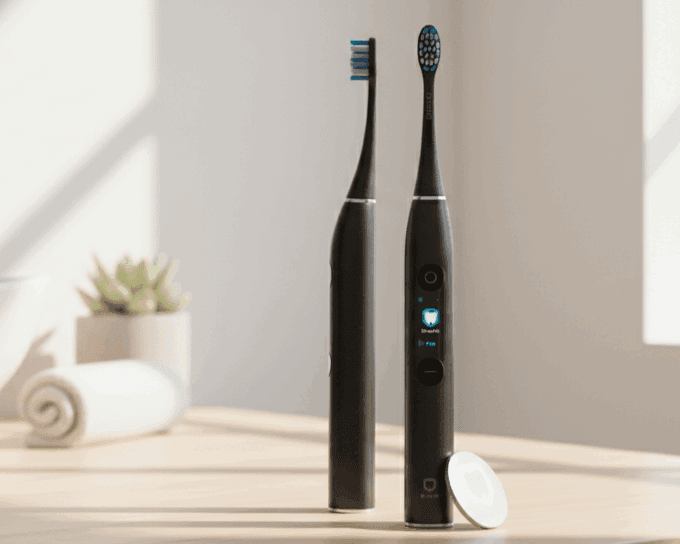
AI-powered toothbrushes are designed to improve brushing technique. They help users:
• Apply proper pressure
• Cover all zones evenly
• Avoid missing hard-to-reach areas
• Track long-term brushing habits
However, toothbrushes—smart or not—can’t clean between your teeth effectively. The narrow spaces between teeth are home to hidden plaque and food particles that bristles can’t reach, no matter how sophisticated the technology.
Flossing performs three critical functions:
Removes Plaque Between Teeth: Prevents tartar buildup in areas where brushes can’t reach.
Protects Gum Health: Reduces risk of inflammation, bleeding, and periodontal disease.
Prevents Interproximal Cavities: Stops decay from forming in between teeth—where it’s hardest to detect.
Without flossing, even the most diligent brushers may leave behind up to 40% of plaque.
Combining smart brushing with traditional flossing gives you a full-spectrum oral care routine:
• BrushO tracks your brushing zones and pressure
• Flossing targets the in-between zones where bristles can’t reach
• Together, they prevent plaque accumulation, gum disease, and bad breath
✅ Tip: Floss before brushing so dislodged particles get swept away more effectively.
Water flossers can help, especially for:
• People with braces or dental implants
• Those with dexterity challenges
• Users seeking an easier, gentler flossing method
However, they may not fully replace traditional string floss, which offers better mechanical plaque removal.
Just like brushing, flossing needs to be:
• Daily (at least once a day)
• Gentle (avoid snapping the floss)
• Consistent (build into your morning or evening routine)
✅ BrushO Tip: Use the app to set flossing reminders alongside your brushing schedule for total mouth care.
Your toothbrush is smarter than ever—but that doesn’t mean flossing is optional. By combining smart brushing technology with daily flossing, you ensure your oral hygiene is comprehensive, not just cosmetic. Think of floss as your toothbrush’s perfect partner—it does the work your bristles can’t.

The uncontrolled hypertension is the condition that the dental practice meets in the patient who presents with the elevated pressure that the guideline does not permit for the elective treatment, and the management of this patient requires the deferral of the dental procedure and the referral to ...

The closure of the extraction space in the orthodontic treatment is the phase that demands the careful selection of the mechanics and the monitoring of the force that the appliance delivers. The sliding mechanics that rely on the continuous archwire and the power chain that connects the brackets ...

The transverse discrepancy of the maxilla is the problem that the crowding and the posterior crossbite often hide, and the maxillary expansion is the treatment that addresses the width of the arch rather than the position of the individual tooth. The clinician who diagnoses the constriction early...

The local anaesthesia is the daily procedure that the modern dentistry treats as the routine, and the complications that follow it range from the transient and the trivial to the permanent and the serious. The clinician who injects by the habit without the anatomy in the mind is the clinician who...

The hypertension is the condition that the dental practice meets in the every day, and the patient who carries the elevated pressure without the symptoms is the patient who presents the risk that the chair-side measurement reveals. The dental team occupies the position that no other profession ho...

The glass-ceramic crown has become the default restoration for the anterior and the many posterior teeth, and the material selection within the family is the decision that determines the strength, the aesthetics, and the longevity of the result. The lithium disilicate, the leucite, and the zircon...

The dental phobia is the extreme form of the dental fear that prevents the patient from attending the treatment that the oral health requires, and the management of the phobia demands the skill that extends beyond the routine behaviour guidance. The systematic desensitization, the exposure therap...

The dental fear of the child is the condition that shapes the attitude for the lifetime, and the clinician who manages the first visits with the skill builds the patient who attends the recall without the dread. The fear that the child develops follows the many sources, and the practice that reco...

The patient with controlled hypertension is the patient who requires the dental care that the oral health demands and the treatment that the blood pressure permits, and the clinician who manages the controlled case safely follows the guideline that the evidence supports. The controlled hypertensi...

The ceramic veneer is the restoration that the aesthetic dentistry depends on, and the bond that retains the veneer on the enamel is the critical link that determines whether the restoration survives the function or fractures and debonds. The clinical technique from the preparation to the cementa...

Xây dựng mạng dữ liệu sức khỏe răng miệng nhanh chóng và chi phí thấp theo cách mọi người đều có thể tham gia.
Xây dựng mạng dữ liệu sức khỏe răng miệng nhanh chóng và chi phí thấp theo cách mọi người đều có thể tham gia.


Address: RM 1427, 14/F RADIO CITY 505, HENNESSY RD CAUSEWAY BAY, HONG KONG
Code: 000000
Phone: +852-53758652
Email: customerservice@brusho.com