
Dry mouth, or xerostomia, might seem like a minor nuisance, but its effects on oral health can be surprisingly severe. Saliva plays a crucial role in neutralizing acids, washing away food particles, and maintaining a healthy oral microbiome. When saliva production drops—due to stress, medications, dehydration, or aging—your teeth and gums become more vulnerable to decay, erosion, and gum disease. In this article, we explore how dry mouth damages your teeth, how to recognize the early signs, and what you can do to protect your oral health. We’ll also look at how smart brushing tools like BrushO help prevent the complications of dry mouth by ensuring a complete, gentle, and effective cleaning routine—even in a saliva-compromised mouth.
Saliva isn’t just moisture—it’s your mouth’s first line of defense. It helps:
• Neutralize harmful acids produced by oral bacteria.
• Rinse away food debris and plaque.
• Deliver minerals like calcium and phosphate that help rebuild enamel.
• Maintain a stable oral pH to inhibit bacterial overgrowth.
Without enough saliva, your mouth becomes a breeding ground for harmful bacteria, leading to faster plaque buildup and increased enamel erosion.
Dry mouth can be caused by a variety of lifestyle, medical, or environmental factors, including:
• Medications: Antihistamines, antidepressants, and blood pressure drugs often reduce saliva production.
• Dehydration: Not drinking enough water or excessive caffeine/alcohol consumption.
• Mouth Breathing: Common during sleep or due to allergies.
• Medical Conditions: Diabetes, Sjögren’s syndrome, or cancer treatments like radiation.
If you’re experiencing persistent dryness, especially in the morning or during the night, it’s time to take action.
• Acids stick longer: Without saliva to buffer and wash away acids, your enamel stays under attack for longer periods.
• More plaque accumulation: Dry environments support bacterial growth, increasing your risk of cavities and gum disease.
• Higher risk of infection: A dry mouth is more prone to ulcers, sores, and oral thrush.
These effects are often worsened if oral hygiene is inconsistent or if you’re not using the right tools.
Here are effective ways to reduce the impact of dry mouth:
Drink water frequently throughout the day. Consider sucking on ice chips or sugar-free mints.
Stimulate saliva production naturally with xylitol-based products.
They can further dry out your mouth. Look for moisturizing rinses instead.
Avoid salty, spicy, or acidic foods. Eat more fibrous fruits and vegetables that stimulate saliva.
Traditional brushing may not remove all plaque in a dry mouth environment. That’s where BrushO makes a difference.
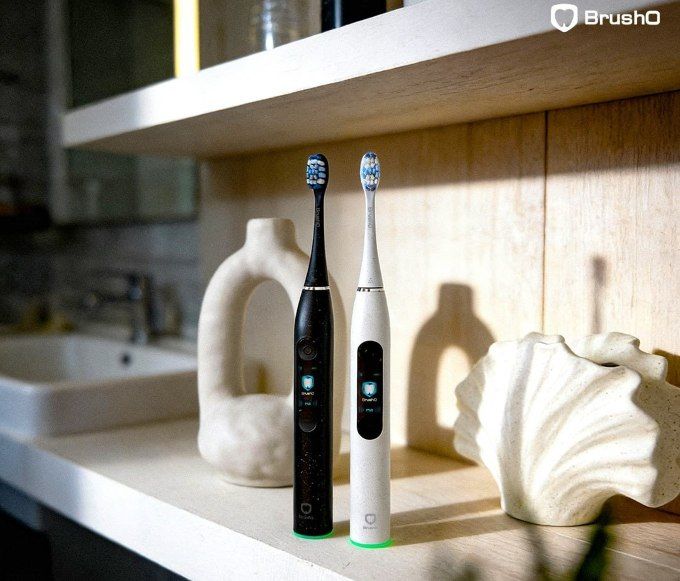
Dry mouth requires extra precision in oral hygiene. BrushO, the AI-powered smart toothbrush, is designed to adapt to these needs:
• Gentle Mode: Custom pressure settings protect weakened enamel and sensitive gums.
• Zone Detection: AI guides you to clean every surface, even in saliva-deficient zones.
• Brushing Feedback: Tracks duration, pressure, and missed spots to ensure no area is left behind.
• Reminders & Rewards: Keep you on track with consistent brushing and reward you with $BRUSH tokens for building healthier habits.
For those with dry mouth, BrushO ensures that every brushing session delivers maximum protection with minimal risk.
Dry mouth might not seem like a serious issue at first, but its long-term effects on your oral health can be devastating if ignored. By understanding the causes, taking daily preventive steps, and incorporating intelligent brushing technology like BrushO into your routine, you can protect your teeth and gums—even in the driest conditions.

<p class="lead">For decades, the only response to a carious lesion was to drill and fill it, removing tooth structure to place a restoration. Resin infiltration offers a different philosophy: instead of removing the lesion, it stops the lesion from progressing by sealing it from within. This mini...

<p class="lead">When a primary tooth is severely decayed or damaged, a simple filling is often not enough to restore its function and keep it healthy until it exfoliates naturally. Preformed crowns provide a durable, full-coverage restoration that protects the tooth and maintains space in the arc...

<p class="lead">After months or years of active orthodontic treatment, the teeth are aligned, the bite is corrected, and the braces come off. Yet the treatment is not finished: without retention, the teeth will drift back toward their original positions. Relapse is a natural consequence of the el...

<p class="lead">Primary herpetic gingivostomatitis is the first infection of the mouth with the herpes simplex virus, and it is one of the most painful conditions a child can experience. Affected children develop fever, widespread oral ulcers, and swollen gums, and they may refuse to eat or drink...

<p class="lead">When a tooth with an apical infection fails to heal after root canal treatment, the endodontist has a limited number of options: retreat the tooth, extract it, or perform periradicular surgery. Apicoectomy, the surgical removal of the root tip and the infected tissue around it, of...

<p class="lead">Osteoradionecrosis of the jaws is one of the most feared complications of radiotherapy for head and neck cancer. It presents as exposed, non-healing bone within the radiation field, causing pain, infection, and fistula formation, and it can severely impair the patient's quality of...

<p class="lead">Mucocele and ranula are the two most common benign lesions of the minor and sublingual salivary glands. Both arise from the obstruction or rupture of a salivary duct, producing a fluid-filled swelling that is usually painless but cosmetically and functionally troublesome. This art...

<p class="lead">Injury to the inferior alveolar or lingual nerve is among the most feared complications in dentistry, producing numbness, tingling, or altered sensation in the lip, chin, and tongue that can persist for months or years. Although rare, these injuries cause significant distress and ...

<p class="lead">The success of a composite restoration depends less on the resin itself than on the quality of the bond between the material and the tooth. Modern adhesive systems have transformed restorative dentistry by making micromechanical attachment to enamel and dentine predictable and dur...

<p class="lead">Bitewing radiographs are the single most valuable imaging tool for the detection of caries, particularly the interproximal lesions that are invisible to the naked eye and frequently missed on clinical examination alone. Yet their use must be balanced against radiation exposure and...


Address: RM 1427, 14/F RADIO CITY 505, HENNESSY RD CAUSEWAY BAY, HONG KONG
Code: 000000
Phone: +852-53758652
Email: customerservice@brusho.com
