
Braces play a critical role in straightening teeth and improving long-term oral health, but they can also introduce new challenges—especially when it comes to maintaining fresh breath. Food particles, plaque, and bacteria easily accumulate around brackets and wires, increasing the risk of bad breath, also known as halitosis. This article explores the science behind breath issues for people with braces, explains why conventional brushing methods often fall short, and introduces how AI-powered solutions like BrushO can help clean thoroughly around orthodontic appliances. We also offer practical tips to keep your breath fresh and your oral hygiene in check throughout your braces journey.
Braces make it significantly harder to clean every surface of your teeth. The brackets, wires, and elastics create multiple hiding spots for food particles and bacteria. When these aren’t removed effectively, plaque builds up, releasing volatile sulfur compounds—the chemicals responsible for bad breath. In fact, studies show that individuals with braces are more prone to gingivitis, dry mouth, and bacterial imbalance—all of which contribute to halitosis. The challenge isn’t that braces directly cause bad breath, but rather that they create conditions that allow bacteria to thrive.
1. Trapped Food Particles: Small bits of food can stick between brackets and wires.
2. Dry Mouth: Some orthodontic devices reduce natural saliva flow, impairing your mouth’s ability to self-clean.
3. Improper Brushing: Many users struggle to clean thoroughly around appliances, especially behind the molars and along the gumline.
4. Lack of Tongue Cleaning: Bacteria on the tongue remain a leading source of odor.
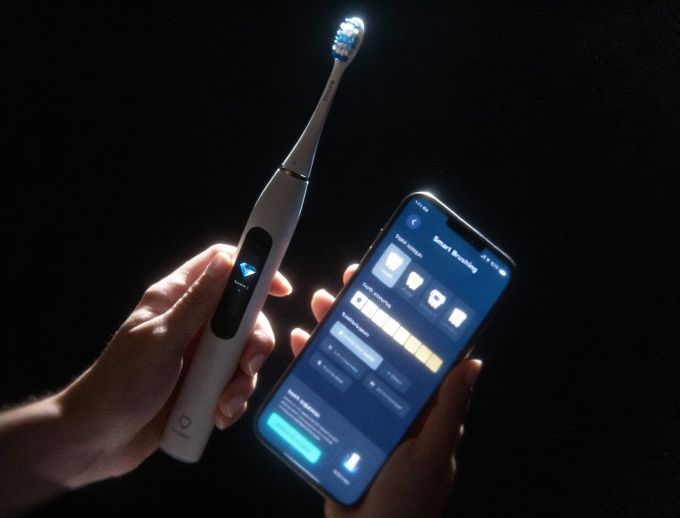
Traditional toothbrushes often fail to adapt to the complexities of orthodontic appliances. BrushO, however, is designed to bridge this gap with intelligent, user-guided brushing:
• AI-Powered Coverage Detection: Ensures no zone—especially around brackets—is left uncleaned.
• Real-Time Feedback: Alerts you when brushing pressure is too low or too high.
• Custom Modes: “Braces Mode” can deliver gentler brushing while maximizing cleaning efficiency.
• Tongue Cleaning Reminder: Helps remove bacterial biofilm from a key odor zone.
Moreover, BrushO’s app generates brushing reports, gamifies habit tracking, and rewards consistency with $BRUSH tokens, encouraging better hygiene even during lengthy orthodontic treatment.
• Brush After Every Meal: Especially important to avoid food decay around brackets.
• Floss or Use Interdental Brushes: Clean between teeth and beneath wires.
• Hydrate Often: Water helps wash away bacteria and stimulate saliva.
• Avoid Sticky, Sugary Foods: These are harder to clean off and feed bacteria.
• Clean the Tongue: Use a scraper or tongue-cleaning mode on smart brushes.
• Use Mouthwash: Choose alcohol-free versions to avoid drying out your mouth.
Wearing braces doesn’t have to be a sentence to chronic bad breath. With the right oral hygiene routine and the help of tools like BrushO, you can maintain fresh breath, prevent plaque buildup, and protect your gums. Orthodontic care is a journey—and your oral health shouldn’t suffer along the way.
BrushO is an AI-powered smart toothbrush engineered for modern oral care challenges. Whether you wear braces, suffer from sensitive gums, or just want cleaner teeth, BrushO offers real-time guidance, adaptive cleaning modes, and a unique Brush & Earn system to reward you for brushing smarter. Make your brushing count—with precision, feedback, and freshness every day.

<p class="lead">For decades, the only response to a carious lesion was to drill and fill it, removing tooth structure to place a restoration. Resin infiltration offers a different philosophy: instead of removing the lesion, it stops the lesion from progressing by sealing it from within. This mini...

<p class="lead">When a primary tooth is severely decayed or damaged, a simple filling is often not enough to restore its function and keep it healthy until it exfoliates naturally. Preformed crowns provide a durable, full-coverage restoration that protects the tooth and maintains space in the arc...

<p class="lead">After months or years of active orthodontic treatment, the teeth are aligned, the bite is corrected, and the braces come off. Yet the treatment is not finished: without retention, the teeth will drift back toward their original positions. Relapse is a natural consequence of the el...

<p class="lead">Primary herpetic gingivostomatitis is the first infection of the mouth with the herpes simplex virus, and it is one of the most painful conditions a child can experience. Affected children develop fever, widespread oral ulcers, and swollen gums, and they may refuse to eat or drink...

<p class="lead">When a tooth with an apical infection fails to heal after root canal treatment, the endodontist has a limited number of options: retreat the tooth, extract it, or perform periradicular surgery. Apicoectomy, the surgical removal of the root tip and the infected tissue around it, of...

<p class="lead">Osteoradionecrosis of the jaws is one of the most feared complications of radiotherapy for head and neck cancer. It presents as exposed, non-healing bone within the radiation field, causing pain, infection, and fistula formation, and it can severely impair the patient's quality of...

<p class="lead">Mucocele and ranula are the two most common benign lesions of the minor and sublingual salivary glands. Both arise from the obstruction or rupture of a salivary duct, producing a fluid-filled swelling that is usually painless but cosmetically and functionally troublesome. This art...

<p class="lead">Injury to the inferior alveolar or lingual nerve is among the most feared complications in dentistry, producing numbness, tingling, or altered sensation in the lip, chin, and tongue that can persist for months or years. Although rare, these injuries cause significant distress and ...

<p class="lead">The success of a composite restoration depends less on the resin itself than on the quality of the bond between the material and the tooth. Modern adhesive systems have transformed restorative dentistry by making micromechanical attachment to enamel and dentine predictable and dur...

<p class="lead">Bitewing radiographs are the single most valuable imaging tool for the detection of caries, particularly the interproximal lesions that are invisible to the naked eye and frequently missed on clinical examination alone. Yet their use must be balanced against radiation exposure and...


Address: RM 1427, 14/F RADIO CITY 505, HENNESSY RD CAUSEWAY BAY, HONG KONG
Code: 000000
Phone: +852-53758652
Email: customerservice@brusho.com
