
Many people instinctively rinse their mouths with water immediately after brushing. But did you know this simple step could be weakening your oral defense system? Discover the science behind rinsing, why dentists often recommend skipping it, and how using smart brushing tools like BrushO can guide you toward better oral health.
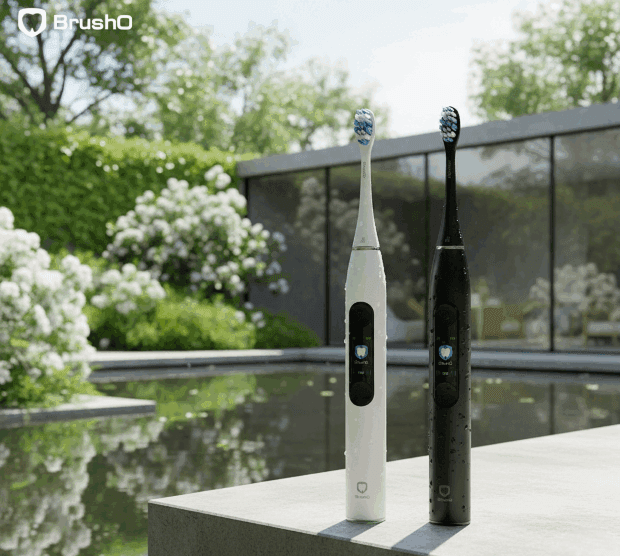
Rinsing after brushing feels natural. It removes leftover toothpaste and leaves the mouth feeling clean and fresh. Culturally, it’s deeply ingrained in many daily routines. However, recent dental research suggests that this habit might actually undo some of the benefits of brushing.
Toothpaste contains fluoride—a key ingredient that strengthens enamel, reduces cavities, and rebuilds weakened tooth surfaces. But when you rinse your mouth with water immediately after brushing, you dilute and wash away the fluoride before it has a chance to fully absorb into your teeth.
Fact: It takes about 30 minutes for fluoride to fully bond with enamel. Rinsing too soon disrupts this process.
What You Lose:
• Reduced protection against cavities
• Weakened enamel remineralization
• Less long-term effectiveness of brushing
Most dental professionals now suggest the “spit, don’t rinse” method. After brushing:
1. Spit out excess toothpaste.
2. Do not rinse with water or mouthwash immediately.
3. Wait at least 15–30 minutes before eating, drinking, or rinsing.
This helps fluoride remain active on your teeth longer, giving you stronger protection.
If you use a fluoride mouthwash, timing matters:
• Use it at a different time than brushing, such as midday or before bed.
• If used immediately after brushing, ensure the mouthwash also contains fluoride and is alcohol-free to avoid drying out your mouth.
Brushing routines are deeply personal—but they can be improved with smart guidance. BrushO is an AI-powered electric toothbrush that:
• Tracks brushing duration and coverage in real time
• Encourages proper technique and pressure
• Provides customized tips through the app, including post-brushing care reminders
• Rewards good habits with $BRUSH tokens through our Brush & Earn system
Whether you’re learning not to rinse or trying to build a better overall oral care routine, BrushO helps you stay on track—even when life gets busy.
It may seem like a minor detail, but skipping that rinse after brushing can significantly improve your oral health. Let your toothpaste do its job—stay on your teeth longer, strengthen enamel, and protect against cavities. Your smile deserves the full benefit of your brushing routine. Sometimes, the best thing you can do is spit and wait.
BrushO is a next-gen smart toothbrush designed to optimize oral hygiene using AI-driven feedback, zone-by-zone brushing scores, and a long-lasting battery perfect for busy lifestyles. Backed by dentists and powered by Stanford-introduced tech, BrushO helps you build consistent habits, track progress, and earn while you brush.

Wisdom teeth, or third molars, are the last teeth to erupt, and a large proportion of them never achieve a functional position. When a wisdom tooth is trapped beneath the gum or bone, it is described as impacted, and the decision to remove it is one of the most common surgical judgments in dentis...

Disk displacement is the most common internal derangement of the temporomandibular joint (TMJ) and a frequent reason for orofacial pain consultations. Magnetic resonance imaging (MRI) is the accepted gold standard for confirming the position of the articular disk because it visualizes soft tissue...

Pulp sensibility testing remains the first diagnostic step before any endodontic intervention. Cold, heat and electric pulp tests (EPT) probe the neural response of the pulp through enamel and dentin, and their results decide whether a tooth needs root canal treatment, a direct pulp cap or simple...

Mouthguards protect teeth from sports trauma and night-time grinding, but a dirty guard can become a reservoir for bacteria, fungi and oral disease. Studies show that used mouthguards accumulate plaque, streptococci and Candida within days of normal wear, and poor hygiene has been linked to gingi...

Halitosis, or persistent bad breath, affects a large share of the adult population and carries real social and psychological consequences. In the vast majority of cases the source is the mouth itself, and the most important reservoir is the coating on the dorsal surface of the tongue. Understandi...

Root canal treatment succeeds only when instrumentation stops at the right place. Working length is the distance from a stable coronal reference point to the apical constriction, and every millimeter of error changes the outcome: over-instrumentation pushes debris and irrigant beyond the apex, wh...

Dry mouth is one of the most common complaints in dental practice, yet it is frequently underestimated. Xerostomia is the subjective feeling of oral dryness, while salivary hypofunction is the measurable reduction in saliva output, and the two do not always coincide. Because saliva protects teeth...

Diabetes affects more than blood sugar, and the mouth is often one of the first places where the disease makes itself known. The relationship is genuinely bidirectional: uncontrolled diabetes increases the risk and severity of periodontal disease, while severe gum inflammation makes blood sugar h...

Enamel is the hardest tissue in the human body, but it is not indestructible. Dental erosion is the chemical dissolution of enamel by acids that are not produced by bacteria, and modern diets supply those acids in abundance. Understanding how acidic foods and drinks attack the tooth surface is th...

A good toothbrush should work as well in a hotel bathroom as it does at home, and that is exactly what BrushO Travel Mode is designed to do. By lowering motor speed and trimming acoustic output, Travel Mode keeps the full two-minute cleaning routine in a form that is discreet enough for shared ro...


Address: RM 1427, 14/F RADIO CITY 505, HENNESSY RD CAUSEWAY BAY, HONG KONG
Code: 000000
Phone: +852-53758652
Email: customerservice@brusho.com
