
Sleep bruxism, or involuntary teeth grinding during sleep, is a hidden enemy of oral health that affects millions—often without them even knowing. This silent condition can gradually wear down enamel, damage gums, and cause jaw pain that extends beyond oral concerns. In this article, we explore what causes sleep bruxism, how to detect it, and how to minimize its damage. We’ll also look at how smart toothbrushes like BrushO, with pressure detection and personalized guidance, can play a key role in protecting your teeth and improving your daily routine. Whether you’re grinding due to stress, misalignment, or sleep disorders, identifying and addressing bruxism early can save your smile.
Sleep bruxism is the medical term for unconscious grinding or clenching of the teeth during sleep. It differs from daytime bruxism, which is usually stress-related and occurs when awake. According to the American Dental Association, an estimated 10–15% of adults and a growing number of children suffer from sleep bruxism. This condition often goes unnoticed until symptoms—like jaw pain or tooth wear—begin to appear. Left untreated, bruxism can have long-term consequences on oral health.
Sleep bruxism doesn’t always present immediate signs, but common symptoms include:
• Flattened, chipped, or worn-down teeth
• Increased tooth sensitivity
• Jaw soreness or tightness upon waking
• Headaches, especially near the temples
• Clicking or popping in the jaw (TMJ disorders)
• Gum recession or inflammation due to excessive pressure
If you experience any of these, it may be time to evaluate your brushing routine and consult a dentist.
Understanding what leads to nighttime grinding is essential. The most common causes include:
• Stress and anxiety: Psychological tension is a leading trigger.
• Sleep disorders: Conditions like sleep apnea are closely linked to bruxism.
• Misaligned bite (malocclusion): Improper tooth alignment can cause grinding.
• Lifestyle factors: Alcohol, caffeine, and smoking can increase risk.
• Genetics: Bruxism often runs in families.
Bruxism wears away your smile from the inside out:
• Tooth enamel erosion reduces protection and leads to cavities.
• Gum trauma can accelerate periodontal disease.
• Jaw strain may cause long-term TMJ dysfunction.
• Cosmetic impact: Teeth may appear shorter or uneven.
These changes are gradual but irreversible without early intervention.
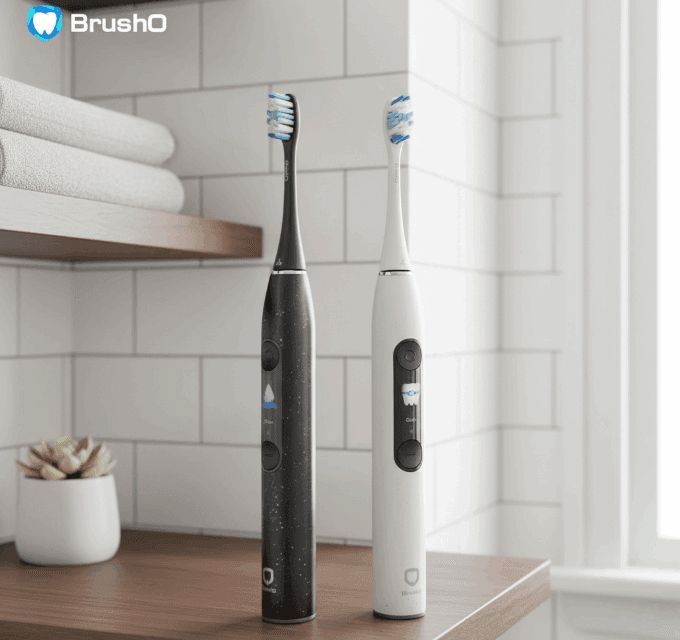
While toothbrushes can’t cure bruxism, AI-powered toothbrushes like BrushO are becoming valuable tools in oral care management by:
Bruxism can lead to overbrushing or uneven brushing due to sensitive areas. BrushO detects excessive pressure and gives real-time alerts, helping protect already weakened enamel and gum lines.
After each session, BrushO’s app shows detailed brushing reports, identifying areas where users may apply too much pressure—useful data for those trying to compensate for grinding-related soreness.
Through custom brushing modes such as “Sensitive Mode”, BrushO helps users develop gentler routines that are ideal for those with grinding-related enamel loss or gum inflammation.
Alongside smart tools, lifestyle and dental adjustments help manage bruxism effectively:
• Use a nightguard (ask your dentist for a custom-fitted one)
• Reduce stress through mindfulness, exercise, or therapy
• Limit alcohol and caffeine, especially before bed
• Maintain a consistent sleep schedule
• Track symptoms using oral health apps or wearables
If you suspect you’re grinding your teeth during sleep—or your smart toothbrush frequently alerts you of pressure spikes—book a dental appointment. Dentists can:
• Examine enamel wear
• Fit nightguards
• Suggest orthodontic or behavioral interventions
Smart brushing doesn’t stop bruxism, but it supports your recovery:
| Feature | Traditional Toothbrush | BrushO Smart Toothbrush |
| Pressure Alerts | ❌ | ✅ Real-time vibration warning |
| Custom Modes | ❌ | ✅ Sensitive & Gum Care Modes |
| Brushing Data | ❌ | ✅ AI-generated brushing reports |
| Gamified Routine | ❌ | ✅ Brush & Earn Reward System |
Sleep bruxism often flies under the radar until it causes permanent harm. Recognizing early symptoms and using smart technology to adapt your brushing habits can make all the difference. BrushO helps by offering not just brushing—it offers awareness, protection, and encouragement to build a smile that lasts. Your teeth rest while you do. Make sure your toothbrush is working while you sleep.
Jan 30
Jan 29

Teledentistry—the use of information and communication technologies to deliver dental care, consultation, education, and public health services across geographic distances—has undergone an unprecedented transformation in recent years. While the concept dates to the 1990s, the COVID-19 pandemic catal

The field of endodontics has undergone a paradigm shift over the past two decades. Traditional root canal therapy, while effective at eliminating infection and preserving teeth, ultimately results in a non-vital tooth that is more brittle and susceptible to fracture. Regenerative endodontics offers

The human oral cavity harbors one of the most diverse and dynamic microbial communities in the body, second only to the gut in complexity. Advances in culture-independent molecular techniques—particularly 16S rRNA gene sequencing and shotgun metagenomics—have transformed our understanding of the ora

Medication-related osteonecrosis of the jaw (MRONJ) is a serious adverse event characterized by exposed necrotic bone in the maxillofacial region that persists for more than eight weeks in patients with current or previous antiresorptive or antiangiogenic therapy and no history of head and neck radi

The dental patient population is aging, and the prevalence of chronic medical conditions continues to rise. The World Health Organization projects that by 2050, the proportion of the global population over 60 years will double from 12% to 22%, with a corresponding increase in the burden of multimorb

Saliva has emerged as a powerful diagnostic fluid that reflects the physiological and pathological state of the body. As an ultrafiltrate of blood, saliva contains a complex mixture of proteins, nucleic acids, metabolites, and microorganisms that originate from multiple sources: salivary glands, gin

Peri-implantitis has emerged as one of the most significant complications in implant dentistry, affecting an estimated 20% of patients and 10% of implants at the patient and implant levels respectively. As the global population of dental implants grows, the burden of peri-implant disease is expandin

Molar Incisor Hypomineralization (MIH) is a qualitative developmental enamel defect affecting one to four first permanent molars, frequently with concurrent involvement of permanent incisors. First described systematically by Weerheijm and colleagues in 2001, MIH has since been recognized as a globa

Digital Smile Design (DSD) has revolutionized aesthetic dentistry by providing a systematic, communication-centered approach to treatment planning. Developed by Dr. Christian Coachman in 2007, DSD integrates facial and dental analysis, intraoral and extraoral digital data, and interdisciplinary coll

Additive manufacturing, commonly known as 3D printing, has transformed dentistry over the past decade from a niche prototyping tool into an integral component of digital workflows. The technology enables the fabrication of surgical guides, dental models, temporary and permanent restorations, denture


Address: RM 1427, 14/F RADIO CITY 505, HENNESSY RD CAUSEWAY BAY, HONG KONG
Code: 000000
Phone: +852-53758652
Email: customerservice@brusho.com
