
Saliva plays a central role in protecting teeth from decay, yet its production drops dramatically during sleep. This natural nighttime reduction alters the oral microbiome, slows acid neutralization, and increases plaque activity — creating conditions that elevate cavity risk. Understanding how saliva functions as a biological defense system helps explain why evening oral care habits are disproportionately important for dental health. This article examines the science behind nighttime saliva changes, their impact on enamel integrity, and evidence-based strategies for mitigating overnight bacterial activity.
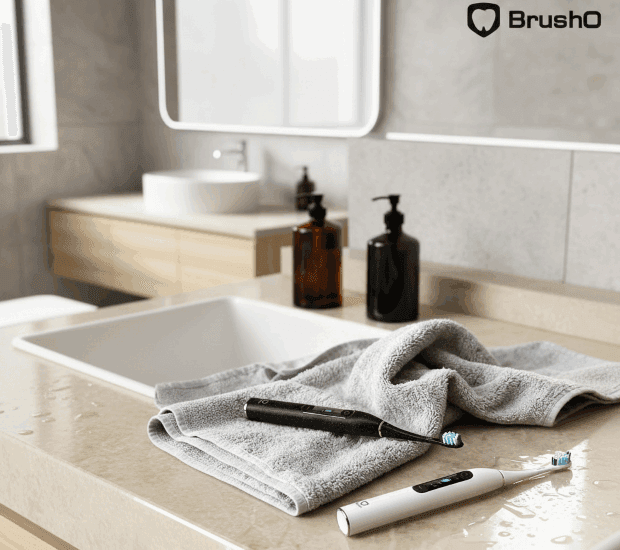
Saliva is far more than moisture — it is a complex biochemical defense system.
• Neutralizing bacterial acids
• Washing away food debris
• Delivering minerals for enamel remineralization
• Regulating microbial balance
• Supporting immune responses in oral tissues
When saliva flow is stable, these mechanisms limit cavity development by maintaining ecological equilibrium in the mouth.
Human salivary glands follow circadian rhythms.
During nighttime rest:
• Saliva production may drop by 80–90%
• Oral clearance mechanisms are slow
• pH buffering weakens
• Mineral delivery decreases
This creates a biologically vulnerable window where teeth are exposed to:
• Sustained acid contact
• Extended bacterial metabolism
• Reduced natural cleansing
Even individuals with excellent daytime hygiene face an elevated risk if nighttime oral preparation is inadequate.
Acid-producing bacteria metabolize carbohydrates into enamel-eroding compounds.
Lower saliva flow means:
• Acids remain longer on tooth surfaces
• Enamel demineralization accelerates
• Protective buffering is delayed
Over time, repeated exposure contributes to microscopic enamel weakening.
Plaque is a structured microbial community.
Overnight conditions encourage:
• Biofilm thickening
• Bacterial adhesion
• Caries-associated species dominance
Without mechanical disruption before sleep, these colonies operate continuously for hours.
Saliva supplies calcium and phosphate, which are essential for repairing enamel.
Nighttime reduction limits:
• Mineral redeposition
• Early lesion reversal
• Structural reinforcement
This shifts the balance toward net mineral loss.
Individuals with mild xerostomia experience greater effects.
Common contributors include:
• Mouth breathing
• Dehydration
• Medication use
• Stress or fatigue
These factors further compound overnight vulnerability.
While both sessions are essential, pre-sleep cleaning carries heightened importance.
Effective nighttime brushing:
• Removes fermentable substrates
• Disrupts plaque biofilms
• Lowers bacterial load
• Reduces acid production window
AI-guided brushing systems such as BrushO enhance effectiveness by:
• Verifying full-zone coverage
• Detecting missed surfaces
• Monitoring pressure
• Reinforcing consistency through feedback
This ensures mechanical plaque disruption occurs before saliva reduction begins.
Adequate water intake supports baseline salivary function.
Carbohydrate exposure before sleep fuels prolonged bacterial metabolism.
Focus on the gumline and molar surfaces where plaque retention is common.
Technology-assisted brushing ensures high-risk zones are not neglected.
Predictable circadian hygiene patterns support microbial stability.
Ignoring nighttime salivary dynamics contributes cumulatively to:
• Enamel demineralization
• Early carious lesion formation
• Gum inflammation
• Microbiome imbalance
Conversely, optimizing evening hygiene reduces lifetime restorative intervention probability and preserves structural tooth integrity.
Nighttime saliva reduction represents one of the most significant biological shifts affecting cavity risk. With diminished buffering, cleansing, and remineralization, teeth become more susceptible to bacterial activity during sleep. Recognizing this vulnerability reframes evening oral care from routine maintenance to preventive intervention. Combining behavioral consistency with precision-guided brushing technology strengthens protection against overnight enamel damage. Understanding saliva’s circadian role empowers individuals to align oral hygiene practices with biological reality — resulting in stronger, healthier teeth over time.
Feb 13
Feb 12

Trigeminal neuralgia (TN), also known as tic douloureux, is a chronic orofacial pain disorder characterized by recurrent, unilateral, brief, electric shock-like pain in the distribution of one or more divisions of the trigeminal nerve. It is widely regarded as one of the most severe pain conditions

Tooth whitening has become one of the most sought-after elective dental procedures worldwide. With increasing emphasis on facial aesthetics, a bright, white smile is now widely perceived as a marker of health, youth, and social confidence. This article provides a comprehensive review of contemporary

The edentulous posterior maxilla presents unique challenges for implant rehabilitation due to the pneumatization of the maxillary sinus and the progressive resorption of the alveolar ridge following tooth loss. Sinus floor elevation, or sinus lift surgery, is a predictable and well-documented surgic

Photodynamic therapy (PDT) is a minimally invasive therapeutic modality that combines a photosensitizing agent, light of a specific wavelength, and molecular oxygen to produce cytotoxic reactive oxygen species. Originally developed for oncological applications, PDT has been increasingly adopted in d

The introduction of temporary anchorage devices (TADs) has fundamentally transformed orthodontic treatment by providing skeletal anchorage that is independent of patient compliance. TADs, also known as mini-implants or miniscrews, enable tooth movements that were previously impossible or required co

Dental caries remains one of the most prevalent chronic diseases worldwide, disproportionately affecting children, elderly populations, and communities with limited access to conventional restorative care. The traditional restorative approach requires expensive equipment, cooperative patients, and m

Platelet-rich fibrin (PRF), a second-generation platelet concentrate, has emerged as one of the most widely adopted autologous biomaterials in contemporary dentistry and oral surgery. Developed by Dr. Joseph Choukroun and colleagues in France in 2001, PRF represents a conceptual evolution from first

The transition from conventional to digital impressions represents one of the most significant technological shifts in contemporary dentistry. Intraoral scanners (IOS) have evolved from experimental prototypes in the 1980s to sophisticated clinical instruments that now rival and, in several key metr

Gingival recession, defined as the apical migration of the gingival margin beyond the cementoenamel junction with exposure of the root surface, is a prevalent condition affecting a substantial proportion of the adult population. Epidemiological studies report that approximately 50% of adults exhibit

Cone beam computed tomography (CBCT) has revolutionized endodontic diagnosis and treatment planning by providing three-dimensional imaging that overcomes the inherent limitations of conventional periapical radiography. While two-dimensional radiographs remain the first-line imaging modality for endo


Address: RM 1427, 14/F RADIO CITY 505, HENNESSY RD CAUSEWAY BAY, HONG KONG
Code: 000000
Phone: +852-53758652
Email: customerservice@brusho.com
