
Oral health is crucial to our quality of life, affecting our ability to speak, eat, and even breathe. However, maintaining oral health has become a significant challenge for people worldwide. According to the World Health Organization, 3.5 billion people suffer from oral diseases, which is more than half of the global population. Over the past 30 years, the number of cases has increased by 1 billion due to factors such as unhealthy diets, trauma, and poor oral hygiene. Oral diseases are often insidious; without good daily care and regular check-ups, they are usually detected too late. Additionally, the high cost and need for professional support in oral care make it unaffordable for many, leading to worsening oral health issues.
Paradoxically, despite the large number of patients and strong market demand, the oral health industry has not seen corresponding growth and benefits. One major issue is the lack of comprehensive oral health data, which hinders industry development. The high costs associated with oral healthcare limit its accessibility, resulting in data that lacks universality. This impacts market research, treatment technology development, product innovation, and sales, creating a vicious cycle of high entry barriers, high costs, and high prices.
Another issue is the difficulty in building an integrated industry platform. The oral health industry spans sectors such as personal care, beauty, insurance, and medical care, each developing in isolation without shared interests, leading to severe information asymmetry. Users struggle to access comprehensive oral health services, limiting the formation of a global oral health ecosystem.
Despite advancements in smart technology making devices like electric toothbrushes popular, challenges such as high prices and the risk of personal oral health data being stored on centralized servers remain.
How can we transform the current state of the oral health ecosystem? We need an innovative solution that reduces the cost of maintaining oral health and promotes the development of the industry. BrushO was created to meet this need.
BrushO aims to usher in a new era of oral health by building a global oral health ecosystem. People can engage with the ecosystem in unprecedented ways and be rewarded for their participation. This platform consists of the BrushO Network and the BrushO smart toothbrush.
BrushO Network is a smart oral health DePIN platform based on Web3.0 technology. Oral health data generated by users while using the BrushO smart toothbrush is collected on the platform, with blockchain technology ensuring the security and privacy of this data. On the BrushO Network, users own and control their oral health data, which they can convert into valuable digital assets.
Institutions and companies in the oral health industry can access scalable, real-world oral health data through BrushO to meet their business needs. This reduces project costs and allows them to offer better services and prices to users, creating a flywheel effect.
The BrushO Network also lowers the barriers to entry into the oral health industry. All compliant software and hardware can connect to the network, leveraging its pre-built distributed infrastructure and data value network. This will drive the industry towards diversity, openness, equality, and prosperity.
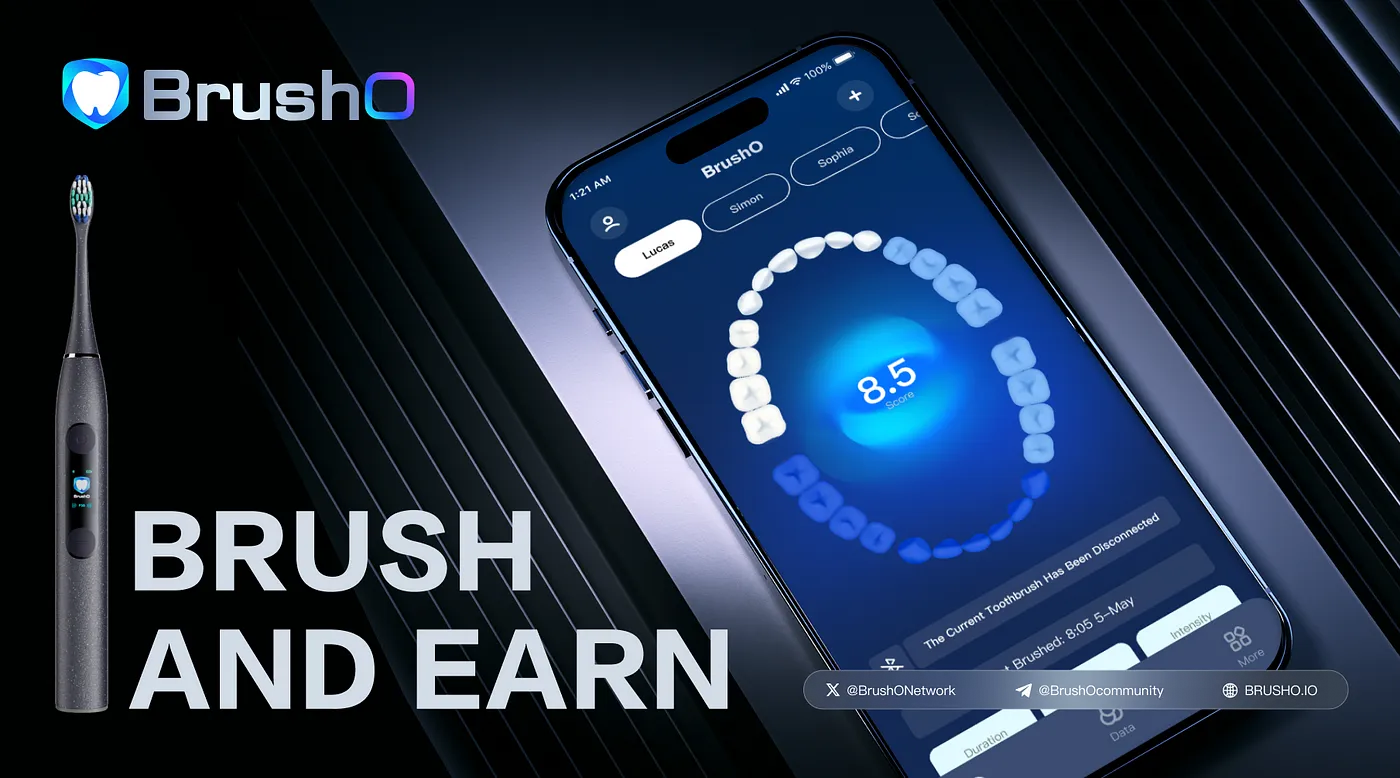
The BrushO smart toothbrush is BrushO’s first oral health sensor device. It uses various sensors and AI algorithms to monitor and optimize users’ brushing habits and introduces the innovative “Brush And Earn” model. Users earn token rewards through their daily brushing activities, reducing usage costs and significantly increasing user engagement and willingness to use the product. It also helps users understand and improve their oral health.
Starting with the smart toothbrush, BrushO will continue to develop more smart oral health hardware, creating a larger distributed sensor network. This will lay a solid foundation for building a global oral health ecosystem.
If you are interested in learning more about BrushO and getting involved, follow us for more exciting updates coming soon…
Jul 24
Mar 13

Squamous cell carcinoma is not a single, uniform disease, and two of its oral variants illustrate the extremes of its behavior. Verrucous carcinoma is a slow-growing, exophytic tumor that almost never metastasizes, while spindle cell carcinoma is an aggressive, sarcomatoid malignancy that can be ...

Most people expect a toothache to be the first sign of pulp disease, but some forms of pulpitis are surprisingly silent. A pulp polyp is the visible result of chronic hyperplastic pulpitis, a condition in which the dental pulp grows out of a large carious opening as a fleshy mass. Recognizing thi...

Dry mouth is not merely uncomfortable; it is a medical condition with real consequences for teeth, speech, swallowing and quality of life. When the salivary glands cannot produce enough saliva, medications called sialogogues can restore some of the missing fluid. Pilocarpine and cevimeline are th...

A blister in the mouth can be the first warning of a systemic autoimmune disease, and two disorders deserve particular attention in the dental chair: pemphigus vulgaris and mucous membrane pemphigoid. Both produce chronic oral ulceration, yet their immunologic targets, clinical behavior and long-...

When infection drains from a tooth, the body often creates a visible escape route, and the dentist must interpret these fistulous openings correctly. A parulis is the common gum boil that signals chronic periapical infection, while an oroantral fistula is a communication between the mouth and the...

Among the fibro-osseous lesions of the jaws, the ossifying fibroma holds a unique position because it is a true neoplasm, unlike the reactive cemento-osseous dysplasia discussed in an earlier article. It grows continuously, expands bone and requires surgical removal, and its cemental variant adds...

Not all keratocystic lesions of the jaw behave alike, and one of the most important distinctions in oral pathology separates the orthokeratinized odontogenic cyst from its better-known relative, the odontogenic keratocyst. Although the two lesions look similar under the microscope at first glance...

Periodontal disease is usually a slowly progressive infection, but a rare form called necrotizing ulcerative periodontitis destroys tissue with alarming speed. Unlike ordinary periodontitis, this condition produces necrotic, cratered papillae, deep pocketing and rapid bone loss, and it appears al...

Every parent has met the child who refuses to eat because of painful mouth sores, and most of these children have one of two viral illnesses: herpangina or hand, foot and mouth disease. Both are caused by enteroviruses, both produce fever and oral ulcers, and both are overwhelmingly common in you...

Cementoosseous dysplasia is one of the most common fibro-osseous lesions found on dental radiographs, yet it is also one of the most frequently misdiagnosed. The lesion replaces normal bone with cellular fibrous tissue and cementum-like material, and it appears in several forms that range from a ...

সবাই যেন নিজের মতো করে গড়তে পারে – এমনভাবে দ্রুত ও কম খরচে ওরাল হেলথ ডেটা নেটওয়ার্ক তৈরি করুন।
সবাই যেন নিজের মতো করে গড়তে পারে – এমনভাবে দ্রুত ও কম খরচে ওরাল হেলথ ডেটা নেটওয়ার্ক তৈরি করুন।


Address: RM 1427, 14/F RADIO CITY 505, HENNESSY RD CAUSEWAY BAY, HONG KONG
Code: 000000
Phone: +852-53758652
Email: customerservice@brusho.com