
Brushing twice a day remains the standard recommendation for maintaining oral health, yet many individuals brush more frequently in pursuit of cleaner teeth and fresher breath. While additional brushing sessions can remove food debris and reduce bacterial buildup, excessive or poorly timed brushing may accelerate enamel wear, irritate gums, and increase tooth sensitivity. The true determinant of oral health is not frequency alone but brushing technique, pressure control, and timing relative to dietary acid exposure. Understanding when extra brushing supports hygiene — and when it introduces risk — helps individuals maintain balanced oral care practices that protect both teeth and gum tissues over the long term.
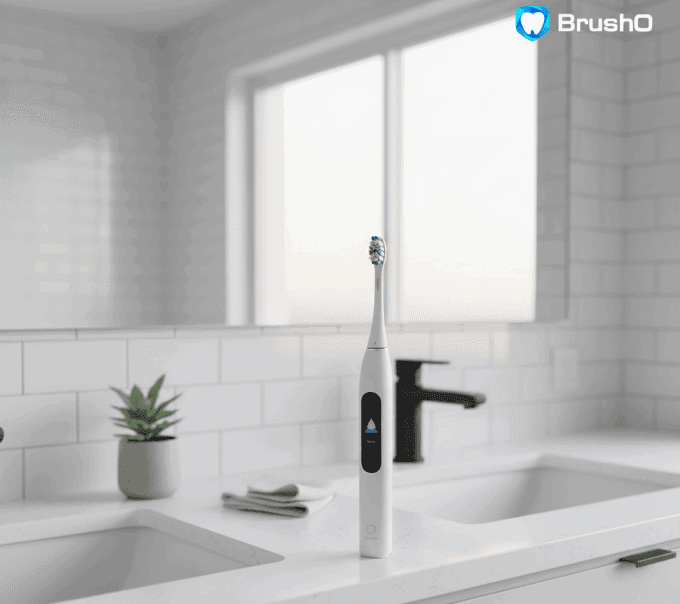
Individuals often exceed the twice-daily recommendation for practical reasons:
• Removing food residue after meals
• Reducing stains from coffee or sugar intake
• Preventing bad breath
• Anxiety about cavities or discoloration
While these motivations are understandable, the biological structure of teeth and gums means that more mechanical abrasion is not always beneficial. Oral tissues require a balance between cleaning and protection.
Enamel is highly mineralized but non-regenerative. Repeated mechanical abrasion — particularly when combined with abrasive toothpaste or excessive force — gradually removes microscopic layers.
Potential consequences include:
• Enamel thinning
• Heightened thermal sensitivity
• Increased vulnerability to decay
• Exposure of underlying dentin
Damage often accumulates slowly and becomes noticeable only after significant structural loss.
Research consistently shows that brushing technique outweighs brushing frequency in determining oral outcomes. Harmful patterns commonly observed include:
• Excessive pressure application
• Horizontal scrubbing motions
• Use of hard-bristled brushes
• Immediate brushing following acidic consumption
Acid exposure temporarily softens the enamel mineral structure. Brushing during this period accelerates erosion. Allowing 30–60 minutes for saliva remineralization significantly reduces risk.
Additional brushing sessions can support hygiene under controlled conditions:
• Gentle cleaning after meals
• Orthodontic appliance maintenance
• Dry-mouth management
• Controlled plaque reduction during illness
In many cases, rinsing with water or performing light brushing without toothpaste offers sufficient interim cleaning without mechanical stress.
Soft tissues typically respond earlier than enamel when brushing becomes excessive.
Indicators include:
• Redness or irritation
• Bleeding during brushing
• Progressive gum recession
• Root surface exposure
Unlike enamel abrasion, gum recession can alter tooth appearance and long-term sensitivity, often requiring professional intervention.
Effective oral hygiene emphasizes:
• Light, controlled pressure
• Complete surface coverage
• Consistent timing
• Structured routine adherence
A thorough two-minute brushing session that targets all oral zones is significantly more protective than multiple hurried or aggressive sessions.
Many individuals remain unaware of excessive pressure or incomplete coverage until symptoms appear. Feedback-enabled brushing systems can improve self-regulation by highlighting:
• Pressure levels
• Coverage gaps
• Routine consistency
Guided brushing transforms hygiene from assumption-based behavior into measurable practice.
Brushing more than twice daily is not inherently harmful, but risk increases when excessive frequency combines with abrasive technique, poor timing, or excessive force. Oral health depends on precision and consistency rather than quantity. Balanced brushing practices — emphasizing gentle technique and full coverage — provide optimal protection for enamel and gum health over time. BrushO supports balanced oral care by guiding brushing technique, monitoring pressure application, and encouraging full-mouth coverage. By emphasizing quality rather than excess, it helps users avoid over-brushing while maintaining consistent hygiene habits that protect teeth and gums long term.
Feb 9
Feb 9

The xerostomia is the symptom that the patient describes as the dry mouth, and the Sjogren syndrome is the systemic autoimmune condition that the clinician identifies as one of the causes that the symptom reveals. The dry mouth that the patient reports may follow the medication, the radiation, th...

The sinus lift is the augmentation procedure that the clinician performs to create the bone height that the posterior maxilla requires for the implant, and the choice between the lateral window and the transcrestal approach determines the surgical trauma, the healing, and the implant that the sit...

Post-extraction bleeding is one of the most common and most distressing experiences after a tooth extraction. For most patients, a small amount of oozing from the extraction site for 24 to 48 hours after the procedure is completely normal. However, when bleeding becomes excessive, prolonged, or d...

The skeletal class III malocclusion is the condition that the clinician treats with the orthognathic surgery or the camouflage orthodontic treatment, and the decision between the two paths determines the function, the aesthetics, and the stability that the patient receives. The orthognathic surge...

Interproximal enamel reduction — commonly referred to as IPR, slenderizing, stripping, or contouring — is the controlled removal of small amounts of enamel from the proximal surfaces of teeth. Despite sounding more invasive than it is, IPR is one of the most widely used and clinically safe proced...

The gingival graft is the surgical procedure that the periodontist performs to restore the keratinized tissue and to cover the exposed root, and the choice between the free gingival graft and the connective tissue graft determines the outcome that the patient receives. The free gingival graft har...

Denture adhesives — commonly known as fixatives or denture creams — are among the most widely used adjuncts in prosthodontic care. Millions of complete and partial denture wearers use some form of adhesive daily, often without a clear understanding of what these products do, when they should be u...

When a young patient presents with an immature tooth that has lost its vitality — typically due to trauma or deep caries — the endodontist faces one of the most consequential decisions in paediatric endodontics. The permanent root has not finished forming, the apex remains open, and the tooth is ...

The ankyloglossia is the condition that the lingual frenulum restricts the movement of the tongue, and the release of the frenulum in the infant is the procedure that the clinician performs to restore the function that the feeding and the speech require. The assessment that the clinician performs...

Dental amalgam fillings have been in clinical use since the mid-19th century, making them one of the most historically established restorative materials. In 2026, the conversation around amalgam replacement has shifted from a simple material preference debate to a nuanced clinical assessment of w...

সবাই যেন নিজের মতো করে গড়তে পারে – এমনভাবে দ্রুত ও কম খরচে ওরাল হেলথ ডেটা নেটওয়ার্ক তৈরি করুন।
সবাই যেন নিজের মতো করে গড়তে পারে – এমনভাবে দ্রুত ও কম খরচে ওরাল হেলথ ডেটা নেটওয়ার্ক তৈরি করুন।


Address: RM 1427, 14/F RADIO CITY 505, HENNESSY RD CAUSEWAY BAY, HONG KONG
Code: 000000
Phone: +852-53758652
Email: customerservice@brusho.com