ফিরে যান

How Smart Devices Integrate With Dental Care Apps
Jan 28

Jan 28
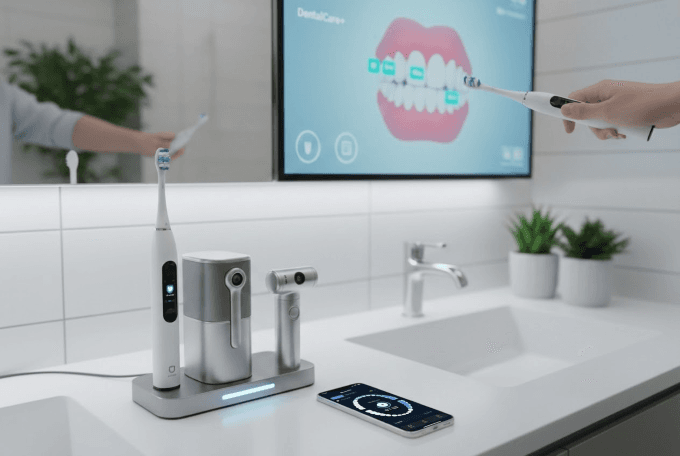
Smart toothbrushes paired with dental care apps, like BrushO’s smart toothbrush and companion app, redefine brushing by syncing real-time data via Bluetooth to offer personalized guidance, coverage tracking, progress reports, and motivation through gamified rewards. This integration transforms how users approach oral care, improving brushing technique, consistency, and long-term dental health with actionable insights and tailored recommendations.
 

The Power of Smart Device + App Integration

Modern oral care is evolving with smart technology that goes beyond simple brushing timers. Devices like the BrushO smart toothbrush connect seamlessly with dental care apps to provide an intelligent, data-driven brushing experience that helps users understand how they brush, not just that they brush. This fusion of hardware and software optimizes oral hygiene techniques, encourages better daily habits, and personalizes care in a way traditional toothbrushes cannot. By pairing your toothbrush with a dedicated app, brushing becomes an interactive experience where every session yields actionable feedback, progress tracking, and even tailored recommendations. For many users, this means a shift from guesswork to informed, effective oral care.
 

How Smart Toothbrushes Sync With Dental Care Apps

1. Bluetooth Pairing and Data Syncing

Integration begins with Bluetooth connectivity. After downloading the dental care app to your phone and enabling Bluetooth, your smart toothbrush automatically syncs data from each brushing session. Once connected, brushing metrics are sent to the app, creating a digital record of oral hygiene behavior. This connection empowers users to review detailed brushing analytics that go far beyond what a manual toothbrush or non-connected electric brush can provide. It turns your mobile device into a real-time dashboard for oral health.

2. Personalized Oral Profiles

When first setting up the app, users complete a brief oral health profile that includes sensitivity levels, whitening goals, gum care needs, and dental history. This allows the app’s AI engine to tailor suggestions and brushing guidance specifically to your mouth and dental care goals—something generic brushes cannot do. These profiles ensure the app doesn’t just track data—it interprets it in the context of your unique dental needs.
 

Core Features of Dental Care App Integration

1. Zone Coverage Monitoring and Feedback

Smart toothbrush systems like BrushO use advanced sensors and Fully Smart Brushing (FSB) technology to divide your mouth into multiple zones. During brushing, the app visualizes this data and alerts you if a zone is missed or under-cleaned, helping ensure comprehensive coverage. This real-time feedback helps users avoid common brushing mistakes—like ignoring back molars or inner tooth surfaces—by notifying them of missed areas instantly.

2. Real-Time Alerts During Brushing

Unlike traditional brushing, where you might not realize you’re applying too much pressure or missing zones, app integration immediately notifies you through visual cues or in-app indicators if something needs correction. These alerts encourage better technique while you brush, not just afterward. For example, if pressure is too high—potentially leading to gum damage—the system will signal you to adjust your technique.

3. Track Progress With Brushing Reports

Apps generate comprehensive weekly or monthly reports that show brushing duration, consistency, missed zones, pressure balance, and overall brushing scores. These insights help users track long-term habits and see improvements over time—similar to fitness apps that plot progress charts against goals. This kind of longitudinal tracking is especially useful before dental checkups, as it provides a documented brushing history you can share with your dentist.

4. Smart Suggestions Powered by AI

As more brushing data is collected, the app’s AI begins to generate smart suggestions—such as recommending brushing modes (e.g., sensitive, deep clean, whitening), suggesting adjustments for pressure, or highlighting zones needing greater attention. These suggestions evolve with your behavior and oral care goals, making the system adaptive rather than static. This level of personalization makes brushing more effective and efficient.

5. Gamified Motivation and Habit Building

Dental care apps often include motivation-driven features such as gamification and reward systems. For example, rewarding users with points for consistent brushing or high brushing scores encourages positive habits. Points can be redeemed for incentives like free brush heads or wellness challenges, making routine care more engaging and enjoyable. This behavioral reinforcement helps users, especially children and habit-challenged adults, maintain better long-term brushing consistency.

6. Integration With Teledentistry and Professional Care

With dental telehealth on the rise, some apps allow users to share brushing reports securely with their dentist. This enables remote monitoring of oral hygiene trends and allows professionals to make informed recommendations or adjustments without in-office visits. This future-oriented trend bridges everyday brushing and professional dental care.
 

Benefits of App-Connected Oral Care Systems

1. Improved Brushing Technique

By providing real-time feedback and tracking coverage, app integration ensures users brush more effectively every session.

2. Personalized Oral Hygiene Guidance

Tailored insights based on your dental profile mean care adapts to your specific needs.

3. Consistency and Habit Formation

Progress reports, habit streaks, and rewards foster motivation—helping users stick to recommended brushing routines.

4. More Informed Dental Checkups

Sharing brushing data with dental professionals supports preventative care and early issue detection.

5. Family Oral Care Management

Some apps allow multi-user tracking so parents can monitor children’s brushing habits or households can manage multiple profiles in one place.

A Smarter Future for Daily Oral Hygiene

Smart toothbrushes integrated with dental care apps like the BrushO system turn an ordinary routine into a scientifically informed, engaging oral care experience. By connecting brushing data with personalized insights, real-time coaching, and progress tracking, users gain a deeper understanding of their habits and how to improve them. This digital synergy empowers better brushes, better habits, and ultimately better long-term oral health—proving that technology, when thoughtfully designed, can make daily brushing smarter and more effective.

সাম্প্রতিক পোস্ট

Saliva as a Diagnostic Fluid in Dentistry

Saliva as a Diagnostic Fluid in Dentistry

Saliva has moved from the byproduct of the examination to the fluid that the modern practice can read, and the diagnostics that the salivary sample supports now reach from the caries risk to the periodontal inflammation and beyond. The fluid is easy to collect, safe to handle, and rich in the pro...

Ridge Split Technique for Narrow Alveolar Ridges

Ridge Split Technique for Narrow Alveolar Ridges

The narrow alveolar ridge is the common obstacle that the implant plan meets in the healed posterior site, and the ridge split technique is the approach that widens the crest without the block graft and the second surgical site. The technique uses the viscoelastic property of the bone, and the co...

Resin-Bonded Bridges: Indications, Design, and Survival

Resin-Bonded Bridges: Indications, Design, and Survival

The resin-bonded bridge is the conservative alternative to the conventional fixed prosthesis, and its place in the modern practice has widened as the adhesive dentistry matured. The prosthesis replaces the missing tooth with the minimal removal of the enamel from the abutment, and the retention i...

Systemic Antibiotics as an Adjunct in Periodontitis

Systemic Antibiotics as an Adjunct in Periodontitis

The systemic antibiotic has a defined and a narrow place in the periodontal therapy, and the clinician who respects its limits uses it well while the clinician who reaches for it routinely erodes both the result and the antibiotic stewardship. The mechanical debridement remains the foundation of ...

Bond Failure in Fixed Orthodontic Treatment

Bond Failure in Fixed Orthodontic Treatment

The bond failure of the bracket is the interruption that the fixed orthodontic treatment can tolerate in the small number but not in the pattern, and the clinician who understands the cause reduces the frequency that the repeated rebonding records. The failure that recurs on the single tooth poin...

Medication-Related Oral Side Effects: Recognition in Practice

Medication-Related Oral Side Effects: Recognition in Practice

The prescription pad is one of the most common sources of the oral complaint that the patient brings to the dental office, and the clinician who does not think of the medication may spend the appointment treating the symptom that the drug created. The list of the agents that affect the mouth grow...

Intraoral Scanners Versus Conventional Impressions

Intraoral Scanners Versus Conventional Impressions

The intraoral scanner has moved from the novelty of the early adopters to the standard equipment of the modern prosthodontic practice, and the comparison with the conventional impression has become a daily question rather than an academic one. The scanner captures the surface of the teeth and the...

Endodontic Retreatment: Indications and Technical Considerations

Endodontic Retreatment: Indications and Technical Considerations

The endodontic retreatment is the second chance that the tooth receives when the initial treatment fails to resolve the infection or the symptoms, and the procedure is both more demanding and more rewarding than the primary treatment. The clinician who retreats the tooth encounters the filling ma...

Endodontic Access Preparation: Principles and Common Mistakes

Endodontic Access Preparation: Principles and Common Mistakes

The access preparation is the gateway of every root canal treatment, and it is the step at which the outcome of the case is most often decided, for good or for ill. A well-designed access straightens the canal system, removes the coronal obstruction, and allows the instruments and the irrigants t...

Dentist-Laboratory Communication in Prosthodontics

Dentist-Laboratory Communication in Prosthodontics

The restoration that the laboratory returns is only as good as the information that the clinician sends, and the communication between the dentist and the technician is the step that determines whether the crown, the veneer, or the bridge meets the expectation of the patient. The shade, the form,...
