
When we think about protecting our teeth, brushing and flossing often take center stage. But what we drink plays a surprisingly powerful role in enamel health. While some beverages weaken enamel with acidity and sugar, others help support remineralization and pH balance — critical for long-term oral protection. In this article, we’ll explore dentist-approved drinks that can promote enamel health and how you can combine them with smarter brushing habits powered by BrushO.
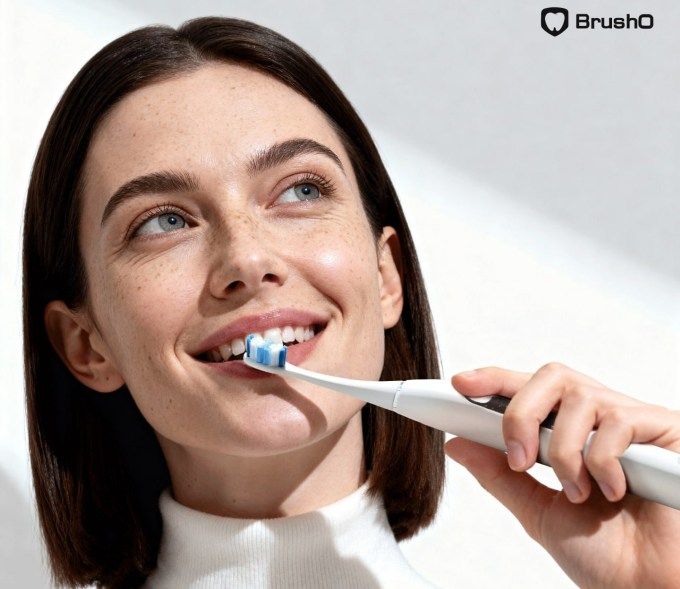
Plain water remains the gold standard when it comes to protecting your enamel.
• Neutralizes acids in the mouth
• Helps rinse away food particles and bacteria
• Promotes saliva production — your body’s natural defense
💡 Tip: Sip water throughout the day, especially after consuming acidic or sugary foods and drinks.
Milk is packed with calcium and phosphorus, two minerals essential for rebuilding enamel.
• Contains casein proteins that help buffer acids
• Supports bone and tooth mineral density
Best options: Low-fat or fat-free milk is recommended for adults concerned with overall health and enamel integrity.
Green tea contains natural fluoride and catechins, which offer dual benefits:
• Inhibit bacteria that cause plaque and acid
• Provide natural anti-inflammatory effects
✔️ Unsweetened green tea is best — avoid added sugars that can reverse its benefits.
Natural, unsweetened coconut water is:
• Low in acidity
• Contains potassium, magnesium, and calcium
• A good hydrating alternative without harming enamel
🚫 Avoid commercial coconut water with added sugars or flavors, which can lead to enamel erosion.
If you’re dairy-free, unsweetened almond milk offers some protective benefits:
• Alkaline in nature (pH-friendly)
• Can be fortified with calcium and vitamin D
• Doesn’t promote harmful bacterial growth
Just be sure it’s unsweetened — many flavored versions are acidic or sugary.
It’s equally important to avoid beverages that erode or demineralize your enamel over time:
• Soda (both regular and diet)
• Energy drinks
• Sweetened fruit juices
• Sports drinks
• Lemon-infused or vinegar-based drinks
These are often high in acidity and low in protective minerals — the perfect storm for enamel breakdown.
Even the best drinks can’t protect enamel alone. That’s where BrushO’s smart brushing technology steps in:
• AI zone tracking ensures all enamel surfaces are evenly cleaned
• Real-time brushing feedback helps reduce over-brushing, which can wear enamel
• Daily brushing score encourages consistent care, especially after acidic exposure
Here’s how to integrate enamel-friendly drinks into your oral routine:
| Time of Day | Drink Recommendation | BrushO Tip |
| Morning | Warm water or green tea | Use soft brushing mode after breakfast |
| Lunch | Water or unsweetened almond milk | Brush 30 mins post-meal to neutralize acids |
| Post-Workout | Coconut water | Rinse mouth and track brushing via BrushO app |
| Before Bed | Water or warm milk | Use BrushO’s night-time mode to protect enamel |
Choosing enamel-friendly beverages is one of the easiest ways to protect your teeth every day. When paired with BrushO’s intelligent brushing system, your enamel can stay stronger, smoother, and more resistant to decay.

Hyperdontia is the presence of one or more teeth in excess of the normal dental formula, and the resulting teeth are described as supernumerary. The condition is common enough to appear in routine practice but variable enough in presentation that the decision to intervene is rarely straightforwar...

Few patients complete orthodontic treatment without asking whether their teeth will move back. The honest answer is that they will, to some degree, in the majority of cases. Relapse is not a failure of treatment but a predictable biological response, and understanding why it happens is the basis ...

The mandible is the largest and most frequently fractured bone of the facial skeleton, and its management sits at the interface between trauma surgery and restorative dentistry. Treatment has shifted over four decades from prolonged maxillomandibular fixation towards rigid internal fixation with ...

Chronic liver disease affects hundreds of millions of people worldwide, and its prevalence continues to rise with the epidemic of metabolic liver disease. The liver is central to haemostasis, drug metabolism and immune competence, and its failure therefore alters the risk profile of almost every ...

Excessive gingival display, commonly described as a gummy smile, is one of the most frequent aesthetic concerns presented to dental practitioners. The condition is not a single entity but a clinical presentation that can arise from skeletal, gingival, muscular or dental factors, and the treatment...

Drug-induced gingival overgrowth is a well-recognised adverse effect of several widely prescribed medications, and it remains one of the most common drug-related findings in periodontal practice. The condition produces firm, fibrous enlargement of the gingiva that can interfere with speech, masti...

Denture stomatitis is an inflammatory condition of the denture-bearing mucosa that affects a large proportion of removable prosthesis wearers, yet it is frequently dismissed as a cosmetic annoyance. The condition is driven by a Candida biofilm on the fitting surface of the prosthesis, and it is m...

Chronic kidney disease affects an estimated 850 million people worldwide, and the number of patients surviving on dialysis or with a renal transplant continues to rise. These patients carry an oral disease burden that is substantially higher than that of the general population, and their medical ...

Angular cheilitis is an inflammatory lesion of the labial commissures that presents with erythema, fissuring and crusting at the corners of the mouth. It is one of the most common conditions encountered in general dental practice, yet it is frequently treated as a simple fungal infection and allo...

Adverse reactions to dental materials are uncommon but they are not rare, and they are frequently misdiagnosed because the oral mucosa responds to allergens in a limited number of ways. A burning sensation, a persistent ulcer or an unexplained area of erythema may all represent a hypersensitivity...

সবাই যেন নিজের মতো করে গড়তে পারে – এমনভাবে দ্রুত ও কম খরচে ওরাল হেলথ ডেটা নেটওয়ার্ক তৈরি করুন।
সবাই যেন নিজের মতো করে গড়তে পারে – এমনভাবে দ্রুত ও কম খরচে ওরাল হেলথ ডেটা নেটওয়ার্ক তৈরি করুন।


Address: RM 1427, 14/F RADIO CITY 505, HENNESSY RD CAUSEWAY BAY, HONG KONG
Code: 000000
Phone: +852-53758652
Email: customerservice@brusho.com