
Your upcoming dental appointment is more than just a cleaning—it’s an opportunity to show your dentist the results of your daily oral care. But how do you know you’re truly ready? This article offers a comprehensive oral health checklist to follow before your next dental visit, ensuring that you walk in with clean teeth, healthy gums, and confidence. From checking plaque levels and gum health to brushing with AI-powered feedback from tools like BrushO, every tip is grounded in science and designed to elevate your oral hygiene game.
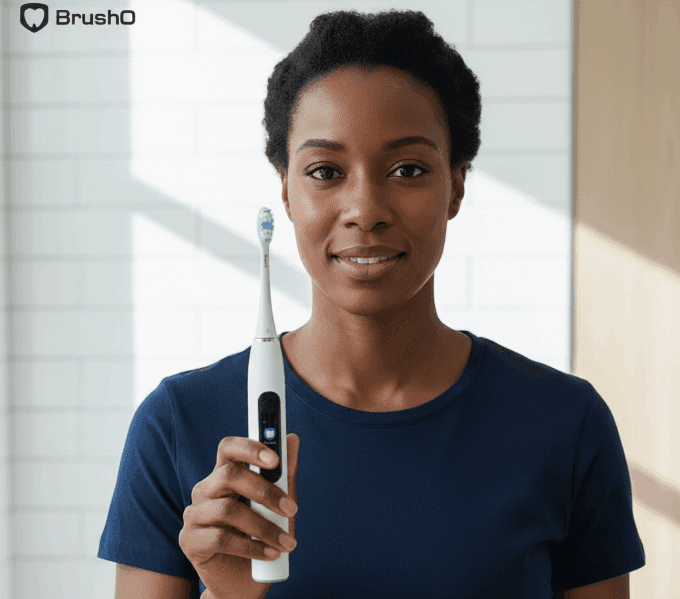
Many people treat dental appointments as passive check-ins. But preparation can greatly improve your outcomes. Dentists can better assess your baseline oral health, spot improvements, and recommend personalized care plans if your oral hygiene is already in good shape. Using a smart toothbrush like BrushO in the days and weeks leading up to your appointment can help ensure your brushing habits are precise, gentle, and comprehensive.
Before your dental visit, ask yourself:
• Are you brushing for 2 full minutes?
• Are you hitting all tooth surfaces?
• Are you brushing the gumline and back molars?
• Are you applying the correct pressure?
Most people unknowingly miss 20–30% of their mouth. Smart toothbrushes like BrushO help eliminate guesswork by:
• Mapping 6 zones and 16 tooth surfaces
• Giving real-time feedback on missed areas
• Warning you about excessive pressure that could damage enamel or gums
Gum disease is one of the most common issues spotted during dental visits. In the days before your appointment:
• Look for redness, swelling, or bleeding when brushing
• Use BrushO’s app report to identify areas with consistent overpressure
• Switch to BrushO’s “Gum Care” mode if needed
If you’re experiencing gum tenderness, catching it early could help your dentist provide preventive care rather than reactive treatment.
Flossing should be part of your daily routine—not something you cram in the night before your appointment.
Tips:
• Use string floss or water flossers consistently
• Focus on the areas between molars and around dental work
• Let your BrushO brushing report guide you to where plaque is most likely to linger
Certain foods can stain teeth or irritate gums right before your visit:
• Avoid coffee, tea, red wine, or dark berries
• Skip crunchy or overly acidic foods that may inflame gums
• Rinse with water after every meal
BrushO’s app also reminds you when to brush and rinse for optimal post-meal hygiene.
One of the best ways to prepare is by reviewing your recent BrushO brushing reports:
• Identify weak brushing zones
• Spot any trends like underbrushing or overpressure
• Share your brushing score with your dentist
These insights help your dentist tailor their recommendations and even adjust your cleaning procedure accordingly.
Before heading to your dentist, prepare:
• A list of any oral discomfort or sensitivity
• Products you currently use (toothpaste, brush type)
• Your BrushO usage data (can be exported from the app)
This gives your provider a complete picture of your oral habits.
Brushing your teeth within an hour before your appointment removes surface debris and gives your dentist a clearer view of your actual gum and tooth health. Use BrushO in “Clean” or “Polish” mode for a confident, fresh-mouth feeling right before your check-up.
BrushO combines cutting-edge features that support ideal pre-visit habits:
• AI zone tracking: Never miss critical areas
• Pressure feedback: Prevent gum damage
• Brush & Earn: Reward consistency before your visit
• Daily reports: Visualize your progress
These features turn your pre-appointment prep into a gamified wellness ritual—helping you walk into the clinic knowing your oral hygiene is on point.
Preparing for your dental visit doesn’t need to be complicated. With this checklist and the help of AI tools like BrushO, you can elevate your oral health, impress your dentist, and avoid surprise findings during your check-up. Take control of your oral care. Start with smarter brushing.
Jan 29
Jan 29

The posterior maxilla is the most demanding site in implant dentistry, because the pneumatized maxillary sinus frequently leaves the clinician with less bone than the implant requires. Maxillary sinus augmentation, the surgical procedure that raises the sinus floor to create vertical bone, has be...

The rubber dam is the oldest and still the most effective isolation device in restorative dentistry, and its reputation as an inconvenient extra step survives among practitioners who have never measured the time it actually saves. The dam isolates the field from the saliva, the tongue, and the ch...

The margin is the most vulnerable line in fixed prosthodontics, because it is the only boundary between the prepared tooth, the restoration, and the oral environment that the clinician cannot fully seal by effort alone. A restoration that fits seamlessly at the margin resists leakage, caries, and...

The masticatory system is built for function, yet much of its damage comes from habits that serve no purpose. Parafunctional habits, the clenching, the grinding, and the tongue pressing performed outside of normal function, sit behind much of the tooth wear, the temporomandibular pain, and the my...

Chronic mouth breathing in the growing child is seldom a dental problem in origin and almost always a facial one in consequence. The child who sleeps with the mouth open bypasses the physiologic benefits of nasal respiration, and the posture that the airway forces upon the tongue, the mandible, a...

The immediate denture is the prosthesis placed on the day the teeth are extracted, sparing the patient the edentulous interval the conventional denture imposes and preserving the occlusal vertical dimension, the facial support, and the appearance through the transition. The clinical literature ha...

The Class III malocclusion in the growing child carries a special urgency, because the maxillary deficiency that marks the pattern does not correct itself and the window for the growth-modifying treatment closes with the skeletal maturity. Elastic protraction, the orthopedic therapy that pulls th...

The denture is the only prosthetic device in medicine that its owner is expected to wear daily and to clean personally, yet it is also the device most commonly neglected until the signs of disease appear. A biofilm that forms on the acrylic base within hours is a reservoir of candida and bacteria...

The complete denture stands or falls on the impression, because the impression determines how well the base follows the mucous membrane and how evenly the occlusal load is distributed across the basal seat. For a century the profession has argued about whether the impression should record the muc...

The all-ceramic crown has moved from a niche product to the default restoration for the anterior single tooth in a single clinical generation, driven by patient demand for metal-free appearance and by materials that now survive functional loading as reliably as their metal-ceramic predecessors. A...

সবাই যেন নিজের মতো করে গড়তে পারে – এমনভাবে দ্রুত ও কম খরচে ওরাল হেলথ ডেটা নেটওয়ার্ক তৈরি করুন।
সবাই যেন নিজের মতো করে গড়তে পারে – এমনভাবে দ্রুত ও কম খরচে ওরাল হেলথ ডেটা নেটওয়ার্ক তৈরি করুন।


Address: RM 1427, 14/F RADIO CITY 505, HENNESSY RD CAUSEWAY BAY, HONG KONG
Code: 000000
Phone: +852-53758652
Email: customerservice@brusho.com