
Recurring mouth infections are not just dental problems — they are often early warning signs of a weakened immune system. When your body’s defenses drop, harmful bacteria, fungi, and viruses in the mouth multiply rapidly, leading to repeated gum infections, sores, and inflammation. This article explains how oral infections reflect immune health, what causes them, and how proper oral care with smart tools can help restore both oral and systemic balance.
Your mouth is the largest immune interface in your body. It is constantly exposed to bacteria, fungi, and viruses. When your immune system is strong, saliva, antibodies, and healthy gums keep these microbes under control. When immunity weakens, infections appear first in the mouth. This is why recurrent gum infections, mouth sores, thrush, or abscesses often show up before more severe illnesses are diagnosed.
The immune system normally suppresses harmful microbes. But when it weakens due to stress, illness, poor sleep, or inflammation, oral bacteria become aggressive.
This leads to:
• Frequent gum infections
• Bleeding gums
• Swollen or painful mouth tissue
• Mouth ulcers
• Fungal infections like thrush
• Persistent bad breath
These are not random. They are biological signals of an immune imbalance.
When plaque and gum inflammation persist, harmful bacteria enter the bloodstream. This forces the immune system to stay in constant defense mode.
Chronic oral infections:
• Drain immune resources
• Increase inflammatory burden
• Reduce white blood cell efficiency
• Make viral and bacterial infections harder to fight
This creates a vicious cycle: weaker immunity leads to more oral infections, which further weakens immunity.
Saliva contains:
• Antibodies (IgA)
• Antimicrobial enzymes
• Minerals that heal enamel
• Immune signaling molecules
When immunity drops, saliva quality declines. Dry mouth, thick saliva, and acidic pH allow microbes to dominate, increasing infection risk.
Repeated oral infections are associated with:
• Chronic stress
• Sleep deprivation
• Nutritional deficiencies
• Diabetes
• Autoimmune disorders
• Hormonal imbalance
• High systemic inflammation
The mouth reveals what blood tests may miss.
Standard brushing often leaves bacteria behind, especially along the gumline and between teeth — exactly where immune defense is weakest.
This allows:
• Hidden bacterial reservoirs
• Ongoing immune activation
• Repeated reinfection
To protect immunity, inflammation must be removed completely — not partially.
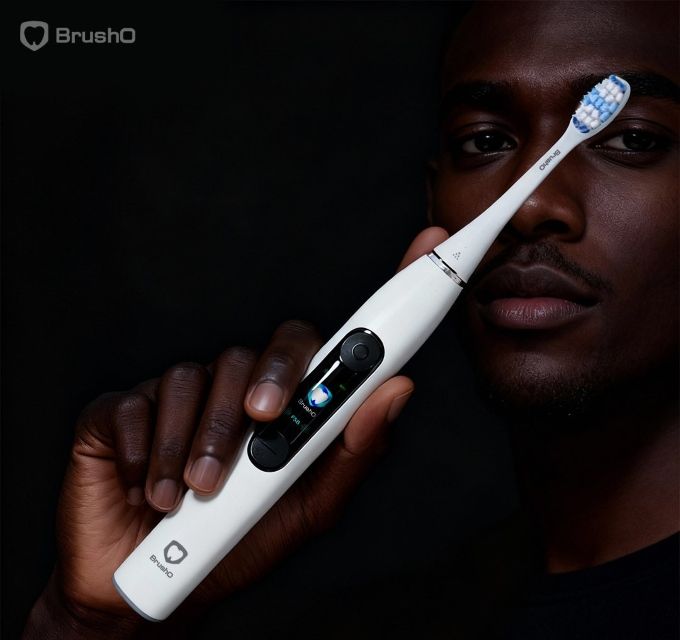
BrushO removes the microbial trigger that keeps the immune system inflamed.
Its AI system ensures:
• No gumline is missed
• No zone is under-cleaned
• No over-brushing damages immune barriers
• No bacteria survive in hidden areas
By stabilizing the oral microbiome, BrushO allows the immune system to recover and rebalance.
Signs Your Mouth Is Showing Immune Stress
• Gum bleeding
• Slow healing sores
• Chronic bad breath
• Repeated infections
• White patches
• Swollen tissue
These are immune signals — not cosmetic issues.
Your mouth is your immune system’s early warning system. When infections repeat, it means your defenses are under strain. By eliminating oral inflammation at its source, BrushO helps restore immune balance — protecting not just your smile, but your entire body. Healthy gums mean stronger immunity. 🛡️🦷

The uncontrolled hypertension is the condition that the dental practice meets in the patient who presents with the elevated pressure that the guideline does not permit for the elective treatment, and the management of this patient requires the deferral of the dental procedure and the referral to ...

The closure of the extraction space in the orthodontic treatment is the phase that demands the careful selection of the mechanics and the monitoring of the force that the appliance delivers. The sliding mechanics that rely on the continuous archwire and the power chain that connects the brackets ...

The transverse discrepancy of the maxilla is the problem that the crowding and the posterior crossbite often hide, and the maxillary expansion is the treatment that addresses the width of the arch rather than the position of the individual tooth. The clinician who diagnoses the constriction early...

The local anaesthesia is the daily procedure that the modern dentistry treats as the routine, and the complications that follow it range from the transient and the trivial to the permanent and the serious. The clinician who injects by the habit without the anatomy in the mind is the clinician who...

The hypertension is the condition that the dental practice meets in the every day, and the patient who carries the elevated pressure without the symptoms is the patient who presents the risk that the chair-side measurement reveals. The dental team occupies the position that no other profession ho...

The glass-ceramic crown has become the default restoration for the anterior and the many posterior teeth, and the material selection within the family is the decision that determines the strength, the aesthetics, and the longevity of the result. The lithium disilicate, the leucite, and the zircon...

The dental phobia is the extreme form of the dental fear that prevents the patient from attending the treatment that the oral health requires, and the management of the phobia demands the skill that extends beyond the routine behaviour guidance. The systematic desensitization, the exposure therap...

The dental fear of the child is the condition that shapes the attitude for the lifetime, and the clinician who manages the first visits with the skill builds the patient who attends the recall without the dread. The fear that the child develops follows the many sources, and the practice that reco...

The patient with controlled hypertension is the patient who requires the dental care that the oral health demands and the treatment that the blood pressure permits, and the clinician who manages the controlled case safely follows the guideline that the evidence supports. The controlled hypertensi...

The ceramic veneer is the restoration that the aesthetic dentistry depends on, and the bond that retains the veneer on the enamel is the critical link that determines whether the restoration survives the function or fractures and debonds. The clinical technique from the preparation to the cementa...

সবাই যেন নিজের মতো করে গড়তে পারে – এমনভাবে দ্রুত ও কম খরচে ওরাল হেলথ ডেটা নেটওয়ার্ক তৈরি করুন।
সবাই যেন নিজের মতো করে গড়তে পারে – এমনভাবে দ্রুত ও কম খরচে ওরাল হেলথ ডেটা নেটওয়ার্ক তৈরি করুন।


Address: RM 1427, 14/F RADIO CITY 505, HENNESSY RD CAUSEWAY BAY, HONG KONG
Code: 000000
Phone: +852-53758652
Email: customerservice@brusho.com