
Not all mouths are the same—and your brushing routine shouldn’t be either. A one-size-fits-all approach can leave key problem areas untouched, worsen existing gum conditions, or even cause enamel wear. A personalized brushing plan considers your specific oral health profile: sensitive areas, plaque buildup zones, gumline conditions, brushing technique, and more. In this article, we explain the science behind personalized dental care and how AI-powered toothbrushes like BrushO use real-time data to build adaptive, customized brushing guidance that evolves with your needs.
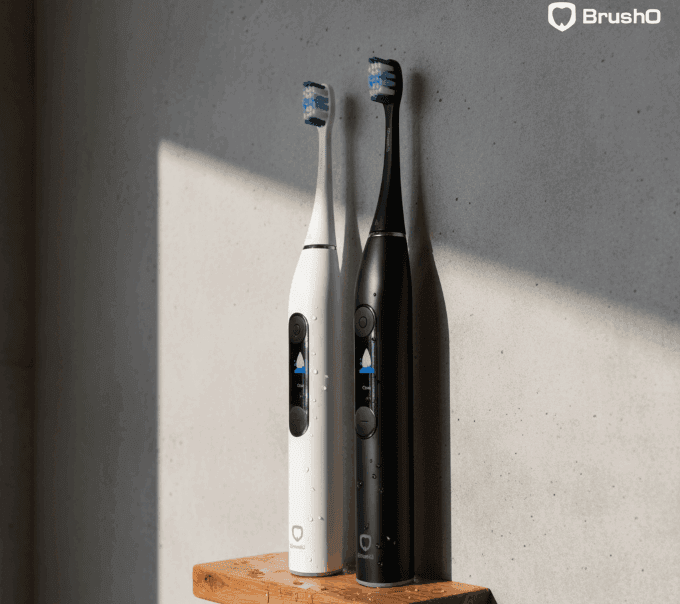
Most people are taught to brush twice a day for two minutes—but this blanket recommendation doesn’t account for individual differences, such as:
• Crowded or misaligned teeth
• Varying gum sensitivity or recession
• Orthodontic appliances or implants
• Left-behind plaque in “missed zones”
• Overbrushing or brushing too fast
Without tailored adjustments, people often under-brush high-risk areas and overbrush healthy ones, leading to avoidable problems like gum damage, cavities, and tooth wear.
A true personalized brushing plan involves more than a schedule. It incorporates:
• Zone-Based Guidance: Divides the mouth into 6 zones and 16 surfaces, prioritizing areas with higher plaque or bleeding risk.
• Technique Optimization: Adjusts brushing pressure, angle, and speed based on how you brush in real-time.
• Time Allocation: Extends time on neglected or problem-prone areas.
• Adaptive Recommendations: Evolves with your brushing data over time.
• User Profile: Considers factors like age, dental history, and gum health.
BrushO’s proprietary FSB (Fully Smart Brushing) technology offers intelligent adaptation that no manual brushing or basic electric brush can provide.
BrushO Features That Enable Personalization:
• Detects excessive pressure and alerts you instantly.
• Tracks hand motion, speed, and consistency.
• Ensures no tooth or gumline is skipped.
• Highlights areas missed in the daily brushing report.
• Weekly performance data triggers customized brushing recommendations.
• You receive tips via app based on your brushing “score.”
• The more you brush, the smarter it gets—adjusting feedback based on patterns.
• The more consistently you follow your plan, the more BrushO points you earn—turning good habits into lasting motivation.
With a personalized brushing plan, you’re more likely to:
• Prevent localized plaque buildup
• Reverse early-stage gum disease (gingivitis)
• Avoid enamel erosion from overbrushing
• Reduce dental hypersensitivity
• Achieve more even whitening over time
• Improve tongue and gumline hygiene
Personalization leads to better long-term outcomes than generic routines, as shown in clinical studies involving AI-powered brushing assistance.
Thanks to accessible smart toothbrushes like BrushO, you no longer need to guess if you’re brushing well. You can measure, adapt, and improve—with feedback as personal as your fingerprint. Whether you’re managing braces, sensitive gums, or just trying to prevent dental issues, a personalized brushing plan can save you thousands in dental bills and preserve your oral wellness for life. Oral health is personal—so should be your brushing plan. With BrushO, you’re not just brushing your teeth; you’re brushing smarter, safer, and specifically for you.
Jan 28
Jan 28

The posterior maxilla is the most demanding site in implant dentistry, because the pneumatized maxillary sinus frequently leaves the clinician with less bone than the implant requires. Maxillary sinus augmentation, the surgical procedure that raises the sinus floor to create vertical bone, has be...

The rubber dam is the oldest and still the most effective isolation device in restorative dentistry, and its reputation as an inconvenient extra step survives among practitioners who have never measured the time it actually saves. The dam isolates the field from the saliva, the tongue, and the ch...

The margin is the most vulnerable line in fixed prosthodontics, because it is the only boundary between the prepared tooth, the restoration, and the oral environment that the clinician cannot fully seal by effort alone. A restoration that fits seamlessly at the margin resists leakage, caries, and...

The masticatory system is built for function, yet much of its damage comes from habits that serve no purpose. Parafunctional habits, the clenching, the grinding, and the tongue pressing performed outside of normal function, sit behind much of the tooth wear, the temporomandibular pain, and the my...

Chronic mouth breathing in the growing child is seldom a dental problem in origin and almost always a facial one in consequence. The child who sleeps with the mouth open bypasses the physiologic benefits of nasal respiration, and the posture that the airway forces upon the tongue, the mandible, a...

The immediate denture is the prosthesis placed on the day the teeth are extracted, sparing the patient the edentulous interval the conventional denture imposes and preserving the occlusal vertical dimension, the facial support, and the appearance through the transition. The clinical literature ha...

The Class III malocclusion in the growing child carries a special urgency, because the maxillary deficiency that marks the pattern does not correct itself and the window for the growth-modifying treatment closes with the skeletal maturity. Elastic protraction, the orthopedic therapy that pulls th...

The denture is the only prosthetic device in medicine that its owner is expected to wear daily and to clean personally, yet it is also the device most commonly neglected until the signs of disease appear. A biofilm that forms on the acrylic base within hours is a reservoir of candida and bacteria...

The complete denture stands or falls on the impression, because the impression determines how well the base follows the mucous membrane and how evenly the occlusal load is distributed across the basal seat. For a century the profession has argued about whether the impression should record the muc...

The all-ceramic crown has moved from a niche product to the default restoration for the anterior single tooth in a single clinical generation, driven by patient demand for metal-free appearance and by materials that now survive functional loading as reliably as their metal-ceramic predecessors. A...

সবাই যেন নিজের মতো করে গড়তে পারে – এমনভাবে দ্রুত ও কম খরচে ওরাল হেলথ ডেটা নেটওয়ার্ক তৈরি করুন।
সবাই যেন নিজের মতো করে গড়তে পারে – এমনভাবে দ্রুত ও কম খরচে ওরাল হেলথ ডেটা নেটওয়ার্ক তৈরি করুন।


Address: RM 1427, 14/F RADIO CITY 505, HENNESSY RD CAUSEWAY BAY, HONG KONG
Code: 000000
Phone: +852-53758652
Email: customerservice@brusho.com