
From TikTok to Instagram, DIY teeth whitening hacks are everywhere—baking soda scrubs, lemon juice rinses, charcoal powders, and even hydrogen peroxide cocktails. While these trends promise instant results, they may come at a high cost: your enamel. In this post, we’ll explore the hidden risks of viral whitening methods and why safe, science-backed solutions like BrushO’s smart brushing are a better path to a radiant smile.
Many of today’s most popular whitening hacks are rooted in household ingredients or “natural” alternatives. Unfortunately, these can disrupt your oral health in several ways:
Though mildly abrasive, frequent use of baking soda without proper dilution can wear away enamel and cause gum irritation. The result? Increased tooth sensitivity and long-term damage.
Acidic solutions like lemon juice and vinegar erode enamel rapidly, weakening the tooth surface and increasing cavity risk. These acids also make your teeth more porous—inviting stains to settle in deeper.
Despite being touted as a detoxifier, charcoal powders are highly abrasive and may leave micro-scratches on enamel, leading to dullness and even more staining over time.
While peroxide is used professionally, high concentrations or improper at-home use can irritate gums, damage soft tissue, and even inflame the tooth pulp.
Your enamel is the protective outer layer of your teeth—and once it’s gone, it doesn’t grow back. Damaged enamel leads to:
• Tooth sensitivity to hot or cold
• Higher risk of decay and cavities
• Staining and yellowing from exposed dentin
• Rough or translucent tooth edges
Most whitening hacks strip away this vital layer, leaving your teeth vulnerable even if they appear temporarily whiter.
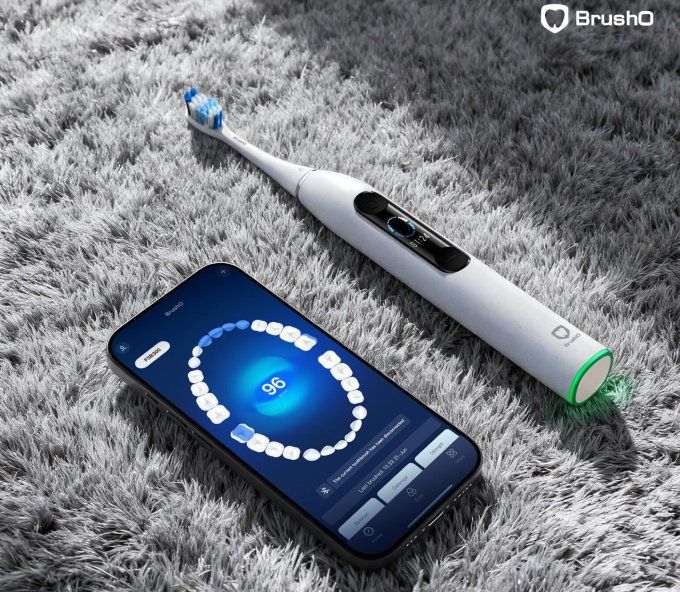
Rather than chasing quick-fix trends, BrushO encourages a sustainable, science-backed approach to whitening through daily brushing habits:
BrushO’s Whitening Mode uses optimized vibrations to gently lift surface stains without damaging enamel. Unlike abrasive methods, it:
• Enhances brightness gradually and safely
• Maintains tooth integrity
• Protects gums with pressure alerts
BrushO tracks your brushing patterns, reminding you to:
• Cover all areas evenly (especially stain-prone ones like molars and lower front teeth)
• Avoid overbrushing and excessive pressure
• Stick to a consistent whitening-safe routine
Combine BrushO use with:
• Fluoride toothpaste for enamel support
• A low-acid diet to prevent stain reabsorption
• Regular hydration to promote saliva flow and natural remineralization
Ask yourself:
• Is it acidic or abrasive? If yes, it can harm enamel.
• Would a dentist recommend it? Most viral trends lack professional backing.
• Does it promise fast, dramatic results? Real whitening takes consistency, not shortcuts.
Whiter teeth are a great confidence boost—but don’t sacrifice your enamel to get them. Trendy whitening hacks might give you a glow-up today, but lead to sensitivity, stains, and decay tomorrow. With BrushO, you can safely brighten your teeth while protecting what matters most: your long-term oral health.
Jan 15
Jan 15

Wisdom teeth, or third molars, are the last teeth to erupt, and a large proportion of them never achieve a functional position. When a wisdom tooth is trapped beneath the gum or bone, it is described as impacted, and the decision to remove it is one of the most common surgical judgments in dentis...

Disk displacement is the most common internal derangement of the temporomandibular joint (TMJ) and a frequent reason for orofacial pain consultations. Magnetic resonance imaging (MRI) is the accepted gold standard for confirming the position of the articular disk because it visualizes soft tissue...

Pulp sensibility testing remains the first diagnostic step before any endodontic intervention. Cold, heat and electric pulp tests (EPT) probe the neural response of the pulp through enamel and dentin, and their results decide whether a tooth needs root canal treatment, a direct pulp cap or simple...

Mouthguards protect teeth from sports trauma and night-time grinding, but a dirty guard can become a reservoir for bacteria, fungi and oral disease. Studies show that used mouthguards accumulate plaque, streptococci and Candida within days of normal wear, and poor hygiene has been linked to gingi...

Halitosis, or persistent bad breath, affects a large share of the adult population and carries real social and psychological consequences. In the vast majority of cases the source is the mouth itself, and the most important reservoir is the coating on the dorsal surface of the tongue. Understandi...

Root canal treatment succeeds only when instrumentation stops at the right place. Working length is the distance from a stable coronal reference point to the apical constriction, and every millimeter of error changes the outcome: over-instrumentation pushes debris and irrigant beyond the apex, wh...

Dry mouth is one of the most common complaints in dental practice, yet it is frequently underestimated. Xerostomia is the subjective feeling of oral dryness, while salivary hypofunction is the measurable reduction in saliva output, and the two do not always coincide. Because saliva protects teeth...

Diabetes affects more than blood sugar, and the mouth is often one of the first places where the disease makes itself known. The relationship is genuinely bidirectional: uncontrolled diabetes increases the risk and severity of periodontal disease, while severe gum inflammation makes blood sugar h...

Enamel is the hardest tissue in the human body, but it is not indestructible. Dental erosion is the chemical dissolution of enamel by acids that are not produced by bacteria, and modern diets supply those acids in abundance. Understanding how acidic foods and drinks attack the tooth surface is th...

A good toothbrush should work as well in a hotel bathroom as it does at home, and that is exactly what BrushO Travel Mode is designed to do. By lowering motor speed and trimming acoustic output, Travel Mode keeps the full two-minute cleaning routine in a form that is discreet enough for shared ro...

Bauen Sie schnell und kostengünstig ein Netzwerk für Zahngesundheitsdaten auf, das jeder nutzen kann.
Bauen Sie schnell und kostengünstig ein Netzwerk für Zahngesundheitsdaten auf, das jeder nutzen kann.


Address: RM 1427, 14/F RADIO CITY 505, HENNESSY RD CAUSEWAY BAY, HONG KONG
Code: 000000
Phone: +852-53758652
Email: customerservice@brusho.com