How Smart Toothbrushes Help Reduce Tooth Sensitivity
Jan 22

Jan 22
Tooth sensitivity affects millions worldwide, causing discomfort and pain during everyday activities like eating, drinking, and brushing. Fortunately, smart toothbrushes offer an advanced solution to alleviate these symptoms. By utilizing cutting-edge technology such as pressure sensors, real-time feedback, and customized brushing modes, these devices are designed to provide a more precise, gentle brushing experience. This blog explores the science behind tooth sensitivity and how smart toothbrushes can address this common issue.


Understanding Tooth Sensitivity and Its Causes

Tooth sensitivity, also known as dentin hypersensitivity, occurs when the underlying layer of the teeth, called dentin, becomes exposed due to the erosion of enamel or gum recession. The dentin contains tiny tubes that lead to the nerve, which is why it triggers sharp pain when exposed to hot, cold, sweet, or acidic substances.
Several factors contribute to this condition, including:
  • Enamel Erosion: Over time, the enamel can wear away due to acidic foods, aggressive brushing, or teeth grinding.
  • Gum Recession: The gums may recede due to age or improper brushing, exposing the sensitive areas of the tooth.
  • Brushing Habits: Using a hard-bristled toothbrush or brushing with excessive force can aggravate sensitivity.
With traditional brushing, individuals often fail to maintain the proper pressure and technique, which can worsen the condition. This is where smart toothbrushes shine—by offering features designed to improve brushing effectiveness and protect sensitive teeth.

How Smart Toothbrushes Help Reduce Tooth Sensitivity

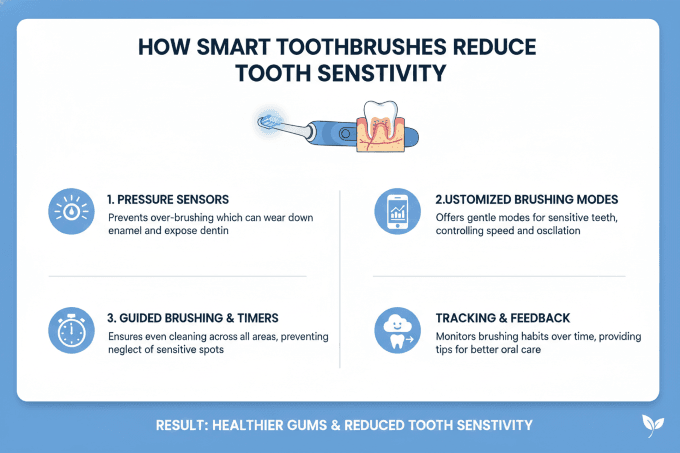
Smart toothbrushes, such as the BrushO smart toothbrush, come equipped with advanced technology that can help prevent or reduce tooth sensitivity. Here’s how:
  1. Pressure Sensors

    One of the key features of smart toothbrushes is pressure sensors that alert users when they are brushing too hard. Brushing with excessive force can lead to enamel wear and gum recession, both of which are major causes of tooth sensitivity. By receiving real-time feedback, users can adjust their brushing technique to avoid unnecessary pressure.
  2. Personalized Brushing Modes

    Smart toothbrushes offer various brushing modes, including gentle settings specifically designed for sensitive teeth. These modes adjust the brush's speed and motion to provide a softer, more comfortable cleaning experience, helping to reduce the likelihood of triggering pain or discomfort.
  3. Full-Mouth Coverage Tracking

    Many smart toothbrushes come with tracking capabilities that ensure users brush every part of their mouth equally, preventing areas from being missed or over-brushed. This technology ensures an even and thorough clean, which is important for maintaining optimal oral health and minimizing gum irritation.
  4. Real-Time Feedback

    Using an accompanying app, smart toothbrushes can offer real-time feedback on brushing technique and pressure. This ensures that users are consistently following recommended oral care practices to prevent tooth sensitivity and achieve the best possible results.
  5. Timers and Alerts

    Smart toothbrushes are equipped with timers that ensure users brush for the recommended two minutes. The built-in alerts also notify users when it's time to change the brushing area, which prevents focusing too much pressure on any one spot, helping to protect sensitive teeth.


Conclusion

Smart toothbrushes offer a modern solution to the age-old problem of tooth sensitivity. By incorporating innovative features like pressure sensors, personalized modes, and real-time feedback, these devices provide a more precise and comfortable brushing experience, protecting sensitive teeth from further damage. Whether you're looking to prevent tooth sensitivity or alleviate existing discomfort, a smart toothbrush may be your key to better oral health.

Aktuelle Beiträge

Wisdom Teeth: When to Keep and When to Remove

Wisdom Teeth: When to Keep and When to Remove

Approximately 85% of people will need their wisdom teeth removed at some point in their lives. However, not all third molars require extraction.

Tooth Sensitivity: Causes, Prevention, and Treatment Options

Tooth Sensitivity: Causes, Prevention, and Treatment Options

Dentin hypersensitivity affects approximately 1 in 3 adults worldwide, causing sharp, transient pain when teeth are exposed to cold, hot, sweet, or acidic stimuli. This common condition occurs when the protective enamel layer wears thin or gum tissue recedes, exposing the underlying dentin and its microscopic tubules that lead directly to the tooth's nerve center.

Root Canal Therapy: Saving Natural Teeth with Endodontic Treatment

Root Canal Therapy: Saving Natural Teeth with Endodontic Treatment

Despite its fearsome reputation, modern root canal therapy is a virtually painless procedure that saves over 15 million teeth each year in the United States alone. With advances in rotary instrumentation, digital imaging, and local anesthesia, the success rate of root canal treatment now exceeds 95%.

Orthodontics: Modern Approaches to Teeth Straightening

Orthodontics: Modern Approaches to Teeth Straightening

Orthodontic treatment has evolved dramatically beyond traditional metal braces. Today's options include clear aligners, lingual braces, and accelerated orthodontic techniques that can shorten treatment time by up to 50%.

Gum Disease: From Gingivitis to Periodontitis — Prevention and Treatment

Gum Disease: From Gingivitis to Periodontitis — Prevention and Treatment

Periodontal disease affects nearly 50% of adults over the age of 30 in the United States, yet its early stage — gingivitis — is completely reversible with proper oral hygiene. Left untreated, gum disease progresses silently, destroying the supporting structures of teeth and emerging as the leading cause of tooth loss among adults worldwide.

Sleep Apnea and the Dentist's Role: Oral Appliance Therapy Explained

Sleep Apnea and the Dentist's Role: Oral Appliance Therapy Explained

Obstructive sleep apnea (OSA) affects an estimated 1 billion adults worldwide aged 30–69, with moderate to severe disease (apnea-hypopnea index, AHI ≥ 15) present in approximately 425 million (Benjafield et al., 2019). In the United States, prevalence estimates range from 9–38% of adults, with 80–90

Pediatric Dentistry: What Every Parent Should Know

Pediatric Dentistry: What Every Parent Should Know

Early childhood caries (ECC) is the most common chronic disease of childhood — five times more prevalent than asthma and seven times more common than hay fever, according to the American Academy of Pediatric Dentistry. Yet it is almost entirely preventable. Despite decades of public health education

Oral Probiotics: Can Beneficial Bacteria Improve Dental Health?

Oral Probiotics: Can Beneficial Bacteria Improve Dental Health?

For over a century, dentistry approached oral microorganisms with a single strategy: elimination. From Lister's carbolic acid spray in the 1860s to modern chlorhexidine mouthwashes, the goal was a sterile mouth. But the oral cavity is not sterile — it is a complex ecosystem housing over 700 bacteria

Dry Mouth (Xerostomia): Causes, Consequences, and Clinical Management

Dry Mouth (Xerostomia): Causes, Consequences, and Clinical Management

Xerostomia — the subjective sensation of dry mouth — affects an estimated 20–30% of the adult population, with prevalence rising sharply with age. Among individuals over 65, prevalence exceeds 40%, driven largely by polypharmacy and systemic disease (Thomson et al., 2023). While often dismissed as a

Dental Implants: The Science of Osseointegration and Long-Term Outcomes

Dental Implants: The Science of Osseointegration and Long-Term Outcomes

In 1952, Swedish orthopedic surgeon Per-Ingvar Brånemark made a serendipitous observation that would transform restorative dentistry. While studying bone healing in rabbit tibiae using titanium optical chambers, he found the chambers could not be removed — bone had grown into direct, rigid contact w
