
Building healthy brushing habits in children requires more than daily reminders—it depends on engagement, correct technique, and long-term consistency. Many kids struggle with brushing properly due to boredom, poor technique, or irregular routines, which can lead to cavities and gum problems over time. Smart toothbrushes address these challenges by combining real-time guidance, interactive features, and habit tracking. With AI-powered feedback, gamified rewards, and parental monitoring tools, smart toothbrushes like BrushO help children learn proper brushing techniques while making oral care enjoyable and effective from an early age. A smart toothbrush provides a modern solution by transforming daily brushing into an engaging and educational routine that supports healthy habits and proper technique.
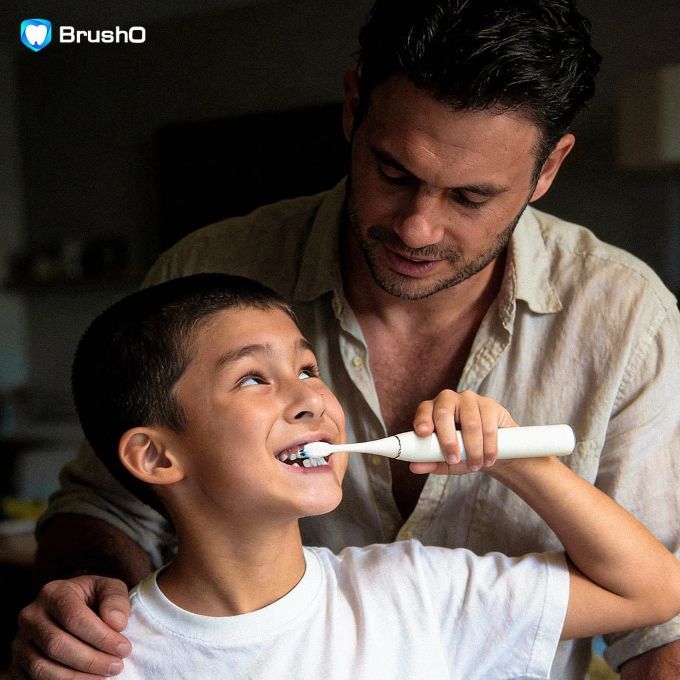
Helping children develop good oral hygiene habits comes with several common challenges:
Lack of engagement: Many kids find brushing boring and may rush through it or skip it entirely.
Inconsistent brushing technique: Without guidance, children may miss key tooth surfaces or apply too much pressure.
Irregular brushing routines: Inconsistent schedules make it harder for kids to form lasting habits.
Over time, these issues increase the risk of cavities, gum disease, and enamel erosion. This is why early habit formation, along with the right tools, is critical.
A smart toothbrush for kids utilizes sensors, AI, and app-based feedback to transform brushing into an interactive experience that promotes correct brushing behavior.
Smart toothbrushes provide immediate feedback to help children brush properly. Devices like the BrushO monitor:
Brushing pressure: Alerts kids when they brush too hard, protecting gums and enamel.
Brushing duration: Encourages brushing for the dentist-recommended two minutes.
Full-mouth coverage: Tracks all 6 brushing zones and 16 tooth surfaces to reduce missed areas.
This real-time guidance helps children learn proper brushing techniques naturally.
Every child’s oral care needs are different. Smart toothbrushes offer customized modes to support growing mouths, including:
Sensitive Mode: Designed for young children with delicate gums.
Deep Clean Mode: Useful after sugary snacks or meals.
White+ Mode: Suitable for older kids or teens concerned about tooth discoloration.
These personalized modes make brushing both safe and effective as children grow.
Gamification plays a key role in habit formation. The BrushO Brush & Earn system rewards kids with $BRUSH tokens for completing brushing goals such as full coverage, correct duration, and daily consistency. These rewards motivate children to brush regularly and reinforce positive behavior through fun incentives.
Track brushing frequency and duration
Review coverage data to identify missed areas
Set brushing reminders for morning and night routines
This visibility helps parents guide children toward better oral hygiene—even when they’re not physically supervising.
Using a smart toothbrush helps children build healthy habits that last well beyond childhood:
Stronger brushing consistency through real-time feedback
Higher engagement thanks to interactive and reward-based features
Improved oral health outcomes with better technique and coverage
Greater parental confidence through data-driven tracking
To maximize the benefits of smart toothbrushes for kids:
Establish fixed brushing times every morning and evening
Use positive reinforcement, such as rewards or progress milestones
Brush together to model proper technique
Reduce distractions and keep brushing time screen-free
Consistency, combined with smart technology, helps children develop strong oral care habits naturally.
Smart toothbrushes are redefining how children learn oral hygiene. By combining real-time feedback, personalized guidance, and gamified motivation, these tools make brushing both effective and enjoyable. As kids develop proper brushing habits early, they are more likely to maintain healthy teeth and gums throughout their lives.
BrushO is an AI-powered smart toothbrush designed to improve oral health through real-time brushing feedback, full-mouth coverage tracking, and personalized guidance. With features such as pressure monitoring, habit analytics, and a Web3-enabled Brush & Earn rewards system, BrushO helps kids and parents turn daily brushing into a fun, data-driven wellness habit.
Jan 16
Jan 16

Torus mandibularis and torus palatinus are benign bony overgrowths that arise on the lingual surface of the mandible and on the midline of the hard...

Oral pigmented lesions are a diverse group of conditions that appear as areas of abnormal color in the oral mucosa, ranging from brown and black...

Gingivoplasty is a periodontal surgical procedure designed to reshape the gingiva and restore a natural, harmonious contour to the gum line. Unlike...

Fusion and gemination are developmental dental anomalies in which two teeth appear to be joined together, producing a single crown that is wider than...

An anterior open bite is a malocclusion in which the anterior teeth fail to meet in the vertical dimension when the posterior teeth are in occlusion,...

Zirconia implant abutments have become the standard of care in the esthetic zone because of their ability to mimic the natural translucency of tooth structure and to preserve the appearance of peri-implant soft tissue. As patients increasingly demand restorations that are indistinguishable from n...

A frenectomy is a minor surgical procedure that removes or releases a frenum, the small fold of tissue that connects the lips, cheeks, or tongue to the underlying structures. When a frenum is abnormally positioned, large, or tight, it can interfere with speech, feeding, oral hygiene, the eruption...

The separation of an instrument within a root canal is one of the most stressful events in endodontic practice, and it occurs in every clinician's career at some point. When a nickel-titanium or stainless steel file fractures, its fragment remains in the canal and can obstruct cleaning, shape, fi...

Corticotomy-assisted orthodontics is an advanced technique that combines surgical stimulation of the alveolar bone with conventional tooth movement to shorten treatment time. The approach, popularized as periodontally accelerated osteogenic orthodontics, or PAOO, has transformed the management of...

Bruxism, the involuntary clenching and grinding of the teeth, affects a large proportion of the population and can cause severe damage to the dentition, the supporting structures, and the temporomandibular joint. The occlusal splint, or night guard, is the most widely used appliance for the manag...

Bauen Sie schnell und kostengünstig ein Netzwerk für Zahngesundheitsdaten auf, das jeder nutzen kann.
Bauen Sie schnell und kostengünstig ein Netzwerk für Zahngesundheitsdaten auf, das jeder nutzen kann.


Address: RM 1427, 14/F RADIO CITY 505, HENNESSY RD CAUSEWAY BAY, HONG KONG
Code: 000000
Phone: +852-53758652
Email: customerservice@brusho.com