
Many office workers brush their teeth twice a day—once in the morning and once at night—but still suffer from dry mouth, bad breath, and even unexpected cavities. Why? The answer lies in the modern desk job routine: extended screen time, dehydration, poor posture, constant snacking, and rarely brushing during the day. This article examines why those working in offices are particularly susceptible to oral health issues, and how intelligent tools like BrushO can help mitigate this trend by promoting data-driven daily habits.
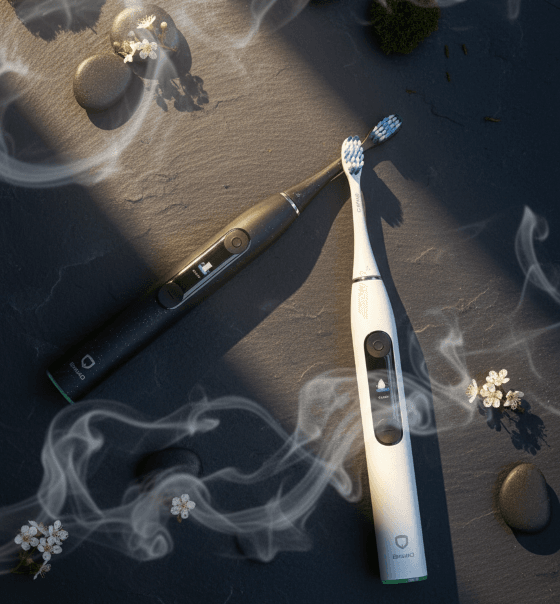
Office culture often encourages long hours, coffee breaks, and back-to-back meetings—but discourages mid-day brushing, hydrating properly, or even standing up frequently. These habits slowly erode oral health without employees realizing it.
• Reduced saliva flow from dehydration and prolonged screen time
• Frequent coffee, tea, or sugary drink consumption
• Skipping mid-day brushing or flossing
• High-stress environments increase inflammation and dry mouth
• Snacking on processed foods that stick to teeth
These combined create the perfect conditions for bacteria to thrive—leading to plaque, bad breath, and eventually, cavities or gum disease.
Dry mouth (xerostomia) is not just uncomfortable—it’s harmful. Saliva is your mouth’s natural defense mechanism. It washes away food particles, neutralizes acids, and helps repair enamel. When saliva production drops, harmful bacteria can flourish.
• Air conditioning dehydrates the air (and your mouth).
• Stress and multitasking reduce saliva production.
• Limited water intake throughout the day.
• Excessive caffeine suppresses salivary glands.
Cavities form when food particles and bacteria sit on your teeth, producing acids that erode enamel. For office workers:
• Snacking without brushing leaves sugar on your teeth for hours.
• Soft drinks, flavored water, or sugary coffee creamers increase acidity.
• Poor posture or mouth breathing during screen time can dry out your mouth and worsen decay risk.
Even if you brush morning and night, these daily patterns mean bacteria stay active for hours during the workday.
High-stress environments like fast-paced offices can impact oral health in subtle ways:
• Teeth grinding or jaw clenching (bruxism)
• Inflammation linked to periodontal disease
• Neglected routines when overwhelmed
Over time, stress becomes a silent contributor to both cavities and gum disease—especially when it leads to skipped brushing or poor dietary choices.
BrushO is designed to help busy professionals stay on top of oral health—even during hectic workweeks.
• Brushing reminders at optimal times (e.g., before/after work and lunch)
• Real-time feedback on pressure, coverage, and duration
• 6-zone coverage ensures back molars and gumlines aren’t missed
• Custom modes like sensitive or deep-clean for coffee drinkers
• $BRUSH token rewards motivate users to maintain consistent routines
• Daily habit tracking to catch inconsistent patterns
Even if brushing at work isn’t possible, BrushO ensures your morning and evening routines are maximized for effectiveness.
• Drink water regularly—set reminders every 30–60 minutes.
• Keep sugar-free gum at your desk to stimulate saliva.
• Rinse your mouth with water after coffee or snacks.
• If possible, keep a travel-size toothbrush at your desk.
• Use BrushO’s app insights to improve routines when you’re back home.
Office life may be great for productivity—but not for your teeth. Between coffee breaks, snack drawers, long meetings, and constant screen time, it’s easy to forget that your oral health is quietly being compromised. Fortunately, awareness combined with smarter tools can protect your smile. By using an AI-powered toothbrush like BrushO, you can fight back against dry mouth and cavities with smarter routines, personalized brushing plans, and real-time feedback—keeping your teeth healthy, even on your busiest workdays.
Jan 16
Jan 16

Wisdom teeth, or third molars, are the last teeth to erupt, and a large proportion of them never achieve a functional position. When a wisdom tooth is trapped beneath the gum or bone, it is described as impacted, and the decision to remove it is one of the most common surgical judgments in dentis...

Disk displacement is the most common internal derangement of the temporomandibular joint (TMJ) and a frequent reason for orofacial pain consultations. Magnetic resonance imaging (MRI) is the accepted gold standard for confirming the position of the articular disk because it visualizes soft tissue...

Pulp sensibility testing remains the first diagnostic step before any endodontic intervention. Cold, heat and electric pulp tests (EPT) probe the neural response of the pulp through enamel and dentin, and their results decide whether a tooth needs root canal treatment, a direct pulp cap or simple...

Mouthguards protect teeth from sports trauma and night-time grinding, but a dirty guard can become a reservoir for bacteria, fungi and oral disease. Studies show that used mouthguards accumulate plaque, streptococci and Candida within days of normal wear, and poor hygiene has been linked to gingi...

Halitosis, or persistent bad breath, affects a large share of the adult population and carries real social and psychological consequences. In the vast majority of cases the source is the mouth itself, and the most important reservoir is the coating on the dorsal surface of the tongue. Understandi...

Root canal treatment succeeds only when instrumentation stops at the right place. Working length is the distance from a stable coronal reference point to the apical constriction, and every millimeter of error changes the outcome: over-instrumentation pushes debris and irrigant beyond the apex, wh...

Dry mouth is one of the most common complaints in dental practice, yet it is frequently underestimated. Xerostomia is the subjective feeling of oral dryness, while salivary hypofunction is the measurable reduction in saliva output, and the two do not always coincide. Because saliva protects teeth...

Diabetes affects more than blood sugar, and the mouth is often one of the first places where the disease makes itself known. The relationship is genuinely bidirectional: uncontrolled diabetes increases the risk and severity of periodontal disease, while severe gum inflammation makes blood sugar h...

Enamel is the hardest tissue in the human body, but it is not indestructible. Dental erosion is the chemical dissolution of enamel by acids that are not produced by bacteria, and modern diets supply those acids in abundance. Understanding how acidic foods and drinks attack the tooth surface is th...

A good toothbrush should work as well in a hotel bathroom as it does at home, and that is exactly what BrushO Travel Mode is designed to do. By lowering motor speed and trimming acoustic output, Travel Mode keeps the full two-minute cleaning routine in a form that is discreet enough for shared ro...

Bauen Sie schnell und kostengünstig ein Netzwerk für Zahngesundheitsdaten auf, das jeder nutzen kann.
Bauen Sie schnell und kostengünstig ein Netzwerk für Zahngesundheitsdaten auf, das jeder nutzen kann.


Address: RM 1427, 14/F RADIO CITY 505, HENNESSY RD CAUSEWAY BAY, HONG KONG
Code: 000000
Phone: +852-53758652
Email: customerservice@brusho.com