How Smart Toothbrushes Help Reduce Tooth Sensitivity
Jan 22

Jan 22
Tooth sensitivity affects millions worldwide, causing discomfort and pain during everyday activities like eating, drinking, and brushing. Fortunately, smart toothbrushes offer an advanced solution to alleviate these symptoms. By utilizing cutting-edge technology such as pressure sensors, real-time feedback, and customized brushing modes, these devices are designed to provide a more precise, gentle brushing experience. This blog explores the science behind tooth sensitivity and how smart toothbrushes can address this common issue.


Understanding Tooth Sensitivity and Its Causes

Tooth sensitivity, also known as dentin hypersensitivity, occurs when the underlying layer of the teeth, called dentin, becomes exposed due to the erosion of enamel or gum recession. The dentin contains tiny tubes that lead to the nerve, which is why it triggers sharp pain when exposed to hot, cold, sweet, or acidic substances.
Several factors contribute to this condition, including:
  • Enamel Erosion: Over time, the enamel can wear away due to acidic foods, aggressive brushing, or teeth grinding.
  • Gum Recession: The gums may recede due to age or improper brushing, exposing the sensitive areas of the tooth.
  • Brushing Habits: Using a hard-bristled toothbrush or brushing with excessive force can aggravate sensitivity.
With traditional brushing, individuals often fail to maintain the proper pressure and technique, which can worsen the condition. This is where smart toothbrushes shine—by offering features designed to improve brushing effectiveness and protect sensitive teeth.

How Smart Toothbrushes Help Reduce Tooth Sensitivity

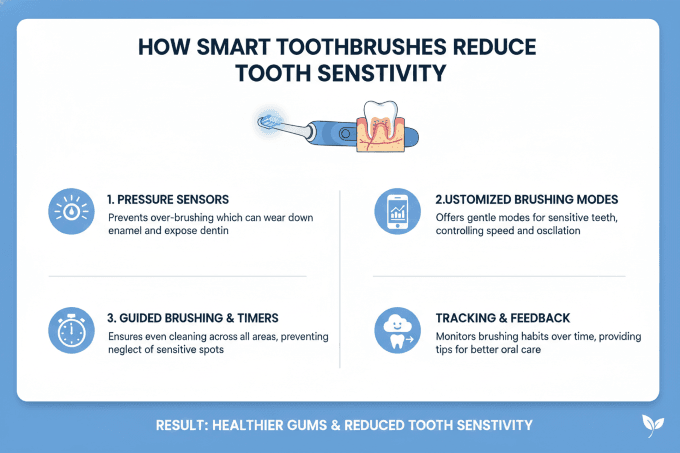
Smart toothbrushes, such as the BrushO smart toothbrush, come equipped with advanced technology that can help prevent or reduce tooth sensitivity. Here’s how:
  1. Pressure Sensors

    One of the key features of smart toothbrushes is pressure sensors that alert users when they are brushing too hard. Brushing with excessive force can lead to enamel wear and gum recession, both of which are major causes of tooth sensitivity. By receiving real-time feedback, users can adjust their brushing technique to avoid unnecessary pressure.
  2. Personalized Brushing Modes

    Smart toothbrushes offer various brushing modes, including gentle settings specifically designed for sensitive teeth. These modes adjust the brush's speed and motion to provide a softer, more comfortable cleaning experience, helping to reduce the likelihood of triggering pain or discomfort.
  3. Full-Mouth Coverage Tracking

    Many smart toothbrushes come with tracking capabilities that ensure users brush every part of their mouth equally, preventing areas from being missed or over-brushed. This technology ensures an even and thorough clean, which is important for maintaining optimal oral health and minimizing gum irritation.
  4. Real-Time Feedback

    Using an accompanying app, smart toothbrushes can offer real-time feedback on brushing technique and pressure. This ensures that users are consistently following recommended oral care practices to prevent tooth sensitivity and achieve the best possible results.
  5. Timers and Alerts

    Smart toothbrushes are equipped with timers that ensure users brush for the recommended two minutes. The built-in alerts also notify users when it's time to change the brushing area, which prevents focusing too much pressure on any one spot, helping to protect sensitive teeth.


Conclusion

Smart toothbrushes offer a modern solution to the age-old problem of tooth sensitivity. By incorporating innovative features like pressure sensors, personalized modes, and real-time feedback, these devices provide a more precise and comfortable brushing experience, protecting sensitive teeth from further damage. Whether you're looking to prevent tooth sensitivity or alleviate existing discomfort, a smart toothbrush may be your key to better oral health.

Publicaciones recientes

The Science of Teeth Whitening: What Works and What Doesn't

The Science of Teeth Whitening: What Works and What Doesn't

teeth whitening science, peroxide whitening mechanism, whitening safety, LED whitening efficacy, whitening toothpaste comparison

Interdental Cleaning: Floss, Water Flossers, and Interdental Brushes Compared

Interdental Cleaning: Floss, Water Flossers, and Interdental Brushes Compared

interdental cleaning comparison, water flosser vs string floss, interdental brush effectiveness, flossing science, plaque removal between teeth

Gum Recession: Causes, Prevention, and Modern Treatment Options

Gum Recession: Causes, Prevention, and Modern Treatment Options

gum recession causes, gingival recession treatment, gum graft surgery, pinhole technique, preventing receding gums

Fluoride: Myths, Facts, and How It Protects Your Teeth

Fluoride: Myths, Facts, and How It Protects Your Teeth

fluoride cavity prevention, fluoride myths debunked, remineralization fluoride, water fluoridation safety, hydroxyapatite vs fluoride

AI in Dentistry: How Machine Learning Is Changing Oral Health Care

AI in Dentistry: How Machine Learning Is Changing Oral Health Care

AI dentistry, machine learning dental diagnosis, AI cavity detection, dental AI radiography, computer vision oral health

Smart Toothbrush Sensors Explained: Pressure, Position, and the Tech That Tracks Your Brushing

Smart Toothbrush Sensors Explained: Pressure, Position, and the Tech That Tracks Your Brushing

The electric toothbrush has evolved from a simple oscillating handle into a sophisticated sensor platform. Modern smart toothbrushes pack accelerometers, gyroscopes, pressure sensors, and even camera-based vision systems into a waterproof housing smaller than a smartphone. The global smart toothbrus

The Oral Microbiome Explained: Good Bacteria, Bad Bacteria, and What Disrupts the Balance

The Oral Microbiome Explained: Good Bacteria, Bad Bacteria, and What Disrupts the Balance

Oral dysbiosis occurs when environmental pressures select for pathogenic species over commensals. The primary drivers include:

The Mouth-Heart Connection: How Gum Disease Increases Cardiovascular Risk

The Mouth-Heart Connection: How Gum Disease Increases Cardiovascular Risk

Periodontitis affects approximately 47.2% of adults aged 30 and older in the United States, according to the CDC's National Health and Nutrition Examination Survey (NHANES) data, with 8.5% classified as severe cases (Eke et al., 2015). Cardiovascular disease remains the leading cause of death global

How Enamel Erosion Happens: pH, Diet, and Prevention Strategies

How Enamel Erosion Happens: pH, Diet, and Prevention Strategies

Tooth enamel is composed of approximately 96% hydroxyapatite (Ca₁₀(PO₄)₆(OH)₂), a crystalline calcium phosphate mineral. The remaining 4% consists of water and organic matrix. This mineral structure gives enamel its remarkable hardness but also makes it chemically vulnerable—hydroxyapatite begins to

Diabetes and Oral Health: The Two-Way Relationship You Need to Know

Diabetes and Oral Health: The Two-Way Relationship You Need to Know

Diabetes affects over 537 million adults worldwide according to the International Diabetes Federation's 2021 Atlas, with projections reaching 783 million by 2045. Within this population, the prevalence of periodontitis is estimated at 60–70%, compared to 30–40% in the general population. The bidirec
