
To many parents, getting their child to brush their teeth can feel like an exhausting daily battle. Whether it’s the ticklish sensation, a fear of the toothbrush, or bad past experiences, dental anxiety in children is real—and very common. The good news? With the right approach, you can turn brushing time from tears into triumph. In this article, we’ll explore practical, psychology-backed tips to help children overcome their fear of brushing and create a positive relationship with oral hygiene. From smart toothbrushes like BrushO to fun routines and rewards, let’s make healthy smiles a happy habit.
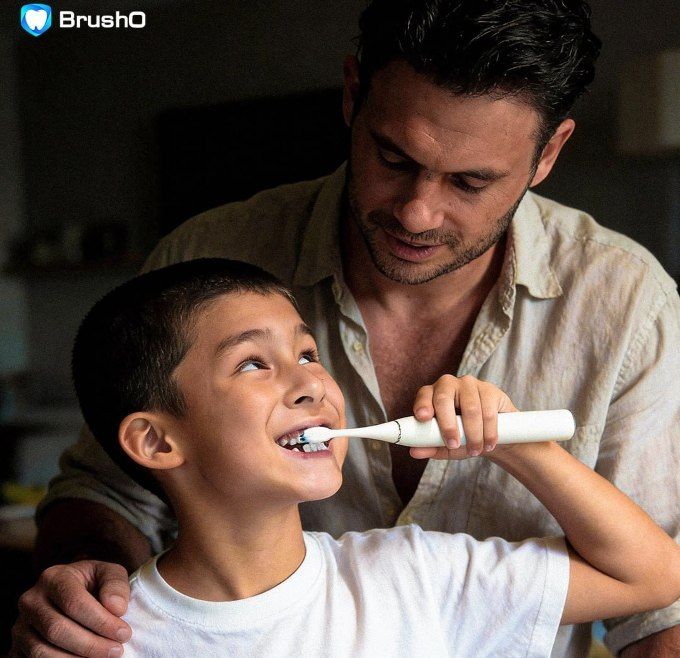
Helping kids brush their teeth shouldn’t feel like a wrestling match. However, if your child screams, cries, or refuses to brush altogether, you’re not alone. Many children develop fear or resistance to brushing due to:
• Sensory sensitivities
• Fear of choking or gagging
• Bad memories from dental visits
• Lack of understanding of why brushing matters
Fortunately, there are ways to gently guide children past this fear and help them feel in control of their dental care journey.
Before reaching for the toothbrush, talk with your child about their feelings. Ask:
“What don’t you like about brushing?”
“Does something hurt or feel uncomfortable?”
By showing empathy, you validate their feelings and reduce resistance. Avoid scolding or forcing brushing—it can reinforce fear.
Kids are often more sensitive to textures and vibrations. That’s where a smart, child-friendly toothbrush like BrushO can make a difference.
Why BrushO Works for Kids:
• Gentle, adjustable modes for different age groups and sensitivities
• Pressure control to prevent aggressive brushing
• Fun app feedback that rewards consistency
• Soft bristles and ergonomic grip for little hands
Making brushing feel comfortable and safe is the first step in eliminating fear.
Make brushing fun—not a chore. Try:
• Brushing together as a family to model behavior
• Brushing songs or videos to match the 2-minute mark
• Sticker charts or “Brush & Earn” systems for small rewards
• Letting them brush your teeth first, then switching roles
Games reduce fear and increase motivation through laughter and play.
Let your child make small choices:
• Pick their favorite toothbrush color
• Choose the toothpaste flavor
• Set the brushing timer or play the app game themselves
These little decisions give them a sense of ownership, which boosts confidence.
Children thrive on routine. If brushing is always rushed or chaotic, it may trigger anxiety.
Try brushing:
• At the same time every day (morning and night)
• In the same setting (e.g., with a favorite toy nearby)
• With soothing background music
Routines signal safety. Over time, the act becomes expected—and less scary.
If your child is still young, start with gentle finger brushing or letting them play with a toothbrush. The earlier they are exposed to brushing, the more likely they are to accept it as part of daily life.
Instead of focusing on what they’re doing wrong, highlight the wins:
• “You did a great job brushing the back teeth today!”
• “Your smile looks super shiny!”
• “Let’s check your BrushO score together—so proud of you!”
Positive feedback encourages repeat behavior and builds self-esteem.
The BrushO Smart Toothbrush App turns daily brushing into an interactive experience for kids:
• Real-time feedback keeps brushing on track
• Fun visuals and brushing score rewards
• Progress tracking helps celebrate milestones
For many kids, it’s not just a toothbrush—it’s a daily mission to win points and impress their brushing buddy!
Helping your child overcome their fear of brushing doesn’t happen overnight. But with patience, the right tools, and a bit of creativity, you can turn dental care into a positive, fear-free experience. Smart products like BrushO make the journey smoother—guiding kids gently, encouraging good habits, and making brushing something to look forward to.
BrushO is an AI-powered smart toothbrush that helps users of all ages build better brushing habits. With advanced motion tracking, pressure detection, and personalized feedback through a connected app, BrushO transforms toothbrushing into a smarter, more enjoyable experience. For families, it’s the perfect tool to create healthy habits from the start.

Squamous cell carcinoma is not a single, uniform disease, and two of its oral variants illustrate the extremes of its behavior. Verrucous carcinoma is a slow-growing, exophytic tumor that almost never metastasizes, while spindle cell carcinoma is an aggressive, sarcomatoid malignancy that can be ...

Most people expect a toothache to be the first sign of pulp disease, but some forms of pulpitis are surprisingly silent. A pulp polyp is the visible result of chronic hyperplastic pulpitis, a condition in which the dental pulp grows out of a large carious opening as a fleshy mass. Recognizing thi...

Dry mouth is not merely uncomfortable; it is a medical condition with real consequences for teeth, speech, swallowing and quality of life. When the salivary glands cannot produce enough saliva, medications called sialogogues can restore some of the missing fluid. Pilocarpine and cevimeline are th...

A blister in the mouth can be the first warning of a systemic autoimmune disease, and two disorders deserve particular attention in the dental chair: pemphigus vulgaris and mucous membrane pemphigoid. Both produce chronic oral ulceration, yet their immunologic targets, clinical behavior and long-...

When infection drains from a tooth, the body often creates a visible escape route, and the dentist must interpret these fistulous openings correctly. A parulis is the common gum boil that signals chronic periapical infection, while an oroantral fistula is a communication between the mouth and the...

Among the fibro-osseous lesions of the jaws, the ossifying fibroma holds a unique position because it is a true neoplasm, unlike the reactive cemento-osseous dysplasia discussed in an earlier article. It grows continuously, expands bone and requires surgical removal, and its cemental variant adds...

Not all keratocystic lesions of the jaw behave alike, and one of the most important distinctions in oral pathology separates the orthokeratinized odontogenic cyst from its better-known relative, the odontogenic keratocyst. Although the two lesions look similar under the microscope at first glance...

Periodontal disease is usually a slowly progressive infection, but a rare form called necrotizing ulcerative periodontitis destroys tissue with alarming speed. Unlike ordinary periodontitis, this condition produces necrotic, cratered papillae, deep pocketing and rapid bone loss, and it appears al...

Every parent has met the child who refuses to eat because of painful mouth sores, and most of these children have one of two viral illnesses: herpangina or hand, foot and mouth disease. Both are caused by enteroviruses, both produce fever and oral ulcers, and both are overwhelmingly common in you...

Cementoosseous dysplasia is one of the most common fibro-osseous lesions found on dental radiographs, yet it is also one of the most frequently misdiagnosed. The lesion replaces normal bone with cellular fibrous tissue and cementum-like material, and it appears in several forms that range from a ...

Construir rápidamente y a bajo costo una red de datos sobre salud bucal de una manera que todos puedan construir.
Construir rápidamente y a bajo costo una red de datos sobre salud bucal de una manera que todos puedan construir.


Address: RM 1427, 14/F RADIO CITY 505, HENNESSY RD CAUSEWAY BAY, HONG KONG
Code: 000000
Phone: +852-53758652
Email: customerservice@brusho.com