
Many people assume that brushing every tooth equally produces uniform oral health results. In reality, dental anatomy, saliva flow, bite forces, microbial accumulation patterns, and accessibility differences cause certain teeth to accumulate plaque faster and require more cleaning attention. Molars, gumline zones, crowded teeth, and low-saliva regions are particularly vulnerable to bacterial retention and enamel demineralization. Understanding these variations enables more targeted brushing strategies, improving plaque removal efficiency and long-term oral health outcomes. This article explores the biological, structural, and behavioral reasons some teeth demand more intensive care and how AI-guided brushing technologies can help identify and correct uneven cleaning patterns.
Teeth vary significantly in:
• Shape
• Surface complexity
• Location
• Exposure to saliva
• Mechanical stress
These differences influence plaque accumulation patterns and cavity risk distribution. Clinical observations consistently show that decay and gum inflammation often concentrate in predictable anatomical regions rather than evenly across the mouth.
Molars feature pits and fissures designed for grinding food. These structures:
• Trap food particles
• Shelter bacteria
• Resist passive saliva cleaning
As a result, molars frequently require more targeted cleaning to prevent plaque buildup and tooth decay.
Misaligned or crowded teeth create:
• Overlapping surfaces
• Limited brush access
• Increased plaque retention
These areas often receive insufficient mechanical cleaning during routine brushing.
The junction where teeth meet gums forms a natural plaque reservoir. Factors include:
• Micro-gaps that harbor biofilm
• Reduced visibility during brushing
• Sensitivity leading to avoidance
Neglecting gumline cleaning significantly increases gum disease risk.
Saliva naturally washes away bacteria and neutralizes acids.
However:
• Back teeth receive less salivary circulation
• Dry mouth conditions increase accumulation
• Nighttime dryness intensifies vulnerability
Lower protection means certain teeth require more active cleaning.
Dominant chewing sides experience:
• Higher mechanical stress
• Surface wear
• Plaque compression into fissures
This can alter bacterial retention and enamel exposure.
Even experienced brushers show pattern bias:
• Focusing on front teeth
• Rushing through molar zones
• Avoiding sensitive areas
• Repeating familiar zones
Studies on brushing coverage consistently show uneven distribution across surfaces.
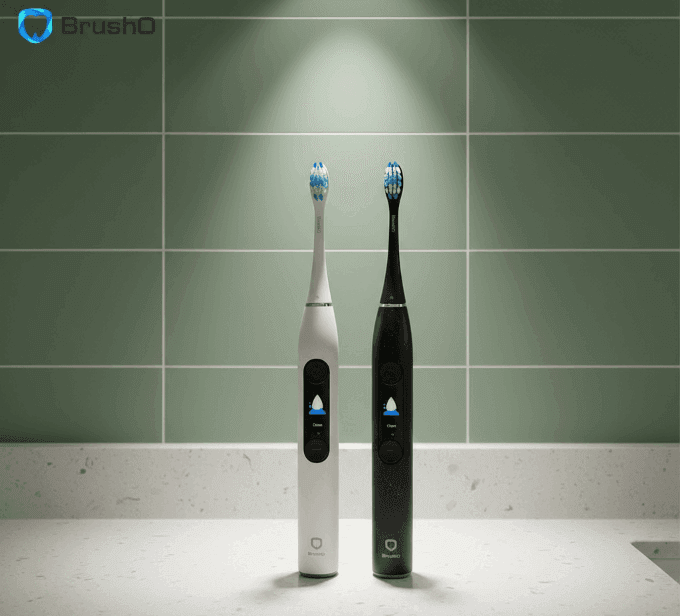
AI-powered tools such as BrushO help correct uneven cleaning patterns through:
Tracking the full 6-zone / 16-surface mouth structure ensures attention to neglected teeth.
Maintains effective plaque removal without damaging vulnerable areas.
Reports reveal patterns showing which teeth receive less cleaning over time.
Encourages targeted improvement where plaque risk is highest.
Data-driven brushing reduces human bias and improves oral hygiene precision.
• Spend extra time on molars
• Angle brushes toward gumlines
• Slow down coverage transitions
• Monitor crowding zones
• Maintain consistent routine timing
Targeted cleaning enhances overall oral health stability.
Correcting cleaning imbalance helps:
• Reduce cavity risk
• Prevent gum inflammation
• Stabilize microbiome distribution
• Minimize enamel erosion
• Improve dental checkup outcomes
Precision brushing supports whole-mouth health rather than localized treatment.
Dental cleaning needs are not uniform because teeth differ in anatomy, exposure, and function. Recognizing that certain teeth demand more attention allows individuals to move beyond generic brushing habits toward targeted oral care strategies. With behavioral awareness and smart guidance technologies, uneven plaque accumulation can be corrected, promoting balanced oral hygiene and long-term dental health stability. Effective brushing is not about equal effort — it is about intelligent distribution of care.
Feb 17
Feb 16

Hyperdontia is the presence of one or more teeth in excess of the normal dental formula, and the resulting teeth are described as supernumerary. The condition is common enough to appear in routine practice but variable enough in presentation that the decision to intervene is rarely straightforwar...

Few patients complete orthodontic treatment without asking whether their teeth will move back. The honest answer is that they will, to some degree, in the majority of cases. Relapse is not a failure of treatment but a predictable biological response, and understanding why it happens is the basis ...

The mandible is the largest and most frequently fractured bone of the facial skeleton, and its management sits at the interface between trauma surgery and restorative dentistry. Treatment has shifted over four decades from prolonged maxillomandibular fixation towards rigid internal fixation with ...

Chronic liver disease affects hundreds of millions of people worldwide, and its prevalence continues to rise with the epidemic of metabolic liver disease. The liver is central to haemostasis, drug metabolism and immune competence, and its failure therefore alters the risk profile of almost every ...

Excessive gingival display, commonly described as a gummy smile, is one of the most frequent aesthetic concerns presented to dental practitioners. The condition is not a single entity but a clinical presentation that can arise from skeletal, gingival, muscular or dental factors, and the treatment...

Drug-induced gingival overgrowth is a well-recognised adverse effect of several widely prescribed medications, and it remains one of the most common drug-related findings in periodontal practice. The condition produces firm, fibrous enlargement of the gingiva that can interfere with speech, masti...

Denture stomatitis is an inflammatory condition of the denture-bearing mucosa that affects a large proportion of removable prosthesis wearers, yet it is frequently dismissed as a cosmetic annoyance. The condition is driven by a Candida biofilm on the fitting surface of the prosthesis, and it is m...

Chronic kidney disease affects an estimated 850 million people worldwide, and the number of patients surviving on dialysis or with a renal transplant continues to rise. These patients carry an oral disease burden that is substantially higher than that of the general population, and their medical ...

Angular cheilitis is an inflammatory lesion of the labial commissures that presents with erythema, fissuring and crusting at the corners of the mouth. It is one of the most common conditions encountered in general dental practice, yet it is frequently treated as a simple fungal infection and allo...

Adverse reactions to dental materials are uncommon but they are not rare, and they are frequently misdiagnosed because the oral mucosa responds to allergens in a limited number of ways. A burning sensation, a persistent ulcer or an unexplained area of erythema may all represent a hypersensitivity...

Construir rápidamente y a bajo costo una red de datos sobre salud bucal de una manera que todos puedan construir.
Construir rápidamente y a bajo costo una red de datos sobre salud bucal de una manera que todos puedan construir.


Address: RM 1427, 14/F RADIO CITY 505, HENNESSY RD CAUSEWAY BAY, HONG KONG
Code: 000000
Phone: +852-53758652
Email: customerservice@brusho.com