
Tooth wear is often blamed on diet or brushing technique, but one of the most overlooked contributors is oral muscle tension. Chronic clenching, jaw tightness, and facial strain subtly increase bite pressure and friction across tooth surfaces, leading to accelerated enamel loss, sensitivity, and structural fatigue. Because these forces occur daily — often unconsciously — their impact accumulates over time. Understanding how muscular tension interacts with dental biomechanics allows individuals to adopt preventive strategies, refine brushing habits, and protect long-term oral stability. With modern AI-guided brushing tools such as BrushO, monitoring pressure and ensuring gentle, balanced cleaning further reduces compounding stress on already strained teeth.
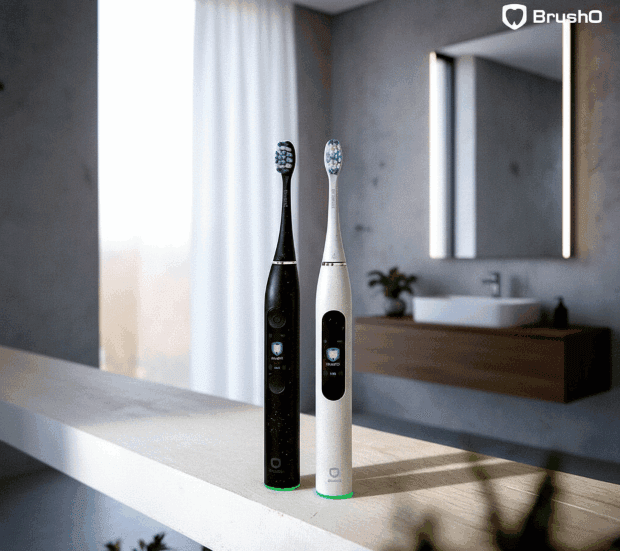
Tooth wear is a mechanical process influenced by friction, force, and repeated contact. While acidic beverages and aggressive brushing contribute, internal forces generated by oral muscles are equally significant.
The mouth contains powerful muscle groups responsible for:
• Chewing force generation
• Jaw stabilization
• Facial expression
• Swallowing coordination
These muscles can produce bite forces exceeding 70–150 pounds, and when tension becomes chronic, teeth experience sustained micro-loading that accelerates wear. This explains why individuals with seemingly healthy diets still develop enamel thinning or flattened cusps.
Common triggers include:
• Psychological stress or anxiety
• Night-time bruxism (grinding)
• Postural strain from screen use
• Jaw clenching during focus
• Poor breathing patterns
Many individuals are unaware that they maintain low-level tension throughout the day, creating constant pressure on tooth surfaces.
Muscle tension affects teeth through three main pathways:
Constant clenching raises contact intensity between upper and lower teeth, leading to:
• Surface flattening
• Micro-fractures in enamel
• Edge chipping
Grinding movements create lateral abrasion, wearing down protective enamel layers.
Stress-linked muscle tension often coincides with reduced salivary flow, weakening natural enamel protection and lubrication.
Because damage accumulates gradually, early warning signs are subtle:
• Teeth appearing shorter or flatter
• Increased sensitivity
• Jaw fatigue or soreness
• Hairline enamel cracks
• Headaches upon waking
Recognizing these indicators allows early behavioral adjustment before structural damage escalates.
Brushing cannot eliminate muscle tension, but improper brushing can amplify wear when enamel is already stressed.
High-risk brushing behaviors include:
• Applying excessive pressure
• Using abrasive motions
• Over-brushing frequency
• Uneven zone coverage
Smart brushing systems such as BrushO mitigate these risks by:
• Monitoring pressure levels
• Ensuring balanced coverage across 6 zones and 16 surfaces
• Providing technique feedback
• Supporting consistent, gentle brushing habits
Reducing brushing-induced friction prevents cumulative damage layered on top of muscle-related stress.
• Relax jaw posture when not chewing
• Avoid resting teeth together
• Maintain ergonomic posture during screen work
• Hydrate to support saliva function
• Night guards for grinding
• Stress management routines
• Personalized brushing analytics
• Routine dental monitoring
Combining muscular awareness with optimized brushing technique produces measurable long-term stability.
Modern preventive oral health focuses on behavioral biomechanics — understanding how daily actions shape long-term outcomes.
Tooth wear rarely stems from a single cause. Instead, it reflects:
• Mechanical stress
• Habit patterns
• Brushing dynamics
• Muscular tension
AI-powered brushing ecosystems like BrushO help transform oral care from a passive routine into measurable habit optimization, reducing compounding mechanical stress across years of daily use.
Oral muscle tension represents a silent but powerful force influencing tooth wear. Chronic clenching, grinding, and jaw strain generate pressure patterns that gradually reshape enamel and dental structure. While these forces cannot always be eliminated, awareness, behavioral adjustments, and intelligent brushing tools significantly reduce long-term impact. Protecting teeth is not only about cleaning them — it is about managing the forces acting on them every day.
Feb 10
Feb 9

Hyperdontia is the presence of one or more teeth in excess of the normal dental formula, and the resulting teeth are described as supernumerary. The condition is common enough to appear in routine practice but variable enough in presentation that the decision to intervene is rarely straightforwar...

Few patients complete orthodontic treatment without asking whether their teeth will move back. The honest answer is that they will, to some degree, in the majority of cases. Relapse is not a failure of treatment but a predictable biological response, and understanding why it happens is the basis ...

The mandible is the largest and most frequently fractured bone of the facial skeleton, and its management sits at the interface between trauma surgery and restorative dentistry. Treatment has shifted over four decades from prolonged maxillomandibular fixation towards rigid internal fixation with ...

Chronic liver disease affects hundreds of millions of people worldwide, and its prevalence continues to rise with the epidemic of metabolic liver disease. The liver is central to haemostasis, drug metabolism and immune competence, and its failure therefore alters the risk profile of almost every ...

Excessive gingival display, commonly described as a gummy smile, is one of the most frequent aesthetic concerns presented to dental practitioners. The condition is not a single entity but a clinical presentation that can arise from skeletal, gingival, muscular or dental factors, and the treatment...

Drug-induced gingival overgrowth is a well-recognised adverse effect of several widely prescribed medications, and it remains one of the most common drug-related findings in periodontal practice. The condition produces firm, fibrous enlargement of the gingiva that can interfere with speech, masti...

Denture stomatitis is an inflammatory condition of the denture-bearing mucosa that affects a large proportion of removable prosthesis wearers, yet it is frequently dismissed as a cosmetic annoyance. The condition is driven by a Candida biofilm on the fitting surface of the prosthesis, and it is m...

Chronic kidney disease affects an estimated 850 million people worldwide, and the number of patients surviving on dialysis or with a renal transplant continues to rise. These patients carry an oral disease burden that is substantially higher than that of the general population, and their medical ...

Angular cheilitis is an inflammatory lesion of the labial commissures that presents with erythema, fissuring and crusting at the corners of the mouth. It is one of the most common conditions encountered in general dental practice, yet it is frequently treated as a simple fungal infection and allo...

Adverse reactions to dental materials are uncommon but they are not rare, and they are frequently misdiagnosed because the oral mucosa responds to allergens in a limited number of ways. A burning sensation, a persistent ulcer or an unexplained area of erythema may all represent a hypersensitivity...

Build an oral health data network quickly and at low cost in a way that everyone can build.


Address: RM 1427, 14/F RADIO CITY 505, HENNESSY RD CAUSEWAY BAY, HONG KONG
Code: 000000
Phone: +852-53758652
Email: customerservice@brusho.com