
Brushing your teeth twice a day isn’t enough if you’re not targeting the right areas—especially your gumline, where plaque and bacteria tend to accumulate the most. Many people brush diligently yet unknowingly skip the critical area where teeth and gums meet, leading to problems such as bleeding gums, gingivitis, and gum recession. In this comprehensive guide, we explore why gumline brushing matters, the science behind plaque buildup in that area, common mistakes to avoid, and how AI-powered toothbrushes like BrushO can optimize your brushing technique for long-term gum health. Backed by research and expert oral care principles, this article equips you with both practical techniques and smart technology solutions to protect your gums for life.
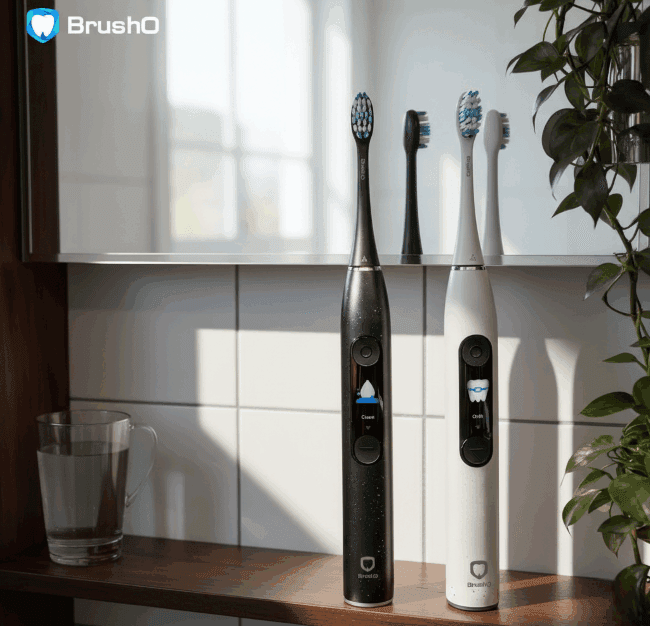
Your gumline is the area where your teeth and gums meet—and it’s often the first place bacteria settle and plaque forms. Failing to clean this area properly can lead to:
• Gingivitis (early-stage gum disease)
• Periodontal disease
• Gum recession
• Tooth sensitivity and loss
According to the American Dental Association, inflammation of the gums often starts silently, making daily gumline cleaning one of the most crucial yet neglected oral hygiene habits.
Most people are unaware they’re brushing ineffectively. Here are frequent errors:
• Brushing only the tooth surface, ignoring the edge near the gums
• Using horizontal scrubbing motions, which can irritate gums
• Brushing too hard, causing gum recession
• Spending insufficient time on each quadrant or zone of the mouth
• Neglecting the back molar gumlines, which are harder to reach
These errors allow plaque to remain along the gumline, hardening into tartar and triggering inflammation.
Proper brushing technique involves:
1. Angling your brush at 45 degrees toward the gumline (the “Bass technique”)
2. Using gentle, circular motions to sweep plaque from the gum area
3. Spending 30 seconds per quadrant, ensuring full coverage
4. Avoiding pressure—brushing harder doesn’t clean better
5. Using a soft-bristled or AI toothbrush to minimize damage
Smart toothbrushes such as BrushO are designed with gum health in mind. Here’s how:
If you’re brushing too hard—especially along the gums—BrushO’s sensors send alerts to help reduce pressure and prevent damage.
BrushO ensures no gumline zone is skipped, especially in the back molars and inner arches. It maps your brushing and reminds you to return to missed areas.
After each session, the BrushO app provides a personalized report, showing pressure zones, missed areas, and overall gumline coverage.
BrushO’s sensitive or gum-care brushing modes are ideal for users with inflamed gums or early-stage gum disease, promoting gentle, effective cleaning.
| Feature | Manual Toothbrush | BrushO AI Toothbrush |
| Pressure Detection | ❌ | ✅ Real-time alerts |
| Gumline Angle Tracking | ❌ | ✅ Smart sensors |
| Missed Zone Reminders | ❌ | ✅ Real-time prompts |
| Progress Reports | ❌ | ✅ App feedbackGum-Friendly Modes |
| Gum-Friendly Modes | ❌ | ✅ Customizable |
Your gumline may seem like a small detail in your daily brushing, but it holds the key to your long-term oral health. Ignoring it invites gum disease, recession, and eventually tooth loss. Thankfully, with awareness and smart brushing tools like BrushO, maintaining your gum health is easier—and smarter—than ever.
Jan 29
Jan 28

If you are thirsty after brushing, choose plain water. Plan your usual bedtime drink before brushing and skip the immediate rinse at the sink.

Waterpik recommends warm water for its flossers. Check your own model and use comfortably lukewarm water if cold water feels sharp.

Let an intact handle return to room temperature before you consider charging it. Check your manual and watch for signs of battery or housing damage.

Lift away the paste, check the care label, and use cool water on washable fabric. Here is a quick approach for a fresh spot.

Turn the brush off, then check the fit, the connection, and the condition of the head. A second compatible head can help you narrow it down.

Look for a clean, rigid container with a secure lid and keep it with your belongings. A napkin on a lunch tray is easy to clear away.

Check the care directions for your clear retainer. Clinics give different instructions, and the right cleaning method depends on the appliance you received.

Try a gentle rinse first. If the hull sits between teeth and floss moves freely, make a careful pass and stop if it still feels stuck.

A tight gap or rough edge can catch floss. Notice where it snags, keep the movement gentle, and find out when to ask your dentist to check.

Your first sip can taste sharp after brushing. Here is what may be changing and how to make breakfast taste like breakfast again.

एक मौखिक स्वास्थ्य डेटा नेटवर्क जल्दी और कम लागत पर इस तरह से बनाएं जिसमें हर कोई भाग ले सके।


Address: RM 1427, 14/F RADIO CITY 505, HENNESSY RD CAUSEWAY BAY, HONG KONG
Code: 000000
Phone: +852-53758652
Email: customerservice@brusho.com