
A toothbrush may seem like a small tool in your wellness routine—but with the right technology, it can completely change the way you view health habits. From guiding better brushing technique to offering real-time feedback and gamified rewards, smart toothbrushes like BrushO turn a once mundane task into a personalized, data-driven, and health-empowering experience. This article explores examines how BrushO helps shift transform brushing from a daily chore into a proactive, holistic wellness habit—with benefits that extend far beyond oral care.
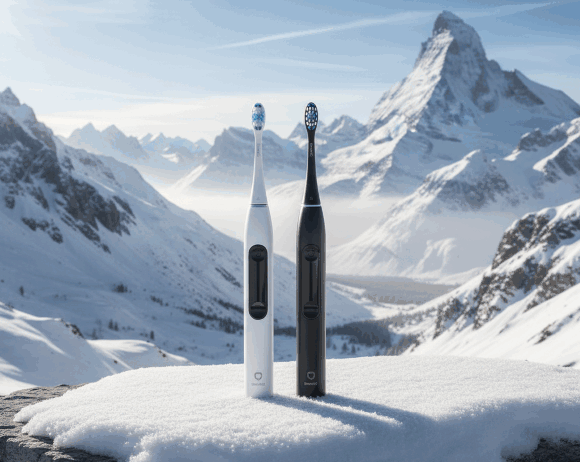
Most people brush their teeth automatically—often rushing, neglecting proper coverage, or applying too much pressure. With BrushO, brushing becomes a mindful and measured ritual.
Thanks to its AI-powered sensors, BrushO monitors:
• Brushing duration
• Pressure
• Coverage zones
Users receive real-time feedback via an LED pressure ring, the BrushO display, and the companion app, helping them build consistent technique. Over time, this transforms brushing into an intentional act that aligns with dentist-recommended standards.
Modern behavioral psychology shows that positive reinforcement and real-time feedback are crucial for building long-term habits. BrushO’s system is built on these principles:
• Gamified rewards through the Brush & Earn program
• Daily streaks, progress badges, and brushing scores
• Personalized “Brushprint” profile tracking
By turning brushing into an engaging experience, BrushO keeps users motivated to brush better—daily.
Oral hygiene is not just about fresh breath or avoiding cavities—it plays a crucial role in preventing systemic diseases such as:
• Heart disease
• Type 2 diabetes
• Respiratory infections
When brushing is consistent and thorough, it reduces bacterial load and inflammation—protecting your whole-body health. BrushO’s data-driven guidance ensures brushing is effective, helping you stay ahead of potential health concerns.
One of BrushO’s standout features is its inclusive design:
• Ergonomic handle to reduce hand fatigue for children, elderly users, and those with limited mobility
• AI-adaptive feedback for personalized routines
• LED base ring with customizable colors to distinguish between multiple users in a shared home
• 6-zone / 16-surface division powered by FSB (Fully Smart Brushing) tech
No matter your age or brushing style, BrushO adjusts to support your best brushing behavior.
The BrushO app is your personal brushing coach:
• Visual maps of missed areas
• Daily and weekly brushing reports
• Smart brushing suggestions based on your oral profile
• Historical tracking to show long-term progress
These features reinforce healthy behaviors and build accountability—turning everyday brushing into a performance you can perfect.
BrushO helps prevent common dental issues before they arise:
• Plaque buildup
• Tooth decay
• Gingivitis
By alerting users to inconsistent brushing patterns, pressure misuse, or missed zones, BrushO becomes a proactive preventive health device—empowering users to maintain wellness at home, between dentist visits.
BrushO not only cares about your health but also the planet:
• Earn reward points for consistent brushing
• Redeem points for lifetime brush head refills
• Reduce plastic waste with a circular usage model
• Align with eco-conscious consumer values
This makes it easier to stay healthy without compromising sustainability.
So, can a toothbrush really change your health routine? With BrushO, absolutely.
What once felt like a boring chore now becomes:
• A rewarding wellness habit
• A tech-driven self-care moment
• A critical piece of your holistic health routine
Through AI, personalization, and smart behavior design, BrushO empowers users to transform oral care into a cornerstone of daily well-being.
BrushO is a next-generation oral care brand integrating AI, design, and behavioral health science. Its Fully Smart Brushing (FSB) technology divides the mouth into 6 zones and 16 surfaces for maximum coverage, while the Brush & Earn system offers real-world rewards for consistent care. With a focus on sustainability, inclusivity, and wellness, BrushO is redefining what it means to brush smarter.
Nov 13
Nov 13

Squamous cell carcinoma is not a single, uniform disease, and two of its oral variants illustrate the extremes of its behavior. Verrucous carcinoma is a slow-growing, exophytic tumor that almost never metastasizes, while spindle cell carcinoma is an aggressive, sarcomatoid malignancy that can be ...

Most people expect a toothache to be the first sign of pulp disease, but some forms of pulpitis are surprisingly silent. A pulp polyp is the visible result of chronic hyperplastic pulpitis, a condition in which the dental pulp grows out of a large carious opening as a fleshy mass. Recognizing thi...

Dry mouth is not merely uncomfortable; it is a medical condition with real consequences for teeth, speech, swallowing and quality of life. When the salivary glands cannot produce enough saliva, medications called sialogogues can restore some of the missing fluid. Pilocarpine and cevimeline are th...

A blister in the mouth can be the first warning of a systemic autoimmune disease, and two disorders deserve particular attention in the dental chair: pemphigus vulgaris and mucous membrane pemphigoid. Both produce chronic oral ulceration, yet their immunologic targets, clinical behavior and long-...

When infection drains from a tooth, the body often creates a visible escape route, and the dentist must interpret these fistulous openings correctly. A parulis is the common gum boil that signals chronic periapical infection, while an oroantral fistula is a communication between the mouth and the...

Among the fibro-osseous lesions of the jaws, the ossifying fibroma holds a unique position because it is a true neoplasm, unlike the reactive cemento-osseous dysplasia discussed in an earlier article. It grows continuously, expands bone and requires surgical removal, and its cemental variant adds...

Not all keratocystic lesions of the jaw behave alike, and one of the most important distinctions in oral pathology separates the orthokeratinized odontogenic cyst from its better-known relative, the odontogenic keratocyst. Although the two lesions look similar under the microscope at first glance...

Periodontal disease is usually a slowly progressive infection, but a rare form called necrotizing ulcerative periodontitis destroys tissue with alarming speed. Unlike ordinary periodontitis, this condition produces necrotic, cratered papillae, deep pocketing and rapid bone loss, and it appears al...

Every parent has met the child who refuses to eat because of painful mouth sores, and most of these children have one of two viral illnesses: herpangina or hand, foot and mouth disease. Both are caused by enteroviruses, both produce fever and oral ulcers, and both are overwhelmingly common in you...

Cementoosseous dysplasia is one of the most common fibro-osseous lesions found on dental radiographs, yet it is also one of the most frequently misdiagnosed. The lesion replaces normal bone with cellular fibrous tissue and cementum-like material, and it appears in several forms that range from a ...

एक मौखिक स्वास्थ्य डेटा नेटवर्क जल्दी और कम लागत पर इस तरह से बनाएं जिसमें हर कोई भाग ले सके।


Address: RM 1427, 14/F RADIO CITY 505, HENNESSY RD CAUSEWAY BAY, HONG KONG
Code: 000000
Phone: +852-53758652
Email: customerservice@brusho.com