
A healthy smile starts in the morning. Your first oral care session of the day doesn’t just fight bad breath—it sets the tone for your dental health, confidence, and long-term wellness. But with so many tips floating around, what’s the ideal morning oral routine? Here’s a science-backed, AI-enhanced guide to optimizing your morning mouth care—for both appearance and health.
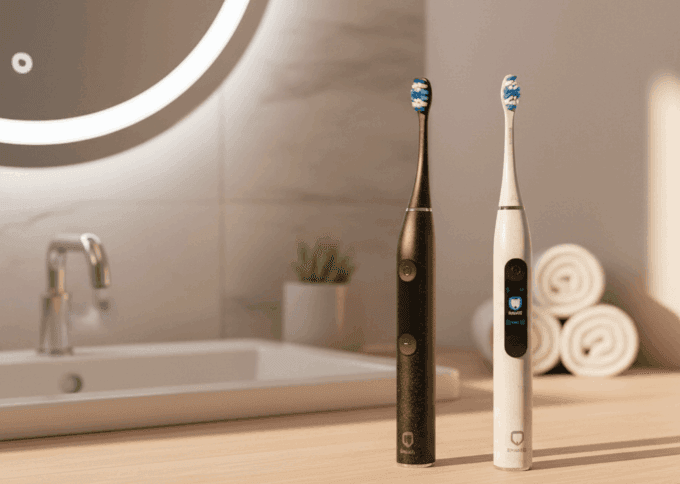
After a night of sleep, your mouth becomes a breeding ground for bacteria. Saliva production slows down, giving odor-causing and plaque-forming microbes the chance to thrive. A well-planned morning routine helps:
• Remove overnight bacterial buildup
• Prevent enamel erosion from acidic breakfast foods
• Refresh your breath for the day ahead
• Reinforce brushing habits and oral health consistency
Neglecting this step or rushing through it could impact both your smile’s appearance and your long-term dental condition.
Contrary to common belief, brushing before breakfast is better for your enamel. Overnight, your mouth becomes acidic, and brushing immediately after eating acidic foods (like fruit juice or toast) can wear down your enamel. Brushing first:
• Reduces bacteria before food contact
• Protects enamel from acidic erosion
• Prepares your teeth with fluoride for the meal ahead
Pro Tip: Use an AI-powered toothbrush like BrushO to ensure you cover all surfaces before breakfast—especially if you tend to brush groggily.
Choose a fluoride toothpaste to help remineralize enamel and protect against decay. For maximum efficiency:
• Use a soft-bristled or AI-monitored brush head
• Set your toothbrush to “fresh breath” or “sensitive” mode if you’re brushing pre-coffee
• Replace brush heads every 3 months—or track wear using the BrushO app
Up to 90% of morning breath originates from the tongue. Make this part of your daily routine:
• Use a built-in tongue scraper or a tongue-cleaning mode on smart brushes
• Gently clean from back to front
• Spend 10–15 seconds removing coating and odor-causing bacteria
BrushO offers dedicated tongue-cleaning tips and app reminders to make this step seamless.
If you’re using fluoride toothpaste, don’t rinse right away. Let the fluoride sit on your teeth for at least 30 minutes for maximum effect. You can:
• Spit out excess foam but skip water rinsing
• Rinse with an alcohol-free mouthwash after breakfast if needed for freshness
• Use BrushO’s app timer to delay rinsing for a healthier post-brushing effect
While many people reserve flossing for the evening, flossing in the morning:
• Removes plaque between teeth before it hardens
• Prevents food particles from breakfast sticking to pre-existing buildup
• Reinforces full-mouth cleanliness from the start of your day
For speed, use a floss pick or water flosser while your toothbrush charges wirelessly (BrushO supports Qi wireless charging for convenience).
BrushO’s smart toothbrush takes your morning brushing to the next level by providing:
• Real-Time Coverage Guidance: 6-zone, 16-surface monitoring to avoid missed areas
• Pressure Feedback: Alerts if you brush too hard or too soft
• Habit Scores: Track streaks, duration, and brushing angles
• Family Monitoring: Parents can review their kids’ brushing behavior before school
By turning your routine into an app-integrated habit, AI helps reinforce consistency—and ultimately, a healthier smile.
Think of your morning oral care like you do skincare or fitness—it’s not just maintenance, it’s prevention. Your smile is one of the first things people notice. Making brushing smarter and more personalized helps ensure you start your day with confidence, not cavities.
The perfect morning oral routine isn’t complicated—it’s consistent, complete, and tech-assisted. From brushing before breakfast to using AI feedback for pressure and zone guidance, your first brushing session of the day can set the tone for long-term dental health.
Let BrushO be your partner in this journey—because a smart smile starts with a smart routine.
Jan 21
Jan 21

The uncontrolled hypertension is the condition that the dental practice meets in the patient who presents with the elevated pressure that the guideline does not permit for the elective treatment, and the management of this patient requires the deferral of the dental procedure and the referral to ...

The closure of the extraction space in the orthodontic treatment is the phase that demands the careful selection of the mechanics and the monitoring of the force that the appliance delivers. The sliding mechanics that rely on the continuous archwire and the power chain that connects the brackets ...

The transverse discrepancy of the maxilla is the problem that the crowding and the posterior crossbite often hide, and the maxillary expansion is the treatment that addresses the width of the arch rather than the position of the individual tooth. The clinician who diagnoses the constriction early...

The local anaesthesia is the daily procedure that the modern dentistry treats as the routine, and the complications that follow it range from the transient and the trivial to the permanent and the serious. The clinician who injects by the habit without the anatomy in the mind is the clinician who...

The hypertension is the condition that the dental practice meets in the every day, and the patient who carries the elevated pressure without the symptoms is the patient who presents the risk that the chair-side measurement reveals. The dental team occupies the position that no other profession ho...

The glass-ceramic crown has become the default restoration for the anterior and the many posterior teeth, and the material selection within the family is the decision that determines the strength, the aesthetics, and the longevity of the result. The lithium disilicate, the leucite, and the zircon...

The dental phobia is the extreme form of the dental fear that prevents the patient from attending the treatment that the oral health requires, and the management of the phobia demands the skill that extends beyond the routine behaviour guidance. The systematic desensitization, the exposure therap...

The dental fear of the child is the condition that shapes the attitude for the lifetime, and the clinician who manages the first visits with the skill builds the patient who attends the recall without the dread. The fear that the child develops follows the many sources, and the practice that reco...

The patient with controlled hypertension is the patient who requires the dental care that the oral health demands and the treatment that the blood pressure permits, and the clinician who manages the controlled case safely follows the guideline that the evidence supports. The controlled hypertensi...

The ceramic veneer is the restoration that the aesthetic dentistry depends on, and the bond that retains the veneer on the enamel is the critical link that determines whether the restoration survives the function or fractures and debonds. The clinical technique from the preparation to the cementa...

एक मौखिक स्वास्थ्य डेटा नेटवर्क जल्दी और कम लागत पर इस तरह से बनाएं जिसमें हर कोई भाग ले सके।


Address: RM 1427, 14/F RADIO CITY 505, HENNESSY RD CAUSEWAY BAY, HONG KONG
Code: 000000
Phone: +852-53758652
Email: customerservice@brusho.com