
Did you know that stress can directly affect your oral health? One of the most common signs is the appearance of painful mouth ulcers—those small, shallow lesions inside your cheeks, lips, or gums. While they’re not contagious, they can make eating, speaking, or brushing uncomfortable. Scientific studies increasingly show that emotional stress weakens your immune defenses, making your mouth more prone to inflammation, ulcers, and bacterial imbalance. In this article, we explore the surprising link between stress and mouth ulcers, and how adopting a smarter brushing routine with tools like BrushO can reduce flare-ups and protect your smile from more than just plaque.
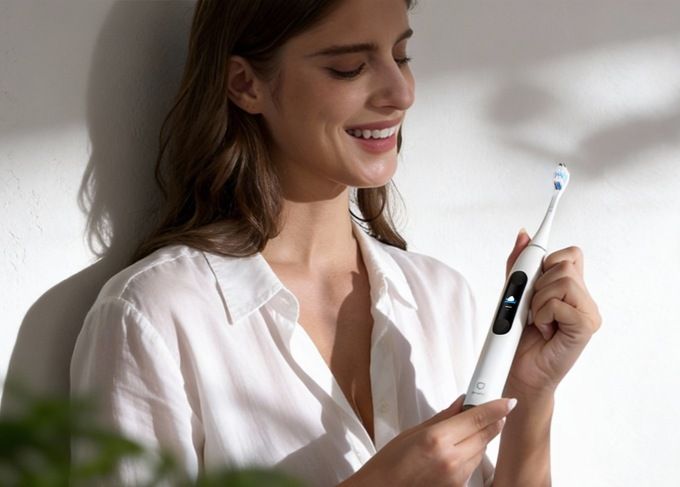
Mouth ulcers, also known as canker sores, are small, painful lesions that develop on the soft tissues inside your mouth. They are typically white or yellow with a red border and can appear on the inside of the lips, cheeks, gums, or under the tongue. Unlike cold sores, they’re not caused by a virus and aren’t contagious.
Chronic stress disrupts your body’s hormonal balance and lowers your immune system. This makes it harder for your mouth to fight off minor injuries, bacterial imbalance, or inflammation.
Key stress-related causes include:
• Hormonal fluctuations: Cortisol, the “stress hormone,” can increase inflammation and sensitivity.
• Weakened immunity: Stress reduces your body’s ability to heal microabrasions in the mouth.
• Sleep disruption: Poor sleep affects tissue regeneration and saliva production, which protects your mouth.
• Poor nutrition: Stress often leads to unbalanced diets low in vitamin B12, iron, or folic acid—nutrients essential for oral health.
In combination with stress, the following habits may worsen or prolong mouth ulcers:
• Overbrushing or brushing too hard
• Poor oral hygiene or skipped brushing
• Smoking or alcohol consumption
• Spicy or acidic foods
• Using toothpaste with sodium lauryl sulfate (SLS)
• Practice stress-reduction techniques like meditation, journaling, or regular exercise.
• Improve sleep hygiene to allow your body to heal and balance hormones naturally.
• Maintain a nutrient-rich diet with leafy greens, whole grains, and foods rich in B vitamins and iron.
Stress may be unavoidable, but oral discomfort doesn’t have to be. BrushO, the AI-powered toothbrush, helps prevent the irritation that leads to mouth ulcers:
• Gentle Pressure Control: Avoids overbrushing, which can injure sensitive mouth tissues.
• Zone-Specific Feedback: Ensures you’re cleaning thoroughly without aggravating ulcers.
• Custom Modes for Sensitive Mouths: Choose gentle mode during flare-ups to maintain hygiene comfortably.
• Brushing Reports & Alerts: Helps you track consistency, a key factor in reducing inflammation and bacterial imbalance.
• Use a soft-bristled toothbrush or BrushO’s sensitive mode.
• Avoid SLS toothpaste; opt for soothing, non-foaming alternatives.
• Rinse with saltwater or alcohol-free mouthwash to promote healing.
• Stay consistent with your brushing routine, even if you’re uncomfortable—BrushO’s gentle AI feedback helps you clean safely.
Mouth ulcers may seem like minor nuisances, but they’re often signals from your body about deeper issues like stress or nutritional deficiency. Taking a holistic approach—balancing stress management with smart oral care—is the most effective way to protect your mouth and your mind.

An in-depth exploration of periodontal disease pathogenesis, the 2017 World Workshop classification system, and the principles of non-surgical periodontal therapy including scaling, root planing, and adjunctive antimicrobials.

An evidence-based comparison of clear aligner therapy versus conventional fixed orthodontic appliances, covering treatment efficacy, duration, patient compliance, comfort, and aesthetic outcomes based on systematic reviews and clinical trials.

A practical guide to third molar assessment and management, including indications for extraction versus retention, surgical techniques for impacted teeth, and prevention and management of common postoperative complications.

A comprehensive review of contemporary root canal treatment protocols, including rotary instrumentation, advanced irrigation systems, and obturation techniques. Examines evidence-based success rates and prognostic factors affecting endodontic outcomes.

A review of modern resin composite technologies including nanofilled, bulk-fill, and bioactive composites. Covers polymerization shrinkage management, bonding protocols, and clinical longevity data for anterior and posterior restorations.

A comprehensive guide to pediatric dental behavior management techniques, including tell-show-do, positive reinforcement, protective stabilization, and pharmacological approaches, along with early interceptive orthodontic intervention strategies.

A comprehensive guide to caries management by risk assessment (CAMBRA), covering risk factor identification, caries detection methods, non-surgical management with fluoride and sealants, and minimally invasive restorative techniques.

A practical overview of contemporary digital dentistry workflows, including intraoral scanning technology, CAD/CAM systems for chairside and laboratory restorations, 3D printing applications, and digital implant planning.

An evidence-based review of traumatic dental injuries based on the Andreasen classification, covering crown fractures, luxation injuries, avulsion, and alveolar fractures, with step-by-step emergency management protocols.

An in-depth review of the dentist's role in managing obstructive sleep apnea, covering mandibular advancement devices, tongue-retaining devices, patient selection criteria, polysomnography interpretation, and collaborative care with sleep physicians.

एक मौखिक स्वास्थ्य डेटा नेटवर्क जल्दी और कम लागत पर इस तरह से बनाएं जिसमें हर कोई भाग ले सके।


Address: RM 1427, 14/F RADIO CITY 505, HENNESSY RD CAUSEWAY BAY, HONG KONG
Code: 000000
Phone: +852-53758652
Email: customerservice@brusho.com