
Frequent snacking doesn’t just affect your waistline — it can significantly harm your oral health. Every time you reach for a chip, candy, or sugary drink, you’re feeding bacteria that lead to cavities, plaque buildup, and gum issues. In this article, we’ll break down the science behind snack-induced dental damage and explain how AI-powered tools like BrushO help you fight back — one brush at a time.
Snacking multiple times a day — especially on processed, sticky, or sugary foods — creates a constant acid attack in your mouth.
• pH levels drop dramatically in your mouth
• Oral bacteria feast on sugars, producing acid
• Acid erodes enamel, leading to cavities
• No recovery time: Unlike mealtimes, snacking leaves no space for saliva to neutralize acids
Even “healthy” snacks like dried fruits or protein bars often stick to your teeth, continuing the damage for hours.
The Stephan Curve illustrates how oral pH drops after sugar intake and takes 20–30 minutes to return to normal. Snacking too often shortens recovery time, keeping your mouth in a constant acidic state. The more frequently you snack, the more you’re preventing your saliva from protecting your enamel.
• Increased risk of cavities
• Persistent bad breath
• Gum inflammation (gingivitis)
• Enamel erosion, leading to sensitivity
• Staining, especially from flavored snacks and beverages
Traditional brushing routines (morning and night) may not be sufficient for those who snack frequently. You could be leaving plaque deposits untouched for 8+ hours between brushes.
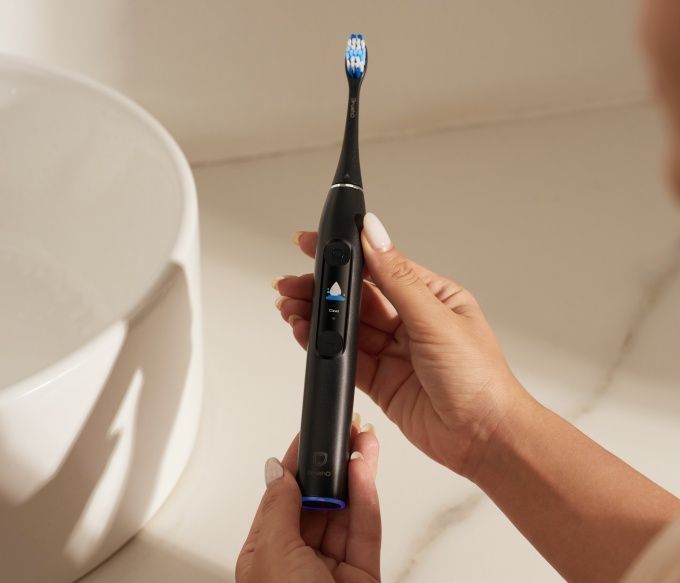
BrushO is designed to adapt to modern lifestyles — including yours.
• Smart Alerts: Get brushing reminders after meals and snack sessions
• Pressure Sensors: Avoid enamel damage from overbrushing
• Zone Tracking: Make sure no food residue lingers in hard-to-reach areas
• Real-Time Feedback: Get a brushing score after each session to ensure effectiveness
• Custom Modes: Try Deep Clean mode after particularly sugary snacks
With BrushO’s intelligent feedback loop, you’re not just brushing — you’re actively protecting your teeth from the cumulative damage of snacking.
If you’re going to snack (we all do!), follow these strategies:
• Choose crunchy fruits & veggies: Apples and carrots stimulate saliva
• Avoid sticky or acidic foods like dried fruit, sodas, or flavored chips
• Rinse your mouth with water immediately after snacking
• Wait 30 mins before brushing to allow enamel to remineralize
• Use a soft-bristle smart toothbrush like BrushO to clean effectively
Frequent snacking may seem harmless, but it creates the perfect storm for plaque, acid, and decay. The good news? With small changes and smart tools, you can enjoy your snacks while protecting your smile. With BrushO, you don’t just brush — you fight back against everyday oral challenges with technology on your side.

Hyperdontia is the presence of one or more teeth in excess of the normal dental formula, and the resulting teeth are described as supernumerary. The condition is common enough to appear in routine practice but variable enough in presentation that the decision to intervene is rarely straightforwar...

Few patients complete orthodontic treatment without asking whether their teeth will move back. The honest answer is that they will, to some degree, in the majority of cases. Relapse is not a failure of treatment but a predictable biological response, and understanding why it happens is the basis ...

The mandible is the largest and most frequently fractured bone of the facial skeleton, and its management sits at the interface between trauma surgery and restorative dentistry. Treatment has shifted over four decades from prolonged maxillomandibular fixation towards rigid internal fixation with ...

Chronic liver disease affects hundreds of millions of people worldwide, and its prevalence continues to rise with the epidemic of metabolic liver disease. The liver is central to haemostasis, drug metabolism and immune competence, and its failure therefore alters the risk profile of almost every ...

Excessive gingival display, commonly described as a gummy smile, is one of the most frequent aesthetic concerns presented to dental practitioners. The condition is not a single entity but a clinical presentation that can arise from skeletal, gingival, muscular or dental factors, and the treatment...

Drug-induced gingival overgrowth is a well-recognised adverse effect of several widely prescribed medications, and it remains one of the most common drug-related findings in periodontal practice. The condition produces firm, fibrous enlargement of the gingiva that can interfere with speech, masti...

Denture stomatitis is an inflammatory condition of the denture-bearing mucosa that affects a large proportion of removable prosthesis wearers, yet it is frequently dismissed as a cosmetic annoyance. The condition is driven by a Candida biofilm on the fitting surface of the prosthesis, and it is m...

Chronic kidney disease affects an estimated 850 million people worldwide, and the number of patients surviving on dialysis or with a renal transplant continues to rise. These patients carry an oral disease burden that is substantially higher than that of the general population, and their medical ...

Angular cheilitis is an inflammatory lesion of the labial commissures that presents with erythema, fissuring and crusting at the corners of the mouth. It is one of the most common conditions encountered in general dental practice, yet it is frequently treated as a simple fungal infection and allo...

Adverse reactions to dental materials are uncommon but they are not rare, and they are frequently misdiagnosed because the oral mucosa responds to allergens in a limited number of ways. A burning sensation, a persistent ulcer or an unexplained area of erythema may all represent a hypersensitivity...

एक मौखिक स्वास्थ्य डेटा नेटवर्क जल्दी और कम लागत पर इस तरह से बनाएं जिसमें हर कोई भाग ले सके।


Address: RM 1427, 14/F RADIO CITY 505, HENNESSY RD CAUSEWAY BAY, HONG KONG
Code: 000000
Phone: +852-53758652
Email: customerservice@brusho.com