How Brushing Scores Motivate Better Oral Care
Jan 26

Jan 26
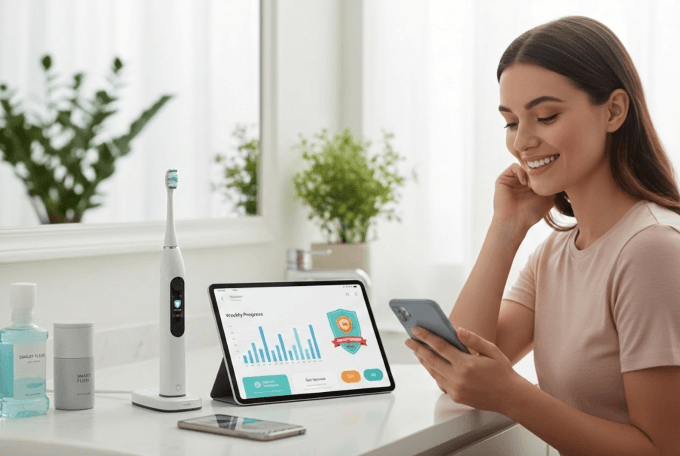
Brushing scores turn oral care into measurable progress. Smart toothbrushes like BrushO leverage AI, sensors, and app feedback to generate personalized brushing scores that educate users on technique, coverage, pressure, and consistency. This measurable feedback motivates users to improve habits, track progress, and build long-term healthy oral care routines. By turning brushing into a data-driven and rewarding experience, brushing scores help users brush better, not just more often.
 

What Are Brushing Scores and Why Do They Matter

Traditional brushing habits often rely on timing alone—most people brush “by feel” without knowing if they are cleaning all surfaces effectively or using proper technique. Research and consumer behavior both show that feedback and measurable outcomes improve habits across many health routines, such as fitness tracking and diet logging. Smart toothbrush technology takes oral hygiene one step further by converting each brushing session into actionable data—brushing scores—that reflect user performance in real time. Unlike manual or basic electric toothbrushes, smart brushes like BrushO’s smart toothbrush analyze brushing technique using advanced Fully Smart Brushing (FSB) technology. This system tracks coverage, pressure, duration, and consistency across zones in your mouth, transforming a routine task into a quantified health activity that encourages improvement and engagement.
 

What Goes Into a Brushing Score

Brushing scores are not arbitrary. They reflect multiple measurable aspects of your brushing behavior:
 
✔ Coverage: Did you reach all 6 zones and 16 surfaces in your mouth?
✔ Duration: Did you meet the dentist-recommended 2-minute brushing time?
✔ Pressure: Were you brushing with healthy pressure—not too hard and not too soft?
✔ Consistency: Are you brushing regularly and forming good habits?
 
Each category contributes to a composite score, giving you a snapshot of how well you take care of your oral health. This score becomes a benchmark—something you can compare daily, weekly, and monthly. Tracking improvements over time highlights progress that would otherwise be invisible with traditional manual brushing.
 

How Brushing Scores Create Motivation

1. Turn Routine Into Measurable Progress

When you see a brushing score after each session, you gain a clear understanding of how effective your oral care was. Seeing measurable progress over time motivates users to do better—not just to brush, but to brush well. This shift from routine to measurable outcome is key to improving habits.
Imagine two users:
  • User A brushes twice a day, but always with poor coverage.
  • User B brushes with full coverage and balanced pressure.
Even if both brush with the same frequency, User B’s brushing scores will be higher, reinforcing good technique and encouraging consistency.

2. Personalized Feedback Turns Data Into Action

Scores alone are informative—but when paired with personalized feedback, they become transformative. Smart toothbrush apps like BrushO’s provide detailed insights such as:
  • Which zones were missed
  • Whether the pressure was too high
  • Where technique needs improvement
This feedback acts as a personal brushing coach, helping users correct mistakes immediately and learn better habits faster.
 

Gamification and Reward Systems Amplify Motivation

Brush & Earn: Motivation With Rewards

BrushO’s unique “Brush & Earn” system ties brushing performance directly to rewards. Users earn points based on their brushing score, which can be redeemed for:
  • Free brush head replacements
  • Product discounts
  • Limited-edition accessories
  • Special perks and challenges
This gamified reward mechanism transforms oral care from a mundane chore into a progress-driven and even enjoyable experience. Instead of brushing because you should, you brush because you want to see progress and earn rewards.
 

Visual Progress and Habit Streaks Drive Consistency

Most humans respond positively to streaks and milestones. When brushing scores are aggregated into:
  • Daily progress charts
  • Weekly streaks
  • Long-term trends
Users naturally strive to beat their previous scores and maintain streaks. These visual insights reinforce consistency—one of the most important factors in preventing gum disease, cavities, and other oral issues.
 

Brushing Scores Lead to Better Oral Health Outcomes

Better brushing habits don’t just feel better—they produce real health benefits:
 
✔ Improved plaque removal
✔ Reduced gum irritation and inflammation
✔ Lower risk of cavities and gingivitis
✔ Better coverage of back teeth and gumline
✔ Higher engagement with oral care routines
 
Unlike guesswork brushing, the measurable outcomes from scoring guide users toward clinically meaningful behaviors. Smart toothbrush data turns daily action into better oral health results, validated by improvement in pressure control and coverage metrics that align with dental health recommendations.
 

Brushing Scores Make Oral Care Work for You

Brushing scores are a powerful motivational tool that encourages users to brush more effectively and consistently. By quantifying performance using real-time data and personalized feedback, smart toothbrushes like BrushO transform oral care from a routine chore into a measurable, rewarding, and health-oriented practice. With scores, progress charts, game-like rewards, and actionable insights, users build healthier brushing habits that lead to long-term oral wellness. Brushing your teeth shouldn’t be guesswork. With technology that scores your efforts and motivates improvement, you’re empowered to brush smarter—every time.

Post recenti

Wisdom Teeth: When to Keep and When to Remove

Wisdom Teeth: When to Keep and When to Remove

Approximately 85% of people will need their wisdom teeth removed at some point in their lives. However, not all third molars require extraction.

Tooth Sensitivity: Causes, Prevention, and Treatment Options

Tooth Sensitivity: Causes, Prevention, and Treatment Options

Dentin hypersensitivity affects approximately 1 in 3 adults worldwide, causing sharp, transient pain when teeth are exposed to cold, hot, sweet, or acidic stimuli. This common condition occurs when the protective enamel layer wears thin or gum tissue recedes, exposing the underlying dentin and its microscopic tubules that lead directly to the tooth's nerve center.

Root Canal Therapy: Saving Natural Teeth with Endodontic Treatment

Root Canal Therapy: Saving Natural Teeth with Endodontic Treatment

Despite its fearsome reputation, modern root canal therapy is a virtually painless procedure that saves over 15 million teeth each year in the United States alone. With advances in rotary instrumentation, digital imaging, and local anesthesia, the success rate of root canal treatment now exceeds 95%.

Orthodontics: Modern Approaches to Teeth Straightening

Orthodontics: Modern Approaches to Teeth Straightening

Orthodontic treatment has evolved dramatically beyond traditional metal braces. Today's options include clear aligners, lingual braces, and accelerated orthodontic techniques that can shorten treatment time by up to 50%.

Gum Disease: From Gingivitis to Periodontitis — Prevention and Treatment

Gum Disease: From Gingivitis to Periodontitis — Prevention and Treatment

Periodontal disease affects nearly 50% of adults over the age of 30 in the United States, yet its early stage — gingivitis — is completely reversible with proper oral hygiene. Left untreated, gum disease progresses silently, destroying the supporting structures of teeth and emerging as the leading cause of tooth loss among adults worldwide.

Sleep Apnea and the Dentist's Role: Oral Appliance Therapy Explained

Sleep Apnea and the Dentist's Role: Oral Appliance Therapy Explained

Obstructive sleep apnea (OSA) affects an estimated 1 billion adults worldwide aged 30–69, with moderate to severe disease (apnea-hypopnea index, AHI ≥ 15) present in approximately 425 million (Benjafield et al., 2019). In the United States, prevalence estimates range from 9–38% of adults, with 80–90

Pediatric Dentistry: What Every Parent Should Know

Pediatric Dentistry: What Every Parent Should Know

Early childhood caries (ECC) is the most common chronic disease of childhood — five times more prevalent than asthma and seven times more common than hay fever, according to the American Academy of Pediatric Dentistry. Yet it is almost entirely preventable. Despite decades of public health education

Oral Probiotics: Can Beneficial Bacteria Improve Dental Health?

Oral Probiotics: Can Beneficial Bacteria Improve Dental Health?

For over a century, dentistry approached oral microorganisms with a single strategy: elimination. From Lister's carbolic acid spray in the 1860s to modern chlorhexidine mouthwashes, the goal was a sterile mouth. But the oral cavity is not sterile — it is a complex ecosystem housing over 700 bacteria

Dry Mouth (Xerostomia): Causes, Consequences, and Clinical Management

Dry Mouth (Xerostomia): Causes, Consequences, and Clinical Management

Xerostomia — the subjective sensation of dry mouth — affects an estimated 20–30% of the adult population, with prevalence rising sharply with age. Among individuals over 65, prevalence exceeds 40%, driven largely by polypharmacy and systemic disease (Thomson et al., 2023). While often dismissed as a

Dental Implants: The Science of Osseointegration and Long-Term Outcomes

Dental Implants: The Science of Osseointegration and Long-Term Outcomes

In 1952, Swedish orthopedic surgeon Per-Ingvar Brånemark made a serendipitous observation that would transform restorative dentistry. While studying bone healing in rabbit tibiae using titanium optical chambers, he found the chambers could not be removed — bone had grown into direct, rigid contact w
