How Brushing Scores Motivate Better Oral Care
Jan 26

Jan 26
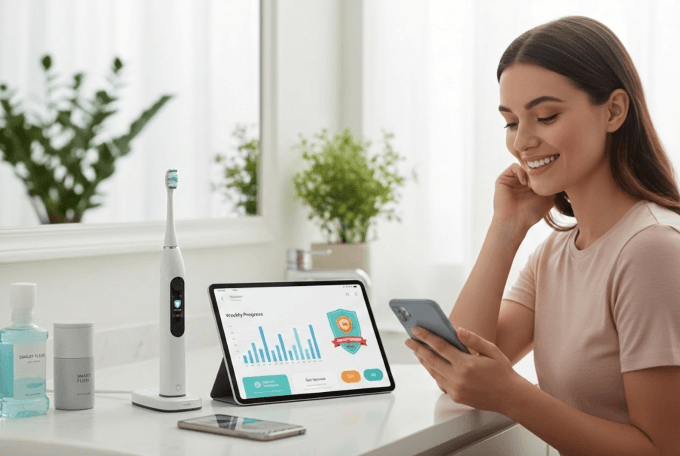
Brushing scores turn oral care into measurable progress. Smart toothbrushes like BrushO leverage AI, sensors, and app feedback to generate personalized brushing scores that educate users on technique, coverage, pressure, and consistency. This measurable feedback motivates users to improve habits, track progress, and build long-term healthy oral care routines. By turning brushing into a data-driven and rewarding experience, brushing scores help users brush better, not just more often.
 

What Are Brushing Scores and Why Do They Matter

Traditional brushing habits often rely on timing alone—most people brush “by feel” without knowing if they are cleaning all surfaces effectively or using proper technique. Research and consumer behavior both show that feedback and measurable outcomes improve habits across many health routines, such as fitness tracking and diet logging. Smart toothbrush technology takes oral hygiene one step further by converting each brushing session into actionable data—brushing scores—that reflect user performance in real time. Unlike manual or basic electric toothbrushes, smart brushes like BrushO’s smart toothbrush analyze brushing technique using advanced Fully Smart Brushing (FSB) technology. This system tracks coverage, pressure, duration, and consistency across zones in your mouth, transforming a routine task into a quantified health activity that encourages improvement and engagement.
 

What Goes Into a Brushing Score

Brushing scores are not arbitrary. They reflect multiple measurable aspects of your brushing behavior:
 
✔ Coverage: Did you reach all 6 zones and 16 surfaces in your mouth?
✔ Duration: Did you meet the dentist-recommended 2-minute brushing time?
✔ Pressure: Were you brushing with healthy pressure—not too hard and not too soft?
✔ Consistency: Are you brushing regularly and forming good habits?
 
Each category contributes to a composite score, giving you a snapshot of how well you take care of your oral health. This score becomes a benchmark—something you can compare daily, weekly, and monthly. Tracking improvements over time highlights progress that would otherwise be invisible with traditional manual brushing.
 

How Brushing Scores Create Motivation

1. Turn Routine Into Measurable Progress

When you see a brushing score after each session, you gain a clear understanding of how effective your oral care was. Seeing measurable progress over time motivates users to do better—not just to brush, but to brush well. This shift from routine to measurable outcome is key to improving habits.
Imagine two users:
  • User A brushes twice a day, but always with poor coverage.
  • User B brushes with full coverage and balanced pressure.
Even if both brush with the same frequency, User B’s brushing scores will be higher, reinforcing good technique and encouraging consistency.

2. Personalized Feedback Turns Data Into Action

Scores alone are informative—but when paired with personalized feedback, they become transformative. Smart toothbrush apps like BrushO’s provide detailed insights such as:
  • Which zones were missed
  • Whether the pressure was too high
  • Where technique needs improvement
This feedback acts as a personal brushing coach, helping users correct mistakes immediately and learn better habits faster.
 

Gamification and Reward Systems Amplify Motivation

Brush & Earn: Motivation With Rewards

BrushO’s unique “Brush & Earn” system ties brushing performance directly to rewards. Users earn points based on their brushing score, which can be redeemed for:
  • Free brush head replacements
  • Product discounts
  • Limited-edition accessories
  • Special perks and challenges
This gamified reward mechanism transforms oral care from a mundane chore into a progress-driven and even enjoyable experience. Instead of brushing because you should, you brush because you want to see progress and earn rewards.
 

Visual Progress and Habit Streaks Drive Consistency

Most humans respond positively to streaks and milestones. When brushing scores are aggregated into:
  • Daily progress charts
  • Weekly streaks
  • Long-term trends
Users naturally strive to beat their previous scores and maintain streaks. These visual insights reinforce consistency—one of the most important factors in preventing gum disease, cavities, and other oral issues.
 

Brushing Scores Lead to Better Oral Health Outcomes

Better brushing habits don’t just feel better—they produce real health benefits:
 
✔ Improved plaque removal
✔ Reduced gum irritation and inflammation
✔ Lower risk of cavities and gingivitis
✔ Better coverage of back teeth and gumline
✔ Higher engagement with oral care routines
 
Unlike guesswork brushing, the measurable outcomes from scoring guide users toward clinically meaningful behaviors. Smart toothbrush data turns daily action into better oral health results, validated by improvement in pressure control and coverage metrics that align with dental health recommendations.
 

Brushing Scores Make Oral Care Work for You

Brushing scores are a powerful motivational tool that encourages users to brush more effectively and consistently. By quantifying performance using real-time data and personalized feedback, smart toothbrushes like BrushO transform oral care from a routine chore into a measurable, rewarding, and health-oriented practice. With scores, progress charts, game-like rewards, and actionable insights, users build healthier brushing habits that lead to long-term oral wellness. Brushing your teeth shouldn’t be guesswork. With technology that scores your efforts and motivates improvement, you’re empowered to brush smarter—every time.

Recent Posts

Missed quadrant streaks can expose a drifting weekend routine

Missed quadrant streaks can expose a drifting weekend routine

When the same quadrant keeps showing weaker brushing on weekends, the issue is usually routine drift rather than random forgetfulness. Repeated misses reveal where sleep changes, social plans, and looser timing are bending the same brushing sequence each week.

Mirror free sessions can reveal whether brushing pressure stays steady

Mirror free sessions can reveal whether brushing pressure stays steady

Brushing without watching the mirror can expose whether your pressure stays controlled or rises when visual reassurance disappears. The exercise helps people notice hidden overpressure, uneven route confidence, and which surfaces get scrubbed harder when the hand starts guessing.

Marginal ridges help premolars resist sideways bite stress

Marginal ridges help premolars resist sideways bite stress

Marginal ridges on premolars help support the crown when chewing forces slide sideways instead of straight down. When those ridges wear or break, the tooth can become more vulnerable to food packing, cracks, and uneven pressure.

Dry office air can make gum margins sting by dusk

Dry office air can make gum margins sting by dusk

Dry office air can quietly reduce saliva and leave gum margins feeling tight or stingy by late afternoon. The problem is often less about dramatic disease and more about long hours of mouth dryness, light plaque retention, and irritated tissue edges.

Citrus sparkling cans can restart enamel softening at dinner

Citrus sparkling cans can restart enamel softening at dinner

A citrus sparkling drink with dinner can keep enamel in a softened state longer than people expect, especially when the can is sipped slowly. The problem is often repeated acidic contact, not one dramatic drink.

Cervical curves change how force leaves the enamel edge

Cervical curves change how force leaves the enamel edge

The curved neck of a tooth changes how chewing and brushing forces leave enamel near the gumline. That helps explain why the cervical area can feel sensitive, wear faster, and react strongly when pressure, acidity, and gum changes overlap.

Workday logs can expose missed lunch brushing

Workday logs can expose missed lunch brushing

Missed lunch brushing often hides inside normal work routines instead of feeling like a conscious choice. Time logs, calendar gaps, and daily patterns can reveal where the habit breaks down and why simple awareness often fixes more than extra motivation does.

Tea sips can keep canker sores tender longer

Tea sips can keep canker sores tender longer

Warm tea can feel soothing at first, but repeated sipping can keep a small canker sore active by extending heat, dryness, acidity, and friction across already irritated tissue. The problem is often the sipping pattern, not the tea alone.

Retainer cases can reseed plaque after cleaning

Retainer cases can reseed plaque after cleaning

A retainer can look freshly cleaned and still pick up old residue from its case. When moisture, biofilm, and handling build up inside the container, the case can quietly place plaque back onto the appliance each time it is stored.

Pulp horns sit closer to the surface than people think

Pulp horns sit closer to the surface than people think

Pulp horns extend higher inside the crown than many people realize, which helps explain why small wear, chips, or cavities can become sensitive faster than expected. Surface damage and inner anatomy are often closer neighbors than they appear from outside.
