
A healthy mouth is more than just a bright smile—it’s a crucial part of your overall well-being. Gum disease, tooth decay, bad breath, and even systemic issues often start with poor oral hygiene. Fortunately, maintaining a healthy mouth doesn’t require perfection—just consistency, awareness, and the right tools. In this article, we’ll cover the essential steps to keeping your teeth and gums healthy, how your daily habits play a role, and why using a smart toothbrush like BrushO can make all the difference in your long-term oral care routine.
Oral health is about more than preventing cavities—it directly impacts your digestion, heart health, and even mental clarity. Neglecting your teeth and gums can lead to:
• Gum Disease (gingivitis or periodontitis)
• Tooth Loss and Decay
• Persistent Bad Breath
• Systemic Inflammation
• Lowered Self-Confidence
Keeping your mouth healthy requires a combination of proper brushing, good lifestyle choices, and proactive care.
Brushing twice a day is essential—but how you brush matters just as much as how often.
• Use fluoride toothpaste and a soft-bristle brush
• Brush for 2 full minutes
• Don’t forget your gumline, molars, and tongue
• Use a 45° angle to gently clean around the gums
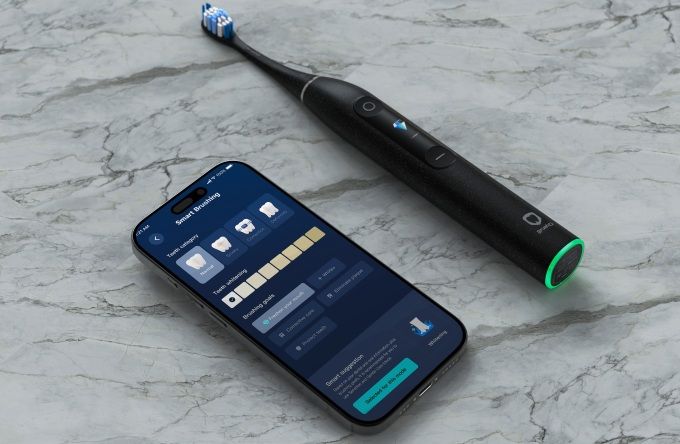
With BrushO’s AI-powered toothbrush, you get real-time feedback, reminders, and zone-by-zone guidance to ensure every surface is cleaned correctly.
Flossing removes plaque and food particles from between teeth—areas your toothbrush can’t reach.
• Choose traditional floss or water flossers
• Gently curve floss around each tooth
• Avoid snapping, which can irritate gums
The tongue harbors bacteria that cause bad breath and contribute to plaque formation.
• Use a tongue scraper or toothbrush back
• Clean from back to front, gently
Saliva is your mouth’s natural defense system. It neutralizes acid, washes away debris, and maintains pH balance.
• Drink water throughout the day
• Limit dehydrating beverages like alcohol or coffee
Your diet plays a major role in the health of your teeth and gums:
• Eat calcium-rich foods: dairy, leafy greens, almonds
• Limit sugar and acidic drinks: soda, energy drinks, candy
• Chew crunchy veggies: like carrots or celery, to stimulate saliva
Visit your dentist every 6 months for cleanings and checkups. These visits help:
• Detect cavities and gum issues early
• Remove hardened plaque (tartar)
• Monitor changes in your oral health
BrushO isn’t just another toothbrush—it’s an AI-powered oral care system:
• Zone-based guidance: Ensures full-mouth coverage (6 zones, 16 surfaces)
• Pressure sensors: Prevent gum recession and enamel wear
• Brushing reports: Track consistency and technique daily
• Habit rewards: Earn $BRUSH tokens for healthy habits
BrushO empowers users of all ages to build consistent, measurable brushing routines that actually improve oral health—not just appearance.
Oral health is a lifelong commitment. Unlike mouthwash or mints, real hygiene is about daily care, correct technique, and ongoing improvement. Don’t rely solely on whitening or cosmetic products—focus on habits that support gum health, plaque removal, and cavity prevention.
• Brush 2x daily with proper technique
• Use an AI toothbrush like BrushO for optimal care
• Floss and clean your tongue every day
• Drink water and eat tooth-friendly foods
• Visit your dentist regularly—even if nothing feels wrong
BrushO is an AI-powered smart toothbrush that transforms oral hygiene into a personalized, tech-driven routine. With real-time feedback, brushing analytics, and $BRUSH token rewards, BrushO empowers users to build consistent habits that keep their mouth truly healthy.
Jan 20
Jan 20

The uncontrolled hypertension is the condition that the dental practice meets in the patient who presents with the elevated pressure that the guideline does not permit for the elective treatment, and the management of this patient requires the deferral of the dental procedure and the referral to ...

The closure of the extraction space in the orthodontic treatment is the phase that demands the careful selection of the mechanics and the monitoring of the force that the appliance delivers. The sliding mechanics that rely on the continuous archwire and the power chain that connects the brackets ...

The transverse discrepancy of the maxilla is the problem that the crowding and the posterior crossbite often hide, and the maxillary expansion is the treatment that addresses the width of the arch rather than the position of the individual tooth. The clinician who diagnoses the constriction early...

The local anaesthesia is the daily procedure that the modern dentistry treats as the routine, and the complications that follow it range from the transient and the trivial to the permanent and the serious. The clinician who injects by the habit without the anatomy in the mind is the clinician who...

The hypertension is the condition that the dental practice meets in the every day, and the patient who carries the elevated pressure without the symptoms is the patient who presents the risk that the chair-side measurement reveals. The dental team occupies the position that no other profession ho...

The glass-ceramic crown has become the default restoration for the anterior and the many posterior teeth, and the material selection within the family is the decision that determines the strength, the aesthetics, and the longevity of the result. The lithium disilicate, the leucite, and the zircon...

The dental phobia is the extreme form of the dental fear that prevents the patient from attending the treatment that the oral health requires, and the management of the phobia demands the skill that extends beyond the routine behaviour guidance. The systematic desensitization, the exposure therap...

The dental fear of the child is the condition that shapes the attitude for the lifetime, and the clinician who manages the first visits with the skill builds the patient who attends the recall without the dread. The fear that the child develops follows the many sources, and the practice that reco...

The patient with controlled hypertension is the patient who requires the dental care that the oral health demands and the treatment that the blood pressure permits, and the clinician who manages the controlled case safely follows the guideline that the evidence supports. The controlled hypertensi...

The ceramic veneer is the restoration that the aesthetic dentistry depends on, and the bond that retains the veneer on the enamel is the critical link that determines whether the restoration survives the function or fractures and debonds. The clinical technique from the preparation to the cementa...

Costruire rapidamente e a basso costo una rete di dati sulla salute orale in modo che tutti possano creare.
Costruire rapidamente e a basso costo una rete di dati sulla salute orale in modo che tutti possano creare.


Address: RM 1427, 14/F RADIO CITY 505, HENNESSY RD CAUSEWAY BAY, HONG KONG
Code: 000000
Phone: +852-53758652
Email: customerservice@brusho.com