
Many people instinctively reach for their toothbrush right after vomiting to feel clean and fresh. However, this common habit might be doing more harm than good. Brushing immediately after throwing up can actually damage your tooth enamel, which is already weakened by stomach acid. In this article, we’ll break down why timing matters, what experts recommend, and how smart brushing habits with BrushO can protect your long-term oral health. Whether you’re dealing with occasional stomach issues, morning sickness, or food poisoning, understanding the right steps to take after vomiting is crucial for maintaining healthy teeth and gums.
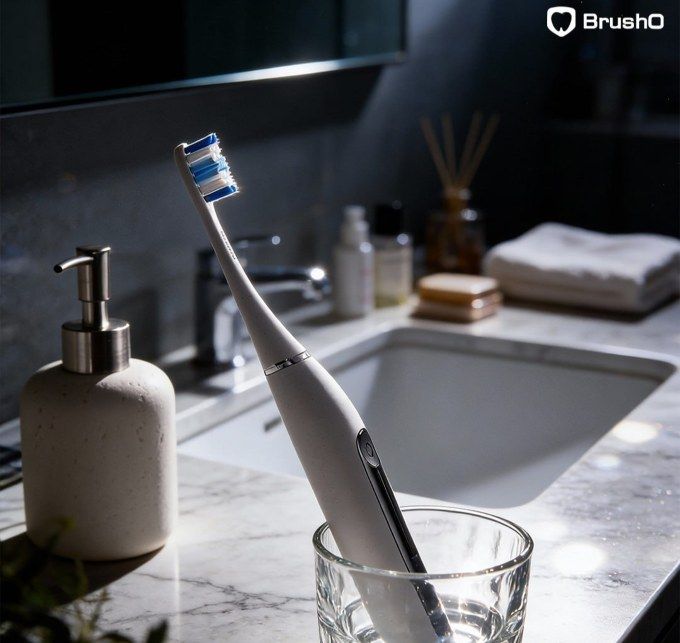
Vomiting isn’t just unpleasant—it exposes your mouth to a powerful mix of stomach acids that can significantly weaken your enamel. Many of us want to brush right away to get rid of the taste and feel clean again. But is that actually safe?
Let’s explore what dental professionals recommend and how smart oral care, with help from BrushO, can minimize damage and promote healing.
Stomach acid has a very low pH, usually between 1 and 3, which can temporarily soften tooth enamel. When you vomit, that acid coats your teeth. If you brush too soon afterward, you might actually scrub away the weakened enamel, leading to:
• Increased tooth sensitivity
• Long-term enamel erosion
• Yellowing of the teeth
• Higher risk of cavities
According to the American Dental Association (ADA) and most dentists, it’s best to wait at least 30 minutes after vomiting before brushing your teeth.
1. Rinse with water immediately – to remove acid residue from the mouth.
2. Rinse with a baking soda solution (1 teaspoon in a cup of water) – this neutralizes acid and protects enamel.
3. Chew sugar-free gum – to stimulate saliva, which naturally helps rebalance pH.
4. Wait 30–60 minutes – then brush gently with a soft-bristled toothbrush like BrushO.
When it’s finally safe to brush, using the right technique and tools is essential.
• Pressure sensors ensure you don’t overbrush sensitive enamel.
• Adaptive modes like “Sensitive” and “Gum Care” offer a gentler clean.
• Smart timing guides you through proper zone-by-zone brushing—even when your mouth is recovering.
• Brushing history tracking helps monitor patterns if vomiting is frequent (e.g., morning sickness, illness).
By using a smart toothbrush like BrushO, you’re less likely to cause additional harm when your enamel is most vulnerable.
Pregnant women dealing with morning sickness may vomit frequently. If so, consider:
• Keeping a bottle of water or mouth rinse nearby
• Switching to enamel-strengthening toothpaste
• Using BrushO’s sensitive mode to avoid triggering gag reflexes
For individuals recovering from bulimia or similar conditions, consistent education and gentle care are key. A smart toothbrush like BrushO offers non-judgmental tracking and habit coaching, helping users improve their oral health gradually.
It’s natural to want to brush right after vomiting—but resist the urge. Wait at least 30 minutes and rinse thoroughly to protect your enamel. Then brush gently with a smart, supportive tool like BrushO that adapts to your needs and helps prevent further damage.
BrushO is an AI-powered smart toothbrush that tracks your brushing performance in real time, from pressure to coverage. With features like adaptive brushing modes, personalized scoring, and app-based feedback, BrushO helps you build better brushing habits every day. Whether you’re managing a sensitive mouth or aiming for optimal oral health, BrushO is your smartest brushing companion.

Squamous cell carcinoma is not a single, uniform disease, and two of its oral variants illustrate the extremes of its behavior. Verrucous carcinoma is a slow-growing, exophytic tumor that almost never metastasizes, while spindle cell carcinoma is an aggressive, sarcomatoid malignancy that can be ...

Most people expect a toothache to be the first sign of pulp disease, but some forms of pulpitis are surprisingly silent. A pulp polyp is the visible result of chronic hyperplastic pulpitis, a condition in which the dental pulp grows out of a large carious opening as a fleshy mass. Recognizing thi...

Dry mouth is not merely uncomfortable; it is a medical condition with real consequences for teeth, speech, swallowing and quality of life. When the salivary glands cannot produce enough saliva, medications called sialogogues can restore some of the missing fluid. Pilocarpine and cevimeline are th...

A blister in the mouth can be the first warning of a systemic autoimmune disease, and two disorders deserve particular attention in the dental chair: pemphigus vulgaris and mucous membrane pemphigoid. Both produce chronic oral ulceration, yet their immunologic targets, clinical behavior and long-...

When infection drains from a tooth, the body often creates a visible escape route, and the dentist must interpret these fistulous openings correctly. A parulis is the common gum boil that signals chronic periapical infection, while an oroantral fistula is a communication between the mouth and the...

Among the fibro-osseous lesions of the jaws, the ossifying fibroma holds a unique position because it is a true neoplasm, unlike the reactive cemento-osseous dysplasia discussed in an earlier article. It grows continuously, expands bone and requires surgical removal, and its cemental variant adds...

Not all keratocystic lesions of the jaw behave alike, and one of the most important distinctions in oral pathology separates the orthokeratinized odontogenic cyst from its better-known relative, the odontogenic keratocyst. Although the two lesions look similar under the microscope at first glance...

Periodontal disease is usually a slowly progressive infection, but a rare form called necrotizing ulcerative periodontitis destroys tissue with alarming speed. Unlike ordinary periodontitis, this condition produces necrotic, cratered papillae, deep pocketing and rapid bone loss, and it appears al...

Every parent has met the child who refuses to eat because of painful mouth sores, and most of these children have one of two viral illnesses: herpangina or hand, foot and mouth disease. Both are caused by enteroviruses, both produce fever and oral ulcers, and both are overwhelmingly common in you...

Cementoosseous dysplasia is one of the most common fibro-osseous lesions found on dental radiographs, yet it is also one of the most frequently misdiagnosed. The lesion replaces normal bone with cellular fibrous tissue and cementum-like material, and it appears in several forms that range from a ...

Costruire rapidamente e a basso costo una rete di dati sulla salute orale in modo che tutti possano creare.
Costruire rapidamente e a basso costo una rete di dati sulla salute orale in modo che tutti possano creare.


Address: RM 1427, 14/F RADIO CITY 505, HENNESSY RD CAUSEWAY BAY, HONG KONG
Code: 000000
Phone: +852-53758652
Email: customerservice@brusho.com