Top Benefits of Using a Smart Toothbrush for Sensitive Teeth
Jan 23

Jan 23
Sensitive teeth can make everyday activities like eating and brushing uncomfortable. A smart toothbrush—with features like pressure sensors, personalized brushing modes, and real‑time feedback—can help improve brushing habits, protect enamel and gums, and reduce sensitivity over time. This article explores the key benefits of using a smart toothbrush specifically for sensitive teeth.


Introduction: Why Sensitive Teeth Need Special Care

Tooth sensitivity, often caused by enamel erosion, gum recession, or aggressive brushing, affects millions of people globally. When dentin—the layer beneath enamel—becomes exposed, it can trigger sharp discomfort from hot, cold, sweet, or acidic foods. Traditional toothbrushes may not provide sufficient protection or guidance to address these issues properly.
This is where smart toothbrush technology becomes especially valuable. Smart toothbrushes are electric toothbrushes equipped with advanced sensors, connectivity, and app integration that help users brush more effectively. They offer science‑backed advantages that go beyond what manual or basic electric brushes can provide.

1. Gentle Cleaning That Protects Sensitive Teeth

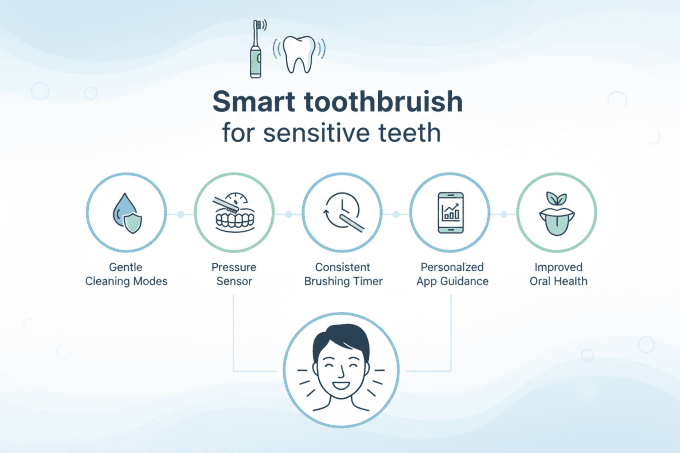
One of the most important benefits of using a smart toothbrush for sensitive teeth is its gentle yet effective cleaning action. Unlike hard manual brushing—which can worsen sensitivity by stripping enamel and irritating gums—smart toothbrushes use advanced motion technology to remove plaque without excessive force. Many models also include dedicated “sensitive” or “gentle” brushing modes tailored for users who need milder brushing power and reduced vibration intensity.
This gentle approach helps maintain enamel integrity while still achieving a thorough clean, reducing the risk of irritation and discomfort common among those with sensitive teeth.

2. Pressure Sensors Prevent Over‑Brushing

Excessive brushing pressure is a common cause of gum recession and enamel wear—two major contributors to sensitivity. Smart toothbrushes typically include built‑in pressure sensors that alert you when you are brushing too hard. These real‑time alerts, often communicated through gentle vibration or app notifications, help you maintain the ideal brushing force, protecting your gums and enamel over time.
By preventing over‑brushing, these sensors help reduce the progression of sensitivity and promote healthier brushing habits.

3. Personalized Brushing Modes for Tailored Oral Care

Unlike traditional brushes with one uniform setting, smart toothbrushes offer multiple brushing modes such as sensitive, gum care, deep clean, or daily clean. For individuals with sensitive teeth, switching to a sensitive mode ensures that strokes are softer and less abrasive, focusing on comfort without compromising hygiene.
This personalized capability means smarter brushing that adapts to your needs, rather than a one‑size‑fits‑all approach.

4. Real‑Time Feedback Encourages Better Brushing Technique

Smart toothbrushes provide real‑time feedback through companion apps that guide you on your brushing technique. These apps use data from built‑in motion trackers, timers, and pressure sensors to show whether you are brushing too hard, missing areas, or not brushing long enough. With this guidance, users can make immediate adjustments, leading to healthier and more effective brushing habits.
Over time, this feedback loop improves brushing consistency and helps prevent issues that lead to tooth sensitivity, such as uneven plaque removal or missed regions prone to decay.

5. Coverage Tracking Ensures Even Cleaning

Missing certain areas of your mouth while brushing can leave plaque behind, contributing to gum irritation and sensitivity. Smart toothbrushes often track which areas have been brushed and for how long, ensuring full mouth coverage. This advanced tracking helps you brush thoroughly and evenly, which is essential for maintaining healthy teeth and minimizing the risk of sensitivity‑related conditions.

6. Long‑Term Habit Tracking and Motivation

Many smart toothbrushes sync with mobile apps to track brushing behavior over weeks and months. This habit tracking not only shows progress but also motivates users to stay consistent. Some apps even provide rewards, streaks, or gamified elements that make sticking to a good brushing routine easier—and more engaging.
This long‑term focus encourages healthier daily habits, further reducing the risk and discomfort associated with sensitive teeth.

7. Enhanced Gum Health and Reduced Inflammation

For many people, tooth sensitivity is closely linked with gum health. Smart toothbrushes help by gently stimulating gums and reminding users to brush along the gum line without applying too much force. With improved gum care and reduced inflammation, the overall oral environment becomes healthier, which can decrease sensitivity triggers.
 

Conclusion: Smart Toothbrushes Make Sensitive Teeth Easier to Manage

A smart toothbrush is more than just a high‑tech gadget—it’s a scientifically supported tool that can make a real difference for people with sensitive teeth. From gentle brushing modes and pressure sensors to real‑time feedback and long‑term habit tracking, these devices empower users with precise, adaptive oral care.
By combining expert‑guided brush technology with personalized insights and data‑driven coaching, smart toothbrushes help you protect enamel, minimize discomfort, and build better habits for a lifetime of healthier smiles.

Post recenti

Workday logs can expose missed lunch brushing

Workday logs can expose missed lunch brushing

Missed lunch brushing often hides inside normal work routines instead of feeling like a conscious choice. Time logs, calendar gaps, and daily patterns can reveal where the habit breaks down and why simple awareness often fixes more than extra motivation does.

Tea sips can keep canker sores tender longer

Tea sips can keep canker sores tender longer

Warm tea can feel soothing at first, but repeated sipping can keep a small canker sore active by extending heat, dryness, acidity, and friction across already irritated tissue. The problem is often the sipping pattern, not the tea alone.

Retainer cases can reseed plaque after cleaning

Retainer cases can reseed plaque after cleaning

A retainer can look freshly cleaned and still pick up old residue from its case. When moisture, biofilm, and handling build up inside the container, the case can quietly place plaque back onto the appliance each time it is stored.

Pulp horns sit closer to the surface than people think

Pulp horns sit closer to the surface than people think

Pulp horns extend higher inside the crown than many people realize, which helps explain why small wear, chips, or cavities can become sensitive faster than expected. Surface damage and inner anatomy are often closer neighbors than they appear from outside.

Protein bars can cling behind crowded lower teeth

Protein bars can cling behind crowded lower teeth

Protein bars often feel convenient and tidy, but their sticky texture can lodge behind crowded lower teeth where saliva and the tongue do not clear residue quickly. That lingering film can feed plaque long after the snack feels finished.

Perikymata show where enamel has been slowly worn

Perikymata show where enamel has been slowly worn

Perikymata are tiny natural enamel surface lines, and when they fade unevenly they can reveal where daily wear has slowly polished the tooth. Their pattern offers a subtle clue about abrasion, erosion, and long-term enamel change.

Handle nudges can steady sink to mirror switching

Handle nudges can steady sink to mirror switching

Many people brush while shifting attention between the sink, the mirror, and other small distractions. Subtle handle nudges can stabilize that switching by bringing focus back during the exact moments when route control and coverage usually start to drift.

Fizzy mixers can keep dentin twinges active at night

Fizzy mixers can keep dentin twinges active at night

Fizzy mixers can seem harmless in the evening, but repeated acidic, carbonated sipping may keep exposed dentin reactive long after dinner. The issue is often not one drink alone, but the long pattern of bubbles, acid, and slow nighttime contact.

Contact points decide where food packs first

Contact points decide where food packs first

Food packing is not random. The tiny shape and tightness of tooth contact points strongly influence where fibers, seeds, and soft fragments get trapped first, especially when bite guidance and tooth form direct chewing into the same narrow spaces again and again.

Allergy mornings can make tongue coating cling longer

Allergy mornings can make tongue coating cling longer

Allergy heavy mornings can make tongue coating seem thicker because mouth breathing, postnasal drip, dryness, and slower oral clearing all build on each other before the day fully starts. The coating is often about the whole morning pattern, not the tongue alone.

Top Benefits of Using a Smart Toothbrush for Sensitive Teeth
