Top Benefits of Using a Smart Toothbrush for Sensitive Teeth
Jan 23

Jan 23
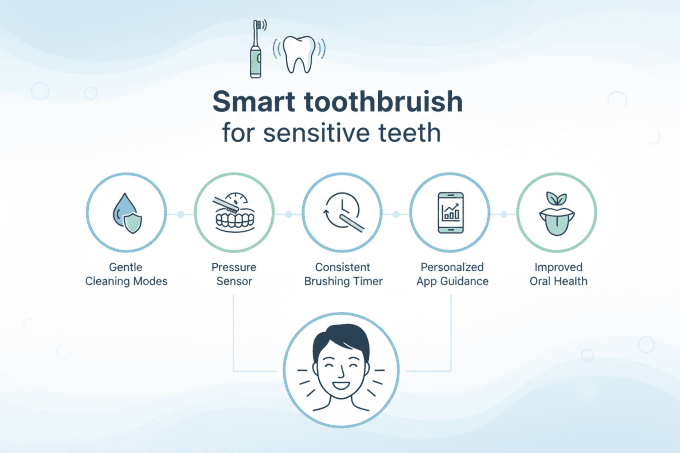
Sensitive teeth can make everyday activities like eating and brushing uncomfortable. A smart toothbrush—with features like pressure sensors, personalized brushing modes, and real‑time feedback—can help improve brushing habits, protect enamel and gums, and reduce sensitivity over time. This article explores the key benefits of using a smart toothbrush specifically for sensitive teeth.


Introduction: Why Sensitive Teeth Need Special Care

Tooth sensitivity, often caused by enamel erosion, gum recession, or aggressive brushing, affects millions of people globally. When dentin—the layer beneath enamel—becomes exposed, it can trigger sharp discomfort from hot, cold, sweet, or acidic foods. Traditional toothbrushes may not provide sufficient protection or guidance to address these issues properly.
This is where smart toothbrush technology becomes especially valuable. Smart toothbrushes are electric toothbrushes equipped with advanced sensors, connectivity, and app integration that help users brush more effectively. They offer science‑backed advantages that go beyond what manual or basic electric brushes can provide.

1. Gentle Cleaning That Protects Sensitive Teeth

One of the most important benefits of using a smart toothbrush for sensitive teeth is its gentle yet effective cleaning action. Unlike hard manual brushing—which can worsen sensitivity by stripping enamel and irritating gums—smart toothbrushes use advanced motion technology to remove plaque without excessive force. Many models also include dedicated “sensitive” or “gentle” brushing modes tailored for users who need milder brushing power and reduced vibration intensity.
This gentle approach helps maintain enamel integrity while still achieving a thorough clean, reducing the risk of irritation and discomfort common among those with sensitive teeth.

2. Pressure Sensors Prevent Over‑Brushing

Excessive brushing pressure is a common cause of gum recession and enamel wear—two major contributors to sensitivity. Smart toothbrushes typically include built‑in pressure sensors that alert you when you are brushing too hard. These real‑time alerts, often communicated through gentle vibration or app notifications, help you maintain the ideal brushing force, protecting your gums and enamel over time.
By preventing over‑brushing, these sensors help reduce the progression of sensitivity and promote healthier brushing habits.

3. Personalized Brushing Modes for Tailored Oral Care

Unlike traditional brushes with one uniform setting, smart toothbrushes offer multiple brushing modes such as sensitive, gum care, deep clean, or daily clean. For individuals with sensitive teeth, switching to a sensitive mode ensures that strokes are softer and less abrasive, focusing on comfort without compromising hygiene.
This personalized capability means smarter brushing that adapts to your needs, rather than a one‑size‑fits‑all approach.

4. Real‑Time Feedback Encourages Better Brushing Technique

Smart toothbrushes provide real‑time feedback through companion apps that guide you on your brushing technique. These apps use data from built‑in motion trackers, timers, and pressure sensors to show whether you are brushing too hard, missing areas, or not brushing long enough. With this guidance, users can make immediate adjustments, leading to healthier and more effective brushing habits.
Over time, this feedback loop improves brushing consistency and helps prevent issues that lead to tooth sensitivity, such as uneven plaque removal or missed regions prone to decay.

5. Coverage Tracking Ensures Even Cleaning

Missing certain areas of your mouth while brushing can leave plaque behind, contributing to gum irritation and sensitivity. Smart toothbrushes often track which areas have been brushed and for how long, ensuring full mouth coverage. This advanced tracking helps you brush thoroughly and evenly, which is essential for maintaining healthy teeth and minimizing the risk of sensitivity‑related conditions.

6. Long‑Term Habit Tracking and Motivation

Many smart toothbrushes sync with mobile apps to track brushing behavior over weeks and months. This habit tracking not only shows progress but also motivates users to stay consistent. Some apps even provide rewards, streaks, or gamified elements that make sticking to a good brushing routine easier—and more engaging.
This long‑term focus encourages healthier daily habits, further reducing the risk and discomfort associated with sensitive teeth.

7. Enhanced Gum Health and Reduced Inflammation

For many people, tooth sensitivity is closely linked with gum health. Smart toothbrushes help by gently stimulating gums and reminding users to brush along the gum line without applying too much force. With improved gum care and reduced inflammation, the overall oral environment becomes healthier, which can decrease sensitivity triggers.
 

Conclusion: Smart Toothbrushes Make Sensitive Teeth Easier to Manage

A smart toothbrush is more than just a high‑tech gadget—it’s a scientifically supported tool that can make a real difference for people with sensitive teeth. From gentle brushing modes and pressure sensors to real‑time feedback and long‑term habit tracking, these devices empower users with precise, adaptive oral care.
By combining expert‑guided brush technology with personalized insights and data‑driven coaching, smart toothbrushes help you protect enamel, minimize discomfort, and build better habits for a lifetime of healthier smiles.

Recent Posts

Watermelon fibers can slip between front teeth after summer snacks

Watermelon fibers can slip between front teeth after summer snacks

Watermelon seems soft and easy to clear, but stringy fibers can slide between front teeth and linger unnoticed. Those tiny strands often become obvious only later, when the lips, tongue, or a sip of water catches the same front contact again and again.

Upper molars use broad chewing tables to crush fibrous foods

Upper molars use broad chewing tables to crush fibrous foods

Upper molars are built with broad chewing tables that help break down fibrous foods efficiently. Their width, cusp pattern, and back-of-mouth position let them spread force across tough textures so chewing can shift from cutting to true grinding.

Sticky rice snacks can hide between molars until late afternoon

Sticky rice snacks can hide between molars until late afternoon

Sticky rice snacks can wedge into molar grooves and between-teeth spaces long after the snack feels finished. When those starches sit for hours, they hold onto plaque and make the back teeth feel coated, crowded, and more difficult to clean by late afternoon.

Salty workout sweat can leave lips dry and gums feeling tender

Salty workout sweat can leave lips dry and gums feeling tender

Long workouts, salty sweat, open-mouth breathing, and delayed rinsing can leave lips dry and gum edges tender even when teeth seem fine. The discomfort usually reflects dehydration, friction, and mild plaque stress gathering around already-dry tissues.

Pressure map recaps can show where rushed-brushing blind spots keep returning

Pressure map recaps can show where rushed-brushing blind spots keep returning

Pressure map recaps can reveal that rushed brushing is not random but repeats in the same zones. When the same areas keep receiving too much force or too little time, the pattern becomes easier to fix than vague promises to brush more carefully.

Overnight mouth breathing can make back gums feel raw by breakfast

Overnight mouth breathing can make back gums feel raw by breakfast

Sleeping with the mouth open can dry the back of the mouth for hours and leave gum edges feeling raw by morning. The discomfort often comes from prolonged airflow, reduced saliva protection, and a rougher surface environment rather than from a sudden overnight injury.

Incisor edges shear soft foods before back teeth finish the job

Incisor edges shear soft foods before back teeth finish the job

Incisors are designed to shear and portion soft foods before chewing shifts to the back teeth. Their thin edges start the breakdown process efficiently, creating smaller pieces that molars can later grind with less effort.

Cold brew sipping all morning can delay saliva rebound after acid

Cold brew sipping all morning can delay saliva rebound after acid

Slow cold brew sipping can keep the mouth in a repeated acid-and-dryness loop for hours. Instead of letting saliva recover between exposures, frequent small drinks extend the period during which enamel and gumline comfort are trying to rebound.

Canine roots help guide side to side movements during chewing

Canine roots help guide side to side movements during chewing

Canines do more than sit between incisors and premolars. Their long roots and stable position help guide side-to-side jaw movements, distribute force, and support smoother transitions when food is moved from cutting to grinding.

Bedtime score dips can show when tired hands stop reaching back molars

Bedtime score dips can show when tired hands stop reaching back molars

Bedtime score dips often reveal a specific fatigue pattern rather than general inconsistency. When tired hands stop fully reaching the back molars, evening brushing can look complete on the surface while leaving the hardest-to-reach areas undercleaned night after night.
