
Data tracking has rapidly transformed modern lifestyles, influencing how individuals manage health, productivity, and daily routines. From wearable fitness sensors to sleep analytics and nutrition apps, measurement-driven awareness has replaced guesswork with actionable insights. This behavioral shift is grounded in psychology and preventive healthcare — measurable feedback improves consistency, motivation, and long-term outcomes. However, oral hygiene historically remained outside this tracking revolution despite being one of the most technique-sensitive daily habits. This article explores why tracking has become essential in modern life, why oral care lagged behind, and how intelligent technologies are bringing precision, awareness, and habit optimization to brushing behavior.
Tracking daily activity once seemed excessive. Today it is embedded in normal routines. Wearables, smartphones, and apps monitor movement, sleep cycles, caloric intake, and screen engagement with minimal effort. This widespread adoption reflects a cultural transition toward the quantified self movement, where behavioral insight supports informed decision-making.
Tracking answers fundamental lifestyle questions:
• How active are daily movement patterns
• Whether sleep quality meets recovery needs
• When cognitive performance peaks
• How consistent personal routines remain
Measured awareness replaces subjective perception with objective understanding.
Historically, lifestyle self-assessment relied on feeling rather than data. Individuals believed they were active, rested, or productive based on perception rather than evidence. Modern tracking eliminates these assumptions by providing numerical clarity.
Observed benefits include:
• Increased accountability
• Earlier behavioral correction
• Preventive health adjustments
• Long-term habit sustainability
Data does not prescribe behavior — it informs it.
Behavioral psychology demonstrates that feedback loops reinforce habit formation. Visible progress activates motivational pathways and reward mechanisms.
Tracking systems enhance adherence because they:
• Create personal accountability
• Visualize improvement
• Encourage streak consistency
• Provide objective reinforcement
This explains the success of activity rings, sleep scores, and productivity metrics.
Despite being performed daily, oral hygiene remained largely unmeasured for decades. Most brushing evaluations depended on subjective assumptions:
• Perceived duration adequacy
• Belief in full coverage
• Sensory confirmation of cleanliness
Yet brushing effectiveness depends heavily on technique precision. Small coverage gaps repeated over the years contribute to plaque retention, gum irritation, and enamel deterioration. Unlike physical activity or sleep, brushing historically lacked real-time feedback mechanisms.
Advances in sensor technology now extend tracking capabilities into oral hygiene. Smart brushing systems allow monitoring of:
• Brushing duration
• Surface coverage patterns
• Pressure application
• Habit consistency trends
This transformation shifts brushing from an automatic routine to a data-informed wellness behavior. Tracking enhances clarity rather than control. It reveals patterns without imposing judgment, allowing natural improvement through awareness.
Modern healthcare emphasizes prevention rather than reaction. Early behavioral insight reduces long-term risk across physiological systems. Tracking supports this shift by identifying subtle deviations before symptoms emerge.
Oral health reflects the same principle:
• Gum inflammation develops gradually
• Enamel erosion accumulates silently
• Plaque retention compounds over time
Measured brushing habits help intercept risk earlier.
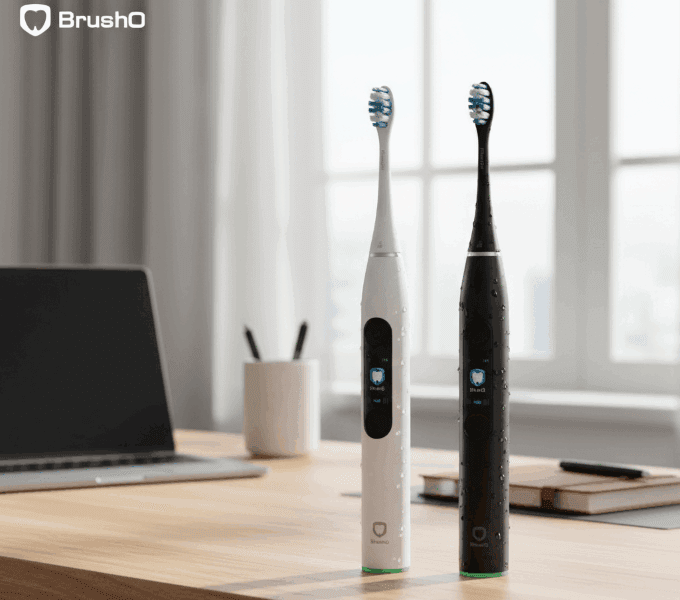
AI-guided brushing platforms such as BrushO integrate real-time coverage monitoring and habit analytics into everyday hygiene. By translating brushing behavior into actionable feedback, these systems reduce uncertainty and reinforce consistency, aligning oral care with the broader trend of measurable wellness management.
The expansion of tracking into everyday life reflects a broader movement toward informed self-management and preventive health awareness. Data transforms habits from assumption-based routines into evidence-driven behaviors. As oral care enters this tracking ecosystem, brushing evolves from an invisible routine into a measurable contributor to long-term wellness. Integrating habit analytics into hygiene practices represents not control, but clarity — empowering individuals to maintain healthier lifestyles through awareness and consistency.
Feb 23
Feb 23

Traumatic dental injuries constitute a significant public health problem, particularly among children and adolescents, with approximately one-third of individuals experiencing a dental trauma before adulthood. The International Association of Dental Traumatology periodically updates evidence-based guidelines for the management of these injuries. This article synthesizes the current IADT recommendations, covering crown fractures, luxation injuries, root fractures, and avulsion, and discusses emergency management protocols, splinting techniques, follow-up regimens, and factors influencing long-term prognosis.

Chemomechanical debridement through irrigation is fundamental to endodontic success, eliminating microorganisms, dissolving organic tissue, and removing the smear layer from the complex root canal system. This article reviews contemporary irrigation protocols, compares the properties and efficacy of sodium hypochlorite, EDTA, chlorhexidine, and newer irrigants, and evaluates activation techniques including passive ultrasonic irrigation, sonic activation, laser-activated irrigation, and negative pressure systems.

Conventional oral examination remains the cornerstone of oral cancer screening, but adjunctive diagnostic tools have been developed to improve the detection of potentially malignant disorders and early malignancy. This article evaluates the evidence supporting toluidine blue staining, autofluorescence devices, chemiluminescence, brush biopsy, and salivary biomarkers as adjuncts to visual and tactile examination, discusses their sensitivity and specificity, and provides a practical framework for incorporating these tools into clinical practice while avoiding over-referral and unnecessary patient anxiety.

The transition from conventional elastomeric impressions to digital intraoral scanning represents one of the most significant technological shifts in restorative dentistry. This article compares the accuracy, clinical efficiency, patient acceptance, and cost-effectiveness of digital versus conventional impression techniques across various clinical applications including single crowns, fixed partial dentures, and implant-supported restorations, drawing on recent systematic reviews and clinical studies.

Antibiotic prophylaxis in dentistry has undergone substantial re-evaluation over the past two decades, driven by evolving evidence on the risk of distant site infections, growing concerns about antimicrobial resistance, and the recognition of adverse drug reactions. This article reviews current evidence-based guidelines from the American Heart Association, the National Institute for Health and Care Excellence (NICE), and other authoritative bodies regarding prophylaxis for infective endocarditis and prosthetic joint infections, and discusses clinical decision-making in the context of immunosuppression, cardiac devices, and other special patient populations.

Dental professionals are uniquely positioned to deliver smoking cessation interventions due to the frequent and regular nature of dental visits and the visible oral consequences of tobacco use. Evidence demonstrates that even brief advice from a dental practitioner can significantly increase quit rates. This article reviews the current evidence base for smoking cessation interventions in dental settings, outlines the 5As framework, and discusses the integration of pharmacotherapy, behavioral counseling, and referral pathways into routine dental practice.

Removable partial dentures (RPDs) remain a cost-effective and widely used prosthetic solution for partially edentulous patients. Despite the increasing popularity of implant-supported restorations, RPDs continue to serve a substantial patient population. This article examines the fundamental principles of RPD design, including Kennedy classification, biomechanical considerations, and component selection, and reviews long-term clinical outcomes regarding patient satisfaction, abutment tooth survival, and the impact on oral health-related quality of life.

Dental fear and anxiety affect approximately 15 to 20 percent of the adult population, with a smaller subset meeting criteria for specific phobia. These conditions lead to avoidance of dental care, deterioration of oral health, and reduced quality of life. This article reviews the epidemiology and etiology of dental fear and anxiety, describes validated assessment tools, and provides an evidence-based framework for behavioral interventions, communication strategies, and pharmacological approaches including nitrous oxide sedation, oral sedation, and intravenous conscious sedation.

The evolution of dental ceramics over the past four decades has transformed restorative dentistry, offering increasingly esthetic, durable, and biocompatible options. From traditional feldspathic porcelain to modern high-translucency zirconia, each ceramic class presents distinct indications, advantages, and limitations. This article traces the development of dental ceramics, compares material properties across glass-based, polycrystalline, and resin-matrix ceramic categories, and discusses clinical selection criteria, bonding protocols, and long-term performance data.

Burning mouth syndrome (BMS) is a chronic intraoral pain condition characterized by a persistent burning sensation in the absence of identifiable mucosal pathology. Affecting predominantly postmenopausal women, BMS presents a significant diagnostic and therapeutic challenge in clinical practice. This article reviews current understanding of its multifactorial etiology, evidence-based diagnostic criteria, and the pharmacological, topical, and psychological management strategies available to dental practitioners.

Costruire rapidamente e a basso costo una rete di dati sulla salute orale in modo che tutti possano creare.
Costruire rapidamente e a basso costo una rete di dati sulla salute orale in modo che tutti possano creare.


Address: RM 1427, 14/F RADIO CITY 505, HENNESSY RD CAUSEWAY BAY, HONG KONG
Code: 000000
Phone: +852-53758652
Email: customerservice@brusho.com