
Data tracking has rapidly transformed modern lifestyles, influencing how individuals manage health, productivity, and daily routines. From wearable fitness sensors to sleep analytics and nutrition apps, measurement-driven awareness has replaced guesswork with actionable insights. This behavioral shift is grounded in psychology and preventive healthcare — measurable feedback improves consistency, motivation, and long-term outcomes. However, oral hygiene historically remained outside this tracking revolution despite being one of the most technique-sensitive daily habits. This article explores why tracking has become essential in modern life, why oral care lagged behind, and how intelligent technologies are bringing precision, awareness, and habit optimization to brushing behavior.
Tracking daily activity once seemed excessive. Today it is embedded in normal routines. Wearables, smartphones, and apps monitor movement, sleep cycles, caloric intake, and screen engagement with minimal effort. This widespread adoption reflects a cultural transition toward the quantified self movement, where behavioral insight supports informed decision-making.
Tracking answers fundamental lifestyle questions:
• How active are daily movement patterns
• Whether sleep quality meets recovery needs
• When cognitive performance peaks
• How consistent personal routines remain
Measured awareness replaces subjective perception with objective understanding.
Historically, lifestyle self-assessment relied on feeling rather than data. Individuals believed they were active, rested, or productive based on perception rather than evidence. Modern tracking eliminates these assumptions by providing numerical clarity.
Observed benefits include:
• Increased accountability
• Earlier behavioral correction
• Preventive health adjustments
• Long-term habit sustainability
Data does not prescribe behavior — it informs it.
Behavioral psychology demonstrates that feedback loops reinforce habit formation. Visible progress activates motivational pathways and reward mechanisms.
Tracking systems enhance adherence because they:
• Create personal accountability
• Visualize improvement
• Encourage streak consistency
• Provide objective reinforcement
This explains the success of activity rings, sleep scores, and productivity metrics.
Despite being performed daily, oral hygiene remained largely unmeasured for decades. Most brushing evaluations depended on subjective assumptions:
• Perceived duration adequacy
• Belief in full coverage
• Sensory confirmation of cleanliness
Yet brushing effectiveness depends heavily on technique precision. Small coverage gaps repeated over the years contribute to plaque retention, gum irritation, and enamel deterioration. Unlike physical activity or sleep, brushing historically lacked real-time feedback mechanisms.
Advances in sensor technology now extend tracking capabilities into oral hygiene. Smart brushing systems allow monitoring of:
• Brushing duration
• Surface coverage patterns
• Pressure application
• Habit consistency trends
This transformation shifts brushing from an automatic routine to a data-informed wellness behavior. Tracking enhances clarity rather than control. It reveals patterns without imposing judgment, allowing natural improvement through awareness.
Modern healthcare emphasizes prevention rather than reaction. Early behavioral insight reduces long-term risk across physiological systems. Tracking supports this shift by identifying subtle deviations before symptoms emerge.
Oral health reflects the same principle:
• Gum inflammation develops gradually
• Enamel erosion accumulates silently
• Plaque retention compounds over time
Measured brushing habits help intercept risk earlier.
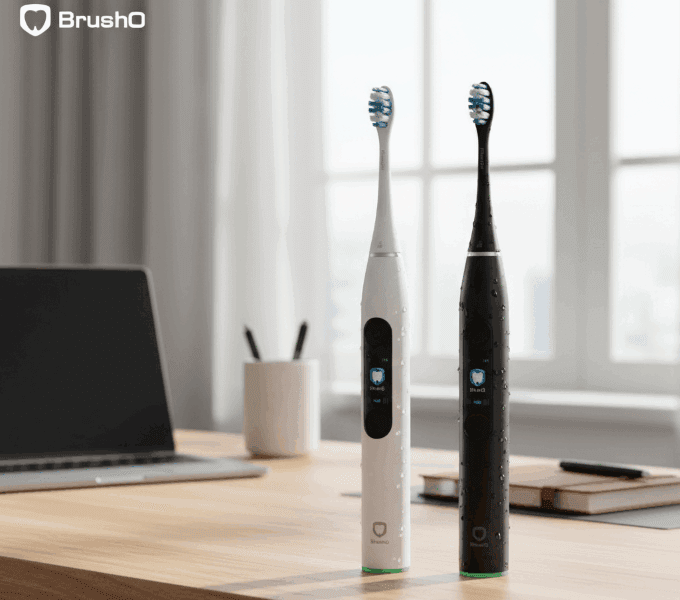
AI-guided brushing platforms such as BrushO integrate real-time coverage monitoring and habit analytics into everyday hygiene. By translating brushing behavior into actionable feedback, these systems reduce uncertainty and reinforce consistency, aligning oral care with the broader trend of measurable wellness management.
The expansion of tracking into everyday life reflects a broader movement toward informed self-management and preventive health awareness. Data transforms habits from assumption-based routines into evidence-driven behaviors. As oral care enters this tracking ecosystem, brushing evolves from an invisible routine into a measurable contributor to long-term wellness. Integrating habit analytics into hygiene practices represents not control, but clarity — empowering individuals to maintain healthier lifestyles through awareness and consistency.
Feb 23
Feb 23

Hyperdontia is the presence of one or more teeth in excess of the normal dental formula, and the resulting teeth are described as supernumerary. The condition is common enough to appear in routine practice but variable enough in presentation that the decision to intervene is rarely straightforwar...

Few patients complete orthodontic treatment without asking whether their teeth will move back. The honest answer is that they will, to some degree, in the majority of cases. Relapse is not a failure of treatment but a predictable biological response, and understanding why it happens is the basis ...

The mandible is the largest and most frequently fractured bone of the facial skeleton, and its management sits at the interface between trauma surgery and restorative dentistry. Treatment has shifted over four decades from prolonged maxillomandibular fixation towards rigid internal fixation with ...

Chronic liver disease affects hundreds of millions of people worldwide, and its prevalence continues to rise with the epidemic of metabolic liver disease. The liver is central to haemostasis, drug metabolism and immune competence, and its failure therefore alters the risk profile of almost every ...

Excessive gingival display, commonly described as a gummy smile, is one of the most frequent aesthetic concerns presented to dental practitioners. The condition is not a single entity but a clinical presentation that can arise from skeletal, gingival, muscular or dental factors, and the treatment...

Drug-induced gingival overgrowth is a well-recognised adverse effect of several widely prescribed medications, and it remains one of the most common drug-related findings in periodontal practice. The condition produces firm, fibrous enlargement of the gingiva that can interfere with speech, masti...

Denture stomatitis is an inflammatory condition of the denture-bearing mucosa that affects a large proportion of removable prosthesis wearers, yet it is frequently dismissed as a cosmetic annoyance. The condition is driven by a Candida biofilm on the fitting surface of the prosthesis, and it is m...

Chronic kidney disease affects an estimated 850 million people worldwide, and the number of patients surviving on dialysis or with a renal transplant continues to rise. These patients carry an oral disease burden that is substantially higher than that of the general population, and their medical ...

Angular cheilitis is an inflammatory lesion of the labial commissures that presents with erythema, fissuring and crusting at the corners of the mouth. It is one of the most common conditions encountered in general dental practice, yet it is frequently treated as a simple fungal infection and allo...

Adverse reactions to dental materials are uncommon but they are not rare, and they are frequently misdiagnosed because the oral mucosa responds to allergens in a limited number of ways. A burning sensation, a persistent ulcer or an unexplained area of erythema may all represent a hypersensitivity...

Build an oral health data network quickly and at low cost in a way that everyone can build.


Address: RM 1427, 14/F RADIO CITY 505, HENNESSY RD CAUSEWAY BAY, HONG KONG
Code: 000000
Phone: +852-53758652
Email: customerservice@brusho.com