
You’ve just polished off a bowl of spicy ramen or dipped into a plate of chili-covered wings. A burning sensation lingers—not just on your tongue, but along your gums. Is this harmless discomfort, or could spicy foods be doing more harm to your oral health than you realize? While spicy foods don’t directly cause gum disease, they can aggravate sensitive gum tissues, especially if your oral health isn’t already in top shape. From inflammation to increased plaque retention and even delayed healing, your love for heat may be affecting your gums more than you think. In this article, we explore the science behind spicy foods and gum health—and how to protect your mouth without giving up flavor.
Spicy foods, especially those with capsaicin (the active compound in chili peppers), can cause temporary irritation to the soft tissues in your mouth, including your gums. If you already suffer from gingivitis or have inflamed areas, consuming hot spices may amplify the discomfort and redness.
If you’ve recently undergone dental treatment or are recovering from gum inflammation, spicy foods can delay healing. Strong chemical stimulation can exacerbate tenderness and inflammation, making it more difficult for tissues to recover.
Spicy meals may indirectly affect gum health by encouraging dehydration or reducing saliva flow. Saliva plays a vital role in neutralizing acids, washing away bacteria, and protecting gum tissues. Without adequate saliva, your gums are more vulnerable to bacterial buildup.
Some spicy dishes are also oily or heavily seasoned, which can increase the chance of food particles sticking to teeth and gums. If not properly cleaned, this can accelerate plaque buildup—contributing to gum problems over time.
No, spicy foods don’t cause gum disease directly. Gum disease is primarily caused by bacterial plaque that accumulates when brushing and flossing habits are poor. However, spicy foods can act as irritants and exacerbate existing issues, especially in people with:
• Receding gums
• Gingivitis or periodontitis
• Mouth ulcers
• Orthodontic appliances or dental restorations
If you love spicy food but are concerned about its effect on your gums, here’s how to keep enjoying your favorite dishes safely:
• Brush and floss after meals: Remove leftover food particles that cling to gum lines.
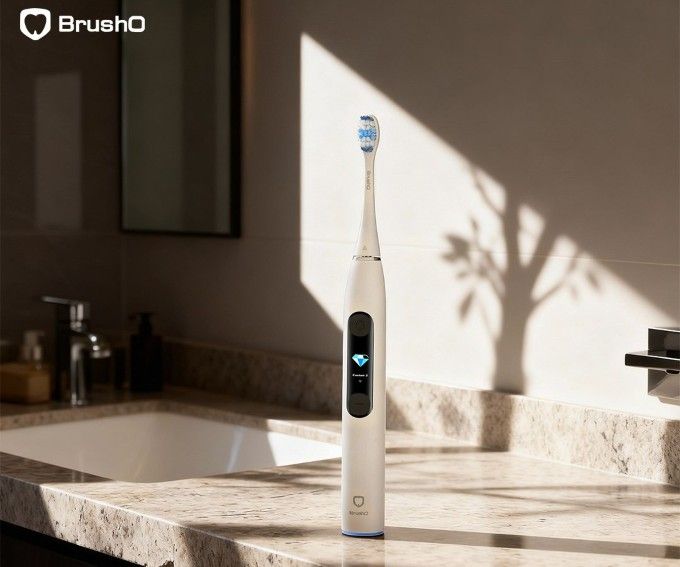
• Use a smart toothbrush like BrushO with FSB (Fully Smart Brushing) tech to ensure even pressure and complete coverage, reducing irritation risk.
• Rinse with water after spicy meals to neutralize acids and clear irritants.
• Choose softer spices if you’re prone to sensitivity—consider turmeric or mild pepper blends.
• Hydrate well to maintain saliva flow and soothe irritated tissues.
• Monitor changes in gum health using BrushO’s smart app, which tracks brushing behavior and helps detect inconsistent hygiene that may lead to inflammation.
Consider skipping spicy foods temporarily if you are:
• Healing from gum surgery or dental extractions
• Experiencing active gum infections or abscesses
• Dealing with bleeding gums or ulcerative lesions
• Suffering from dry mouth due to medications
In these cases, it’s best to focus on bland, non-irritating foods until the mouth heals.
Even if spicy foods are only mildly irritating to your gums, they serve as a good reminder that your gums are sensitive to environmental stressors. Using a smart toothbrush like BrushO ensures you’re protecting your gum line with the right technique and pressure every day. Plus, BrushO’s $BRUSH token reward system turns your daily oral care into a motivating habit, helping you stay consistent—even when your food gets fiery.
Dec 30
Dec 30

An in-depth exploration of periodontal disease pathogenesis, the 2017 World Workshop classification system, and the principles of non-surgical periodontal therapy including scaling, root planing, and adjunctive antimicrobials.

An evidence-based comparison of clear aligner therapy versus conventional fixed orthodontic appliances, covering treatment efficacy, duration, patient compliance, comfort, and aesthetic outcomes based on systematic reviews and clinical trials.

A practical guide to third molar assessment and management, including indications for extraction versus retention, surgical techniques for impacted teeth, and prevention and management of common postoperative complications.

A comprehensive review of contemporary root canal treatment protocols, including rotary instrumentation, advanced irrigation systems, and obturation techniques. Examines evidence-based success rates and prognostic factors affecting endodontic outcomes.

A review of modern resin composite technologies including nanofilled, bulk-fill, and bioactive composites. Covers polymerization shrinkage management, bonding protocols, and clinical longevity data for anterior and posterior restorations.

A comprehensive guide to pediatric dental behavior management techniques, including tell-show-do, positive reinforcement, protective stabilization, and pharmacological approaches, along with early interceptive orthodontic intervention strategies.

A comprehensive guide to caries management by risk assessment (CAMBRA), covering risk factor identification, caries detection methods, non-surgical management with fluoride and sealants, and minimally invasive restorative techniques.

A practical overview of contemporary digital dentistry workflows, including intraoral scanning technology, CAD/CAM systems for chairside and laboratory restorations, 3D printing applications, and digital implant planning.

An evidence-based review of traumatic dental injuries based on the Andreasen classification, covering crown fractures, luxation injuries, avulsion, and alveolar fractures, with step-by-step emergency management protocols.

An in-depth review of the dentist's role in managing obstructive sleep apnea, covering mandibular advancement devices, tongue-retaining devices, patient selection criteria, polysomnography interpretation, and collaborative care with sleep physicians.


Address: RM 1427, 14/F RADIO CITY 505, HENNESSY RD CAUSEWAY BAY, HONG KONG
Code: 000000
Phone: +852-53758652
Email: customerservice@brusho.com
