
Smart sonic toothbrushes, like BrushO’s smart toothbrush, use high-frequency vibrations to deliver deep cleaning that reaches areas manual brushes often miss. This enhances plaque removal, gum health, and long-term oral wellness. Combining sonic tech with AI guidance, pressure sensors, and personalized brushing modes ensures comprehensive cleaning, better oral hygiene habits, and reduced risk of dental issues.
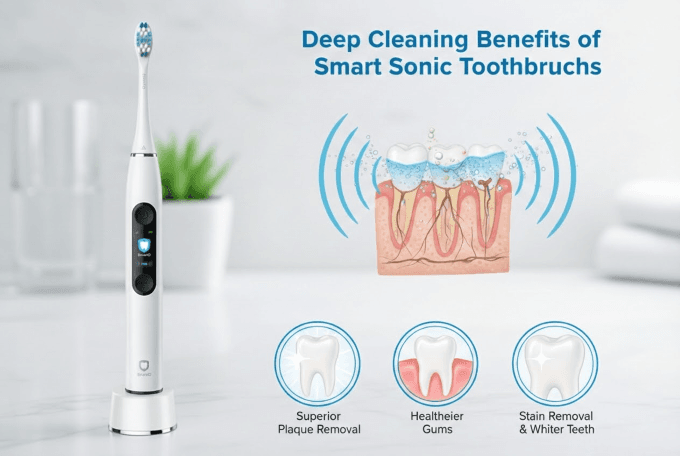
Many people assume all toothbrushes work the same—but when it comes to achieving a deep clean, smart sonic toothbrushes stand leagues ahead of manual brushing alone. Instead of merely relying on manual motion, sonic brushes harness high-frequency vibrations that create dynamic fluid movements, helping to dislodge plaque and bacteria even where bristles barely reach. Smart sonic toothbrushes—such as those from BrushO—combine this advanced cleaning power with intelligent guidance and feedback systems, giving users a smarter, more effective way to protect oral health. This article explores how sonic technology enhances deep cleaning and why it’s transforming modern oral care.
Sonic toothbrushes operate at tens of thousands of vibrations per minute, creating dynamic fluid action that extends cleaning far beyond the bristle tips. These vibrations generate microcurrents and microbubbles that penetrate between teeth and along the gumline, areas where manual brushes often miss. This mechanism disrupts bacterial plaque more effectively than normal brushing motion, leading to deeper removal of plaque and debris—especially in tight interdental spaces that are prone to decay and gum inflammation.
Unlike manual or simple electric toothbrushes, sonic toothbrush technology utilizes hydrodynamic cleaning—moving fluid within the mouth using high-speed motion. This fluid motion helps dislodge plaque and bacteria from areas where bristles cannot physically reach, such as under the gumline and between crowded teeth. This deeper reach not only improves overall cleanliness but also helps reduce the risk of gingivitis, periodontal issues, and tartar buildup when used consistently.
BrushO’s smart toothbrush pairs sonic cleaning power with AI-powered feedback to ensure you’re brushing effectively, not just vigorously. The built-in sensors analyze your brushing pattern and alert you when you need to adjust pressure, reach under-cleaned zones, or improve coverage. This real-time coaching helps users avoid common brushing mistakes—like missing inner surfaces or brushing too hard—and reinforces effective habits that contribute to deeper, more comprehensive oral hygiene.
Smart sonic toothbrushes offer specialized brushing modes—such as Deep Clean, Gum Care, and Whiten+—that tailor cleaning intensity to your specific needs. According to dental advice, matching brushing mode to oral condition helps maximize cleaning benefits without harming sensitive areas. This adaptability ensures that users can achieve a deep clean while still protecting enamel and gum tissue—something a manual brush cannot consistently provide.
A major downside of manual brushing is that many users inadvertently skip or under-clean certain sections of their mouth. Smart sonic toothbrushes track brushing effectiveness across zones to ensure consistent coverage, reducing the chance that plaque or bacteria remain hidden in neglected regions. By highlighting missed zones and providing interactive guidance, these devices help users achieve a deep, full-mouth clean every time.
Clinical research has shown that sonic toothbrushes remove significantly more plaque than traditional manual brushing. This enhanced plaque control is crucial because plaque buildup is the root cause of cavities, gum disease, and bad breath. By disrupting plaque biofilms and reducing bacterial load, sonic toothbrushes help lower the risk of periodontal concerns and support healthier teeth over time.
The fluid dynamics created by high-frequency sonic vibrations not only clean surfaces but also gently massage the gumline, supporting circulation and reducing inflammation. Studies have demonstrated that users of sonic brushes often show improvements in gingival health and reduced bleeding compared to manual brushing. This makes deep cleaning especially important for individuals prone to gum sensitivity or early signs of gum disease.
Individuals with braces, implants, or crowns benefit particularly from sonic toothbrushes. The high-frequency vibrations can reach around brackets, wires, and dental hardware more effectively than manual brushing alone, reducing the likelihood of plaque buildup in these difficult areas. This helps maintain oral hygiene around restorative work and orthodontics, protecting overall dental health.
Deep cleaning powered by sonic technology promotes confidence and consistency. When users see the tangible results of thorough brushing—such as improved gum health and cleaner teeth—they are more likely to maintain a disciplined oral care routine. Smart tracking and feedback further reinforce this beneficial cycle.
Deep cleaning with a smart sonic toothbrush combines advanced sonic vibration technology with intelligent feedback and personalized guidance. This powerful combination delivers:
Superior plaque removal in hard-to-reach areas
Improved gum health and reduced inflammation
Enhanced cleaning around dental work
Reinforced positive oral care habits
For those seeking to elevate their daily routine beyond what manual brushing can provide, smart sonic toothbrushes offer a proven, science-backed solution for achieving a deeper, more effective clean and long-lasting oral wellness.
Jan 27
Jan 27

Saliva has moved from the byproduct of the examination to the fluid that the modern practice can read, and the diagnostics that the salivary sample supports now reach from the caries risk to the periodontal inflammation and beyond. The fluid is easy to collect, safe to handle, and rich in the pro...

The narrow alveolar ridge is the common obstacle that the implant plan meets in the healed posterior site, and the ridge split technique is the approach that widens the crest without the block graft and the second surgical site. The technique uses the viscoelastic property of the bone, and the co...

The resin-bonded bridge is the conservative alternative to the conventional fixed prosthesis, and its place in the modern practice has widened as the adhesive dentistry matured. The prosthesis replaces the missing tooth with the minimal removal of the enamel from the abutment, and the retention i...

The systemic antibiotic has a defined and a narrow place in the periodontal therapy, and the clinician who respects its limits uses it well while the clinician who reaches for it routinely erodes both the result and the antibiotic stewardship. The mechanical debridement remains the foundation of ...

The bond failure of the bracket is the interruption that the fixed orthodontic treatment can tolerate in the small number but not in the pattern, and the clinician who understands the cause reduces the frequency that the repeated rebonding records. The failure that recurs on the single tooth poin...

The prescription pad is one of the most common sources of the oral complaint that the patient brings to the dental office, and the clinician who does not think of the medication may spend the appointment treating the symptom that the drug created. The list of the agents that affect the mouth grow...

The intraoral scanner has moved from the novelty of the early adopters to the standard equipment of the modern prosthodontic practice, and the comparison with the conventional impression has become a daily question rather than an academic one. The scanner captures the surface of the teeth and the...

The endodontic retreatment is the second chance that the tooth receives when the initial treatment fails to resolve the infection or the symptoms, and the procedure is both more demanding and more rewarding than the primary treatment. The clinician who retreats the tooth encounters the filling ma...

The access preparation is the gateway of every root canal treatment, and it is the step at which the outcome of the case is most often decided, for good or for ill. A well-designed access straightens the canal system, removes the coronal obstruction, and allows the instruments and the irrigants t...

The restoration that the laboratory returns is only as good as the information that the clinician sends, and the communication between the dentist and the technician is the step that determines whether the crown, the veneer, or the bridge meets the expectation of the patient. The shade, the form,...


Address: RM 1427, 14/F RADIO CITY 505, HENNESSY RD CAUSEWAY BAY, HONG KONG
Code: 000000
Phone: +852-53758652
Email: customerservice@brusho.com
