
In the world of electric toothbrushes, it’s not enough to spin fast; you need precision, balance, and feedback. That’s the promise behind BrushO’s FSB technology (“Fully Smart Brushing”)—a motor system designed to offer up to 64,000 RPM, zone‑by‑zone tracking, pressure adaptation, and ultra‑quiet operation. In this article, we’ll break down what FSB really means, how it works, the scientific advantages it brings for both plaque removal and gum protection, and why it’s a standout feature for users who want oral care that evolves with them.
FSB stands for Fully Smart Brushing—a proprietary system from BrushO that blends high‑speed motor mechanics, real‑time sensor feedback, and adaptive software intelligence.
Key components include:
• A 2nd‑generation Maglev sonic motor rated up to 64,000 rpm.
• AI sensors that detect brushing pressure, coverage area (6 zones / 16 surfaces), and motion.
• Firmware and app integration to adjust performance and provide personalized feedback.
• Smart design features like ultra‑quiet operation (< 45 dB) and IPX7 waterproofing.
While many electric toothbrush brands tout “high RPM,” FSB emphasizes balanced performance:
High speed alone can risk enamel wear or gum recession. FSB modulates vibration according to brushing mode and pressure sensor input, allowing for effective plaque disruption while guarding soft tissues.
With six zones and 16 surfaces mapped in the app, FSB ensures you don’t skip back molars or hidden sulcus areas—critical spots for early gum disease.
Whether you choose “Whitening,” “Gum Care,” or a custom setting, FSB calibrates the motor’s behavior—avoiding the common issue of a high‑powered brush being too harsh for sensitive users.
According to BrushO’s product page, FSB technology contributes to up to 20× more plaque removal compared to manual brushes. This increased efficacy is achieved by combining high‑frequency bristle motion with optimized power delivery rather than raw speed alone.
Over‑brushing and excess pressure are known risk factors for gum recession. FSB’s built‑in smart pressure sensor monitors your force and the app delivers feedback when you exceed safe thresholds—helping preserve your gingiva for the long term.
FSB’s use of Maglev technology offers lower friction, less heat, and quieter operation (< 45 dB), meaning users can brush comfortably—even in the early morning—without disturbing others.
• Select the correct mode in the BrushO app: Choose Gum Care if you’re sensitive, Whitening if you drink coffee or tea often.
• Follow zone prompts: Monitor the six‑zone/16‑surface display and make sure you deal with back molars.
• Watch for pressure alerts: The brush will flash or the app will notify you if you’re pressing too hard—reduce force, let the brush do the work.
• Replace brush head on schedule: Though FSB gives you smart feedback, heads still need replacement—BrushO’s lifetime free head program ensures you’re covered.
• Use the app’s progress data: Review your monthly brushing stats and set micro‑goals—better consistency often leads to fewer dental issues.
• High‑speed motor + adaptive intelligence = deep clean + soft touch
• Real‑time feedback helps avoid gum damage, enamel wear and missed zones
• Data‑driven brushing fosters better habits and long‑term oral health
• Quiet, durable design suitable for sensitive users, busy schedules and travel
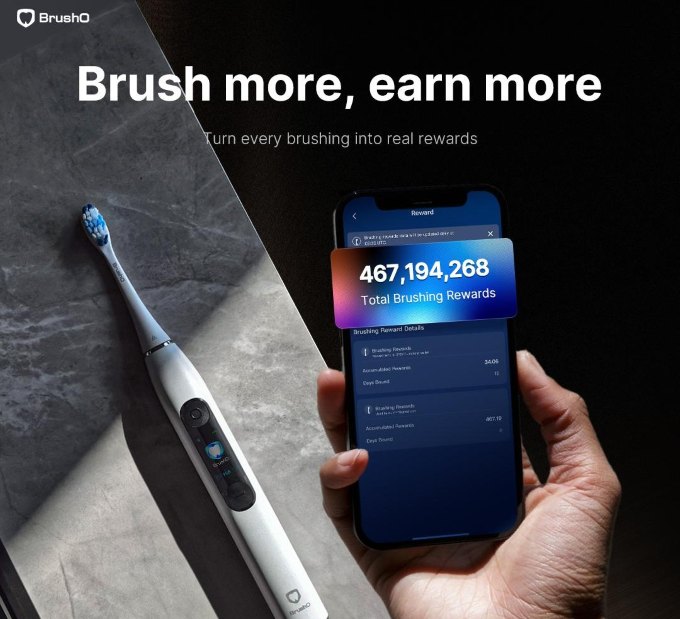
• Integrated with BrushO’s broader ecosystem (app, rewards, lifetime heads) for ongoing value
BrushO is a brand offering AI‑powered smart electric toothbrushes. With its FSB (Fully Smart Brushing) technology, 64,000 RPM motor, app‑connected feedback system, and sustainable lifetime brush‑head program, BrushO is redefining how we approach oral hygiene—from routine to insight‑driven. Recommended by over 40 UK dental clinics and introduced via Stanford innovation, BrushO blends performance, personalization, and long‑term value.
Nov 6
Nov 6

Squamous cell carcinoma is not a single, uniform disease, and two of its oral variants illustrate the extremes of its behavior. Verrucous carcinoma is a slow-growing, exophytic tumor that almost never metastasizes, while spindle cell carcinoma is an aggressive, sarcomatoid malignancy that can be ...

Most people expect a toothache to be the first sign of pulp disease, but some forms of pulpitis are surprisingly silent. A pulp polyp is the visible result of chronic hyperplastic pulpitis, a condition in which the dental pulp grows out of a large carious opening as a fleshy mass. Recognizing thi...

Dry mouth is not merely uncomfortable; it is a medical condition with real consequences for teeth, speech, swallowing and quality of life. When the salivary glands cannot produce enough saliva, medications called sialogogues can restore some of the missing fluid. Pilocarpine and cevimeline are th...

A blister in the mouth can be the first warning of a systemic autoimmune disease, and two disorders deserve particular attention in the dental chair: pemphigus vulgaris and mucous membrane pemphigoid. Both produce chronic oral ulceration, yet their immunologic targets, clinical behavior and long-...

When infection drains from a tooth, the body often creates a visible escape route, and the dentist must interpret these fistulous openings correctly. A parulis is the common gum boil that signals chronic periapical infection, while an oroantral fistula is a communication between the mouth and the...

Among the fibro-osseous lesions of the jaws, the ossifying fibroma holds a unique position because it is a true neoplasm, unlike the reactive cemento-osseous dysplasia discussed in an earlier article. It grows continuously, expands bone and requires surgical removal, and its cemental variant adds...

Not all keratocystic lesions of the jaw behave alike, and one of the most important distinctions in oral pathology separates the orthokeratinized odontogenic cyst from its better-known relative, the odontogenic keratocyst. Although the two lesions look similar under the microscope at first glance...

Periodontal disease is usually a slowly progressive infection, but a rare form called necrotizing ulcerative periodontitis destroys tissue with alarming speed. Unlike ordinary periodontitis, this condition produces necrotic, cratered papillae, deep pocketing and rapid bone loss, and it appears al...

Every parent has met the child who refuses to eat because of painful mouth sores, and most of these children have one of two viral illnesses: herpangina or hand, foot and mouth disease. Both are caused by enteroviruses, both produce fever and oral ulcers, and both are overwhelmingly common in you...

Cementoosseous dysplasia is one of the most common fibro-osseous lesions found on dental radiographs, yet it is also one of the most frequently misdiagnosed. The lesion replaces normal bone with cellular fibrous tissue and cementum-like material, and it appears in several forms that range from a ...


Address: RM 1427, 14/F RADIO CITY 505, HENNESSY RD CAUSEWAY BAY, HONG KONG
Code: 000000
Phone: +852-53758652
Email: customerservice@brusho.com
