How Smart Toothbrushes Clean Every Surface of Your Teeth
Jan 21

Jan 21
When brushing your teeth, ensuring every surface is thoroughly cleaned is crucial for maintaining optimal oral health. While traditional toothbrushes might leave certain areas missed, smart toothbrushes, equipped with sensors and AI, can track coverage and guide you to clean every surface effectively. In this article, we’ll explore how smart toothbrushes, like BrushO, clean each surface of your teeth, from front to back and every hard-to-reach corner. Discover how this advanced technology ensures you never miss a spot while brushing.


How Smart Toothbrushes Clean Every Surface of Your Teeth

1. The Challenge of Cleaning Every Surface of Your Teeth

To achieve optimal oral health, it’s crucial to clean all surfaces of your teeth—front, back, chewing surfaces, and even the areas along the gumline. However, with traditional manual or even basic electric toothbrushes, it's easy to miss certain areas, especially those at the back of the mouth or in between teeth.
Smart toothbrushes are designed to address this challenge. They are equipped with sensors and AI technology that track brushing coverage and ensure that every part of the mouth is cleaned thoroughly.

2. How Sensors Track Brushing Coverage

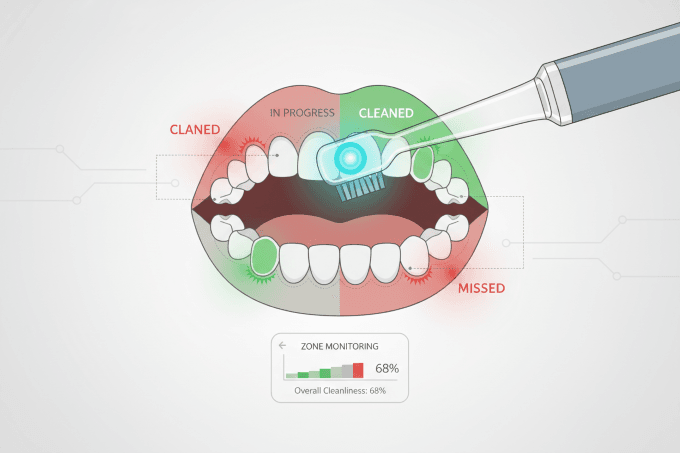
Smart toothbrushes use advanced motion sensors and accelerometers to track the movements of the toothbrush. These sensors map out the different zones of your mouth—often dividing the mouth into 6 zones, depending on the model. As you brush, the smart toothbrush monitors whether you’re covering all these areas effectively, ensuring that no part of your teeth is neglected.
The brushing process is monitored in real-time, and if you’re missing an area or brushing too quickly, the smart toothbrush will provide feedback through vibrations or visual indicators. This ensures that every surface, from the front of your teeth to the back molars, receives proper attention.

3. Brushing Technique: Covering All Surfaces Efficiently

Proper brushing technique is key to ensuring all tooth surfaces are cleaned effectively. Smart toothbrushes guide users in brushing at the correct angle and motion to ensure full-mouth coverage. Whether you’re using a circular or back-and-forth motion, the smart toothbrush’s AI system adapts to your style and gives personalized recommendations for better coverage.
For example, a smart toothbrush may suggest altering the angle for cleaning the gumline or adjusting pressure on the back molars. This targeted feedback improves the overall brushing technique and guarantees that no surface is left out.

4. The Importance of Brushing the Gumline and Hard-to-Reach Areas

The gumline and areas behind your teeth are often overlooked, especially when brushing manually. These areas are prone to plaque buildup and can contribute to gum disease if not cleaned properly. Smart toothbrushes are equipped with pressure sensors and coverage tracking features that alert you when you’re not brushing the gumline or other hard-to-reach areas thoroughly enough.
By ensuring proper cleaning of these often-neglected spots, smart toothbrushes help maintain healthier gums and reduce the risk of plaque and tartar buildup.

5. AI-Powered Feedback for Complete Coverage

AI technology in smart toothbrushes takes the guessing out of brushing. With AI-powered feedback, these devices track your brushing behavior over time, analyzing which areas of your mouth are getting the most attention and which areas are being missed.
By providing real-time guidance, smart toothbrushes help you improve your technique, making sure you cover all surfaces. These devices also keep track of your progress, offering insights and reminders that encourage better brushing habits.

6. Personalized Brushing Modes for Comprehensive Cleaning

Smart toothbrushes often come with different brushing modes tailored to specific needs, such as a "deep clean" mode, a "gum care" mode, or a "white+" mode. These modes optimize brushing for specific areas of your teeth and allow you to clean every surface more efficiently. For example, the deep clean mode may focus on areas that need extra attention, while the gum care mode targets the gumline.
These customizable modes, paired with AI-powered feedback, ensure that every surface of your teeth gets the attention it needs for optimal cleaning.

7. Progress Tracking and Continuous Improvement

The data collected by your smart toothbrush is stored and analyzed in the corresponding app, allowing you to track your progress over time. Weekly or monthly reports provide an overview of your brushing habits, highlighting areas that need improvement. If you’re consistently missing a certain surface or not brushing for the recommended duration, the app will remind you and offer tips for improvement.
By offering actionable feedback, smart toothbrushes help users develop better brushing habits and ensure that every surface of the teeth is cleaned effectively.

8. The Long-Term Benefits of Full Surface Cleaning

Cleaning all surfaces of your teeth is key to maintaining long-term oral health. Smart toothbrushes not only ensure that every surface is cleaned during each brushing session, but they also help you establish better brushing habits over time. Consistent use of a smart toothbrush can lead to healthier gums, reduced plaque buildup, and fewer cavities.
By preventing missed areas and ensuring proper coverage, smart toothbrushes promote long-term oral health and help you avoid common dental issues like gum disease and tooth decay.
 

Final Thoughts: Smart Toothbrushes for Thorough, Effective Cleaning

Smart toothbrushes take the guesswork out of brushing by providing real-time feedback and personalized recommendations. With advanced sensors and AI technology, these devices ensure that every surface of your teeth is cleaned thoroughly, from the front to the back and everywhere in between.
By using a smart toothbrush, you can ensure that your brushing habits are more effective, leading to healthier teeth, gums, and a brighter smile in the long run.

最新の投稿

Zone replay maps can reveal your skipped start side

Zone replay maps can reveal your skipped start side

People often believe they skip the end of brushing because that is when they are tired or impatient, but the beginning of the session can create its own blind spot. Most people judge the risk by portion size, pain level, or how dramatic the habit looks from the outside. The mouth judges it

Whitening strips can irritate already dry gum edges

Whitening strips can irritate already dry gum edges

Whitening strips often look like a simple cosmetic add-on, but the tissues around the teeth do not experience them as surface decoration. Most people judge the risk by portion size, pain level, or how dramatic the habit looks from the outside. The mouth judges it differently. It notices ti

Travel mode reminders can prevent rushed hotel brushing

Travel mode reminders can prevent rushed hotel brushing

Travel compresses routines. Even careful brushers often become faster, more distracted, and less systematic in hotel bathrooms than they are at home. Most people judge the risk by portion size, pain level, or how dramatic the habit looks from the outside. The mouth judges it differently. I

Snoring nights can leave the tongue coating heavier

Snoring nights can leave the tongue coating heavier

A heavier tongue coating in the morning often gets blamed on dinner, but the night itself can be the bigger factor. Most people judge the risk by portion size, pain level, or how dramatic the habit looks from the outside. The mouth judges it differently. It notices timing, repeat exposure,

Predentin matures before dentin can bear force

Predentin matures before dentin can bear force

Inside a tooth, supportive tissue does not appear fully ready all at once. Most people judge the risk by portion size, pain level, or how dramatic the habit looks from the outside. The mouth judges it differently. It notices timing, repeat exposure, tissue stress, and whether recovery time

Popcorn hulls can reopen the same sore gum spot

Popcorn hulls can reopen the same sore gum spot

A popcorn hull is tiny, but tiny things can be remarkably good at finding the same vulnerable area over and over. Most people judge the risk by portion size, pain level, or how dramatic the habit looks from the outside. The mouth judges it differently. It notices timing, repeat exposure, t

Enamel rods direct how cracks spread across a tooth

Enamel rods direct how cracks spread across a tooth

People tend to imagine a crack as a simple line, but tooth structure is more directional than that. Most people judge the risk by portion size, pain level, or how dramatic the habit looks from the outside. The mouth judges it differently. It notices timing, repeat exposure, tissue stress,

Desk snacks can keep acid attacks all afternoon

Desk snacks can keep acid attacks all afternoon

A desk drawer full of small snacks can seem completely separate from oral health. Most people judge the risk by portion size, pain level, or how dramatic the habit looks from the outside. The mouth judges it differently. It notices timing, repeat exposure, tissue stress, and whether recove

Cold brew habits can hide a slow sensitivity problem

Cold brew habits can hide a slow sensitivity problem

Cold brew feels smoother than many hot coffees, so people often assume it is gentler on the mouth in every way. Most people judge the risk by portion size, pain level, or how dramatic the habit looks from the outside. The mouth judges it differently. It notices timing, repeat exposure, tis

Cementum helps roots stay attached under daily load

Cementum helps roots stay attached under daily load

Roots do not stay functional just because they are buried. They stay functional because several supporting tissues cooperate under ordinary chewing forces all day long. Most people judge the risk by portion size, pain level, or how dramatic the habit looks from the outside. The mouth judge
